

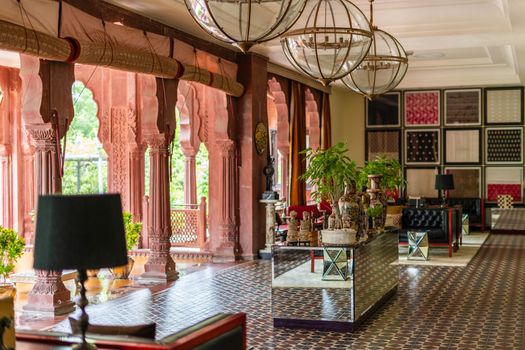
India’s hotel industry is on track to add more than 70,000 new rooms by 2030, as domestic tourism, rising middle-class travel, and improving infrastructure drive one of the largest hospitality expansions in the country’s history. Hotel operators are projecting 15 percent EBITDA compound annual growth over fiscal years 2026 to 2028, as occupancy rates stabilise above 70% and average room rates (ARR) continue their post-pandemic upward trajectory.
India recorded an estimated 2.9 billion domestic tourist visits in 2024, a figure expected to nearly double before the end of the decade. This sustained demand surge is pulling hotel investment beyond the traditional metros — Mumbai, Delhi, Bangalore, and Chennai — into Tier-2 and Tier-3 cities, pilgrimage destinations, and emerging leisure markets across Rajasthan, Uttarakhand, and Kerala.
Which Hotel Chains Are Leading India’s 70,000-Room Expansion?
The 70,000-room pipeline by 2030 is being built by a mix of international chains and Indian operators. Indian Hotels Company (IHCL, owner of Taj Hotels) has the most aggressive domestic pipeline, with over 100 hotels under development as part of its Accelerate 2030 strategy targeting 700 hotels by decade-end. Marriott International has over 50 hotels in various stages of development across India. OYO, despite its restructuring in 2023-24, remains the largest budget hotel operator with over 18,000 properties. Mid-scale segments — driven by brands like Lemon Tree, Sarovar Hotels, and Radisson’s Country Inn & Suites — are the fastest-growing, accounting for an estimated 40% of the new room pipeline.
What Is Driving India’s Hotel Expansion Beyond Metros?
Three structural trends are reshaping India’s hotel geography. First, domestic air connectivity has improved dramatically — India added 25 new airports between 2022 and 2026, opening previously underserved leisure and pilgrimage destinations to air travellers who demand branded hotel experiences. Second, the MICE (Meetings, Incentives, Conferences, and Exhibitions) sector is growing 15% annually, requiring convention-capable hotels in cities like Hyderabad, Pune, Ahmedabad, and Kochi. Third, workation and bleisure travel — a trend that accelerated post-COVID — has created year-round demand in hill stations and heritage cities that previously had sharp seasonal demand patterns. GST rationalisation in September 2025 further improved hotel affordability across price bands.
Industry Reaction and Expert Commentary
IHCL MD and CEO Puneet Chhatwal stated: “India is entering a golden decade for hospitality. The fundamentals — domestic demand, infrastructure investment, and a growing middle class with rising travel aspirations — are stronger than at any point in our history.” JLL Hotels & Hospitality Managing Director Jaideep Dang noted that India’s hotel transaction volumes hit a record $1.2 billion in 2025, with sovereign wealth funds and PE firms from Singapore and the UAE increasing exposure to Indian hospitality assets. Asian Hospitality cited an industry study confirming India’s hospitality sector has entered a “golden cycle” of sustained growth.
What Happens Next?
The single largest policy risk facing India’s hotel expansion is the absence of infrastructure status for hospitality — a long-standing industry demand that would unlock cheaper project financing and reduce land acquisition costs. The Hotel and Restaurant Association of India (HRAI) has renewed its budget memorandum to the Finance Ministry for infrastructure status ahead of the Union Budget 2027. Without it, mid-scale hotel projects in Tier-2 cities face financing costs 200–300 basis points higher than comparable infrastructure projects, slowing the pace of the 70,000-room pipeline in smaller markets.
Frequently Asked Questions
How many hotel rooms is India adding by 2030?
India’s hotel industry is on track to add over 70,000 new rooms by 2030, driven by domestic tourism growth, improved air connectivity, and expanding MICE demand. Hotel operators project 15% EBITDA CAGR for FY2026–2028, with mid-scale hotels accounting for approximately 40% of the new room pipeline.
Which cities in India are seeing the most hotel development?
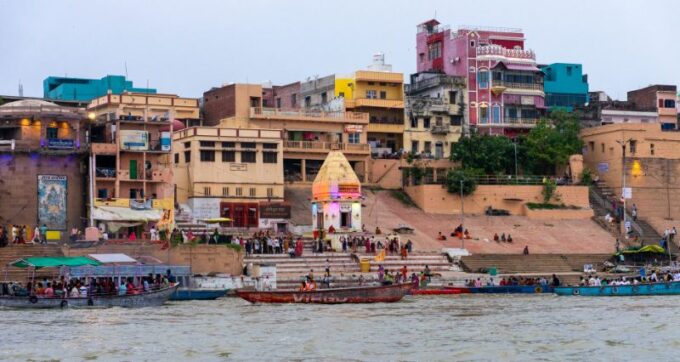
While Mumbai, Delhi, and Bangalore remain the largest hotel markets, the fastest-growing development activity is in Tier-2 cities like Hyderabad, Pune, Ahmedabad, Kochi, and emerging leisure destinations including Jaipur, Rishikesh, Coorg, and Varanasi — driven by improved air connectivity and rising domestic travel demand.
What is the biggest challenge facing India’s hotel expansion?
The primary challenge is the lack of infrastructure status for the hospitality sector, which results in project financing costs 200–300 basis points higher than other infrastructure sectors. This disproportionately affects mid-scale hotel development in Tier-2 and Tier-3 cities, where the demand opportunity is greatest but financing remains expensive.










Leave a comment