

India’s Production Linked Incentive Scheme for the Food Processing Industry (PLISFPI) has surpassed both its investment and employment targets, with approved companies investing Rs 9,207 crore against a committed level of Rs 7,722 crore, the government said on July 23, 2026. Employment generation has also crossed the original target of 2.5 lakh jobs, with the scheme now supporting around 3.35 lakh direct and indirect jobs across India.
The PLISFPI has an approved outlay of Rs 10,900 crore for the period from FY22 to FY27 and was designed to promote domestic food processing and value addition, support the creation of global food manufacturing champions, strengthen Indian food brands in overseas markets, and generate rural and semi-urban employment. As of the latest update, 163 applications from 127 companies, including 69 micro, small and medium enterprises, are covered under the scheme across 22 states and 212 locations.
Why Has the Food Processing PLI Scheme Outperformed Its Targets?
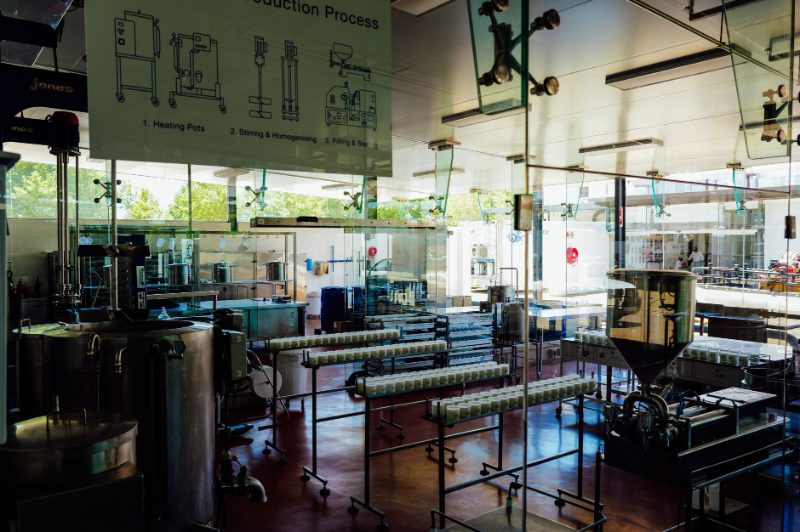
Investments under the scheme have created food processing capacity of 34 lakh metric tonnes per annum, according to government figures, as approved companies moved quickly to set up new plants and expand existing ones to claim incentives tied to incremental sales of processed food products. Sales of PLI-supported products rose sharply, from Rs 58,758 crore in FY20 to Rs 1,08,854 crore in FY26, nearly doubling over the scheme period. The strong participation from MSMEs, which make up more than half of approved companies, suggests the scheme succeeded in drawing in smaller processors alongside larger FMCG and dairy players, rather than concentrating benefits among a handful of large corporations.
What Does This Mean for India’s Wider Food Processing Industry?
The PLI outperformance comes as India’s food processing sector separately pursues a USD 600 billion opportunity by 2030, according to a Deloitte-FICCI report released at FICCI FoodWorld India 2026. Rising demand for value-added dairy products and packaged foods is expected to lift food processing growth to 11-13% in FY26-27. Government officials have pointed to the PLI scheme as one of several policy levers, alongside the Pradhan Mantri Kisan SAMPADA Yojana, that are strengthening India’s food processing capacity, with roughly 1,600 SAMPADA-linked projects approved and more than 1,180 completed and operationalised as of early 2026.
Market Reaction and Industry Response
Food processing companies and industry bodies have broadly welcomed the scheme’s performance, noting that incentive-linked capacity expansion has helped several mid-sized processors scale production lines that would otherwise have taken years to fund through conventional bank financing. Officials from the Ministry of Food Processing Industries have highlighted the scheme’s role in building export-oriented capacity, particularly in categories such as ready-to-eat foods, marine products, organic foods and millet-based products, where Indian companies have historically struggled to compete on scale with processors in Southeast Asia and China.
What Happens Next for the PLI Scheme?
With the scheme’s outlay period running through FY27, the government is expected to conduct a final round of disbursements and capacity verification before the programme concludes. Industry watchers will be tracking whether the investment and employment momentum holds through the final year, and whether a successor scheme or extension is announced to sustain capacity building in categories that have lagged, such as processed fruits and vegetables. The performance data is also likely to feature in upcoming budget discussions as the government weighs further incentive-linked programmes for the food processing sector.
Frequently Asked Questions
What is the Food Processing PLI scheme?
It is a Production Linked Incentive Scheme for the Food Processing Industry with an approved outlay of Rs 10,900 crore from FY22 to FY27, designed to boost domestic processing capacity, value addition and food exports.
How much investment has the PLI scheme attracted so far?
Approved companies have invested Rs 9,207 crore, surpassing the committed target of Rs 7,722 crore, according to the government’s July 23, 2026 update.
How many jobs has the Food Processing PLI scheme created?
The scheme has generated around 3.35 lakh direct and indirect jobs, well above its original target of 2.5 lakh, across 22 states and 212 locations.









Leave a comment