

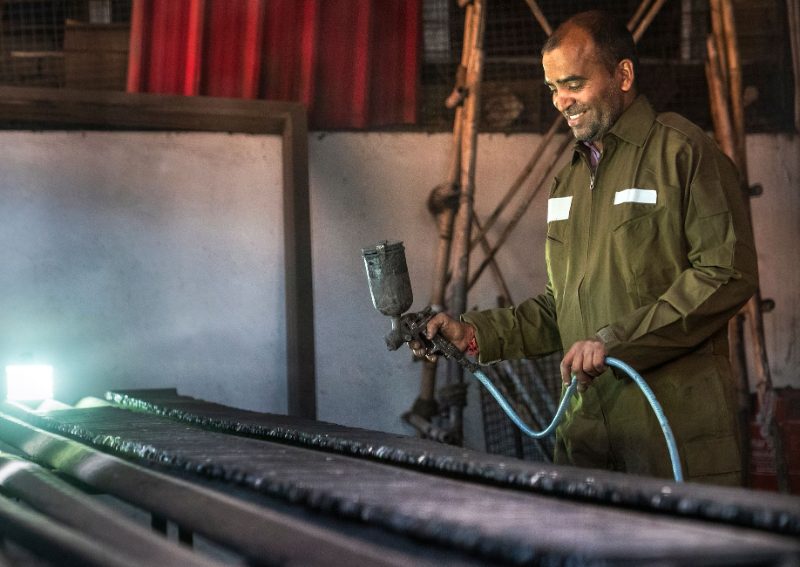
India’s paints sector outlook is clouding over as crude oil prices surge 32% year-on-year to $104 a barrel, squeezing input costs just as dealer destocking and soft premium demand weigh on volumes. Shares of the top listed paint makers have fallen roughly 12% over the past three months as brokerages including Equirus Securities and PL Research turn cautious on near-term earnings.
The pressure comes even after a strong June quarter, when Birla Opus posted revenue of ₹1,660 crore, up 64% year-on-year and 17% sequentially, while gaining 30 percentage points of sequential market share. Asian Paints logged 16% standalone revenue growth in the same period. But titanium dioxide, a key raw material, has become 10.6% costlier year-on-year and 23.3% costlier quarter-on-quarter, and crude has jumped 38% on a three-month basis, according to Business Standard’s September 27 market report.
Why Are Crude Oil Prices Hurting the Paints Sector Outlook?
Paints are petrochemical-intensive products, and crude oil directly feeds into solvents, resins and packaging costs. With Brent-linked crude near $104 a barrel, analysts at PL Research, led by Amnish Aggarwal, say demand visibility remains weak heading into the September quarter, even as companies attempt to pass on costs through price hikes. Equirus Securities expects some moderation in the July-September period, with a possible pickup only around the festive season in October and November.
What Does This Mean for India’s Paint Industry?
The sector’s competitive intensity is compounding the cost pressure. Birla Opus and JSW Paints’ Dulux brand, backed by its 2025 acquisition of a majority stake in Akzo Nobel India, are both expanding aggressively, forcing incumbents Asian Paints, Berger Paints and Kansai Nerolac to defend market share through wider distribution and new product launches rather than pure price increases. That dynamic makes it harder for established players to fully offset rising titanium dioxide and crude costs without hurting volumes further.
Market Reaction and Industry Response
Listed paint stocks have underperformed the broader market, down about 12% over three months as of late September 2026. Analysts note that while Birla Opus’ rapid share gains show the category still has growth headroom, the near-term margin outlook for legacy players like Asian Paints and Berger Paints is under scrutiny. Trade channel checks cited by brokerages point to dealers trimming inventory ahead of the festive season, a pattern that typically precedes a demand rebound but depresses reported volumes in the interim.
What Happens Next?
Investors and dealers will watch the September-quarter results, expected through October and November 2026, for signs of whether festive demand offsets the input-cost squeeze. Equirus Securities flagged that a sustained recovery hinges on crude oil prices stabilising below current levels and on paint majors successfully pushing through further price hikes without ceding more share to Birla Opus and JSW’s Dulux. Any easing in titanium dioxide costs, which have risen sharply on a sequential basis, would also help margins recover into FY27.
Frequently Asked Questions
Why is the paints sector outlook weak in India right now?
Crude oil prices have risen 32% year-on-year to around $104 a barrel, pushing up costs for solvents and resins, while dealer destocking and soft premium demand are weighing on near-term volumes for paint makers.
Which paint companies are most affected by rising input costs?
Asian Paints, Berger Paints and Kansai Nerolac face the most pressure as legacy players defending market share, while newer entrants Birla Opus and JSW Paints’ Dulux brand are still in aggressive expansion mode.
When might the paints sector recover?
Analysts at Equirus Securities and PL Research expect any meaningful recovery to depend on the festive season in October-November 2026 and on crude oil and titanium dioxide costs stabilising.









Leave a comment