

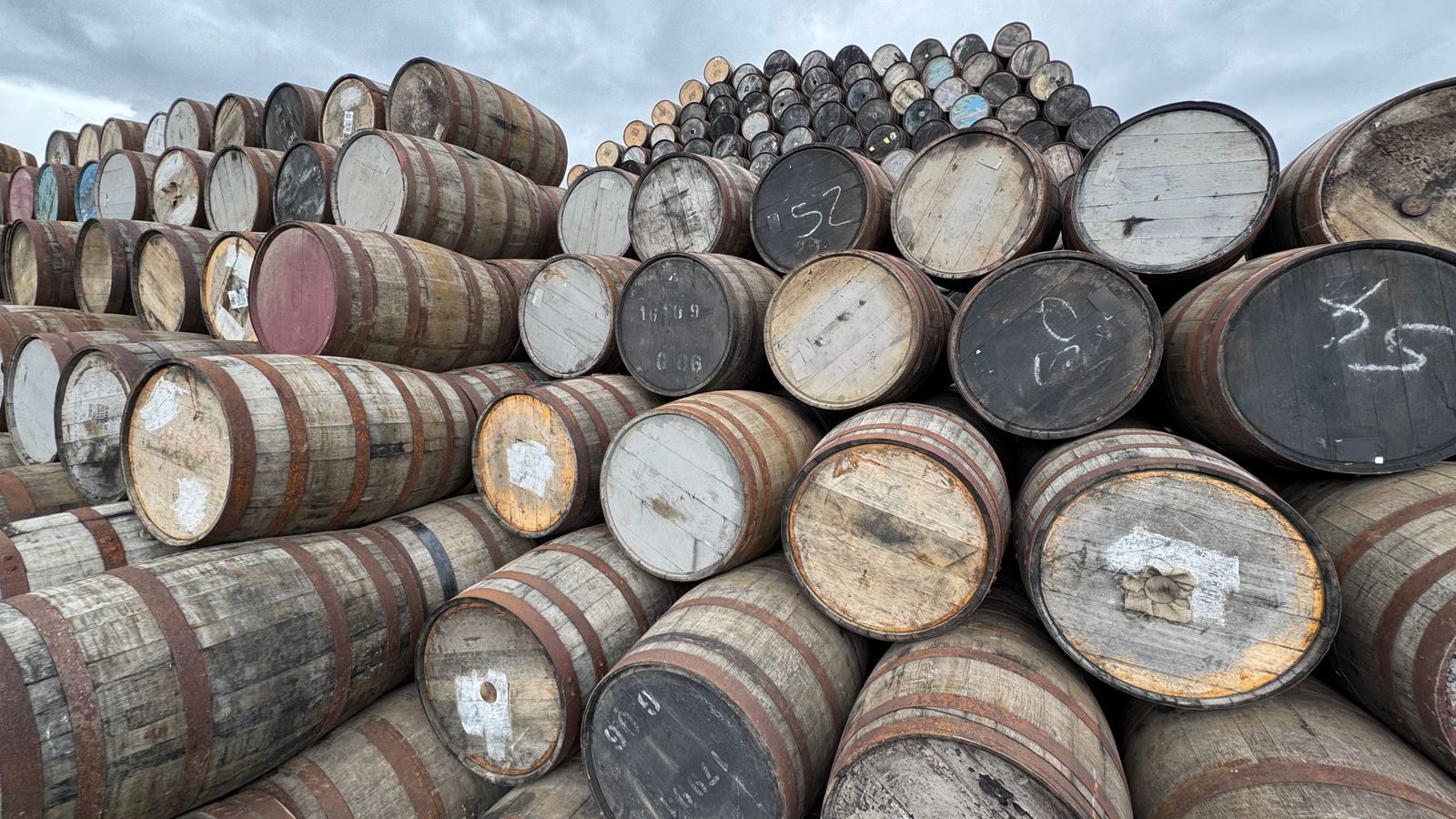
A bulk Scotch duty of an effective 162.5 per cent is being applied by Indian customs on bulk Scotch whisky imports, even though the India-UK trade agreement cut the tariff on Scotch to 75 per cent, according to reports by Business Standard and STV News on 19 November 2026 citing Reuters. More than 80 containers of bulk Scotch belonging to Pernod Ricard, Diageo and Bacardi are held at Indian ports, Reuters reported on 18 November, as cited by Business Standard.
The effective rate is higher than the 150 per cent tariff that applied before the India-UK Comprehensive Economic and Trade Agreement (CETA) took effect on 15 July 2026. Under CETA, the rate was halved to 75 per cent immediately, with a phased cut to 40 per cent over 10 years.
Why is the bulk Scotch duty higher than the CETA rate?
The dispute is about customs classification. A tariff item, 21069051, was introduced in May 2026 for compound alcoholic preparations used in beverage manufacturing. Customs investigators say certain bulk Scotch concentrates fall under this item, which carries a 150 per cent basic customs duty. An additional consumption tax takes the effective burden to 162.5 per cent, according to a government document reviewed by Reuters.
India’s customs notification of 14 July 2026, which implemented the preferential rate, covers Scotch whisky tariff items under heading 220830 but not tariff item 21069051, Business Standard reported. The 75 per cent concession is made up of 25 per cent basic customs duty plus 50 per cent Agriculture Infrastructure and Development Cess, subject to conditions including origin.
In a memorandum dated 4 November reviewed by Reuters, the Directorate of Revenue Intelligence (DRI) told customs commissioners to keep applying the higher tariff, taking the position that the lower rate applies to finished bottled Scotch and not to bulk concentrates. Importers say bulk Scotch is whisky and qualifies for the preferential rate.
Which companies and products are affected?
Besides the shipments of Pernod Ricard, Diageo and Bacardi, Business Standard reported that Radico Khaitan, Allied Blenders and Distillers and Tilaknagar Industries are under scrutiny. The International Spirits and Wines Association of India, which represents Diageo and Pernod Ricard, wrote to the commerce minister on the issue, according to a Reuters report of 23 October cited by the newspaper.
About 80 per cent of Scotch imports from Britain, by volume, arrive in bulk, and India is the world’s largest Scotch market by volume. Most bulk imports go into Indian-Made Foreign Liquor blended whisky. The Scotch Whisky Association has forecast that the trade deal could raise Scotch exports to India by USD 1.34 billion over five years.
Market and Trade Reaction
A UK Government spokesperson said: “Ministers are urgently working with the Government of India to resolve this issue,” STV News reported. A Scottish Government spokesperson said “we are hopeful a mutually beneficial resolution will be found soon.” The Scotch Whisky Association said upholding the agreement’s principles, “including the import of bulk Scotch whisky,” is vital to the industry’s success in India. No stock market reaction was cited in the reports reviewed.
What Happens Next?
The classification dispute remains unresolved. Some consignments have been provisionally released, with importers paying 75 per cent of the goods’ value upfront and covering the rest with bank guarantees; Business Standard noted this is a provisional arrangement and not confirmation of the final rate. Commerce Secretary Rajesh Agrawal said on 13 November that India would honour the pact’s duty concessions and that the classification issue would be resolved soon, according to the newspaper.
Frequently Asked Questions
What duty does CETA set on Scotch whisky?
The India-UK CETA, in force since 15 July 2026, halved the tariff on Scotch whisky from 150 per cent to 75 per cent, with a phased cut to 40 per cent over 10 years.
Why are bulk Scotch shipments held at Indian ports?
Customs investigators classify certain bulk Scotch concentrates as compound alcoholic preparations, which attract a higher duty. Importers dispute this, and more than 80 containers have been held while the issue is pending.
Has India said how the dispute will be settled?
Commerce Secretary Rajesh Agrawal said on 13 November that India would honour the duty concessions in the pact and that the classification issue would be resolved soon. No final decision has been reported.
Source: Business Standard, 19 November 2026; STV News, 19 November 2026 (both citing Reuters reporting).











Leave a comment