

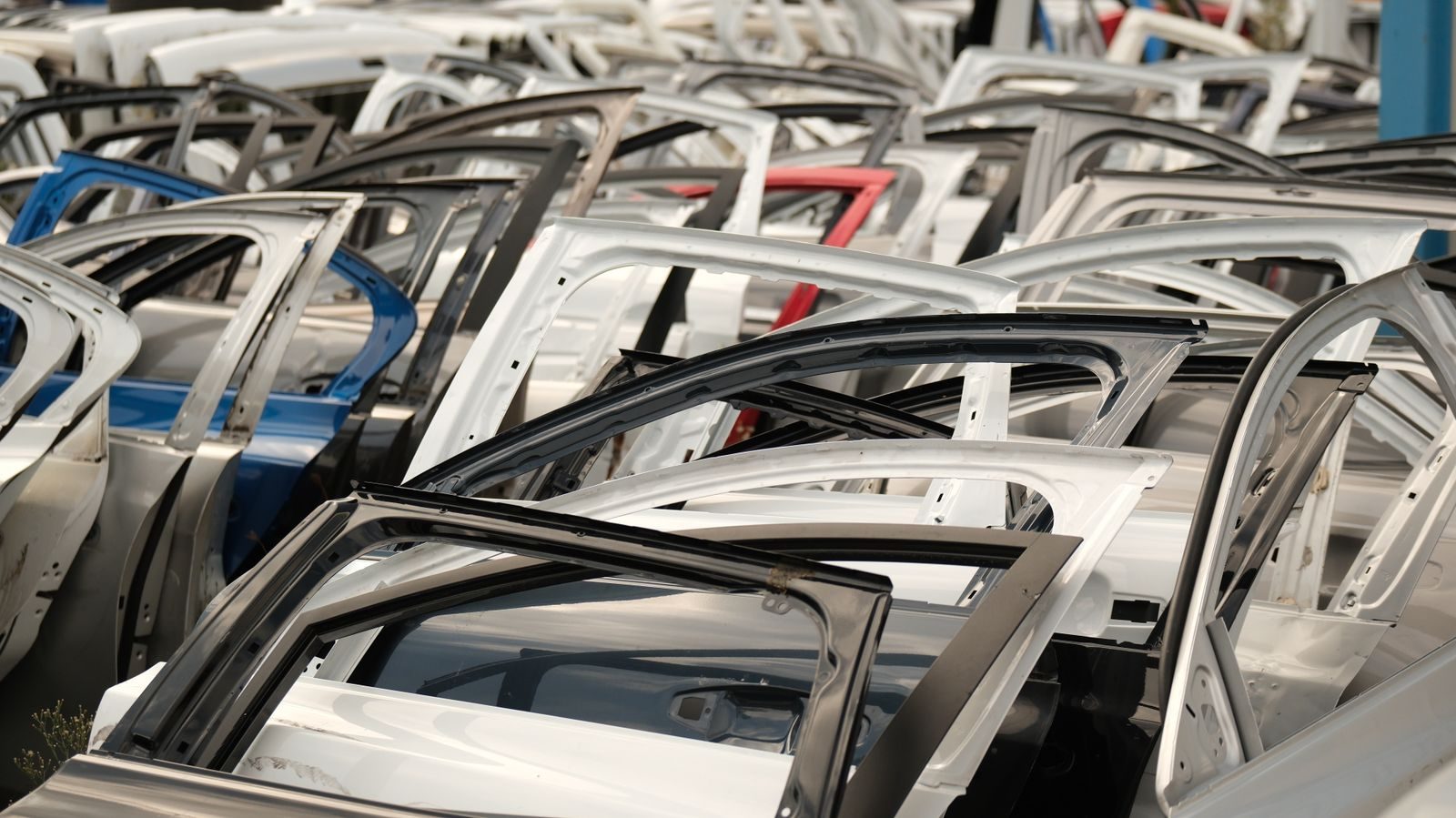
The Centre has amended India’s vehicle scrapping rules so that automakers still operating in India will not have to treat future recycling obligations as current liabilities. Under the change to the Environment Protection (End-of-Life Vehicles) Rules, 2025, unfulfilled Extended Producer Responsibility (EPR) obligations will arise only when a manufacturer permanently ceases operations.
The amendment was notified by the Ministry of Environment, Forest and Climate Change on November 20, 2026, Business Standard reported on November 24. It clarifies Rule 4(6) of the rules, which covers producer responsibilities when operations shut down. According to the notification, the provision “shall come into operation only upon permanent cessation of operations by the producers.”
What Changes Under the Amended Vehicle Scrapping Rules?
The End-of-Life Vehicles Rules came into force on April 1, 2025. They set annual scrapping targets for manufacturers, tied to vehicles they sold 15 to 20 years earlier. Automakers can meet these targets by buying EPR certificates from registered scrapping facilities through a centralised online portal. The certificates are based on the quantity of steel recovered from scrapped vehicles.
Under the amendment, operating automakers will not be required to recognise future recycling obligations as current liabilities. If a producer permanently ceases operations, it must provide details of transport vehicles introduced to the market in the preceding 15 years and non-transport vehicles introduced in the preceding 20 years. The Central Pollution Control Board (CPCB) will then assess and determine the company’s outstanding EPR obligations.
Why Automakers Sought Clarity on EPR Liabilities
Automakers had argued that the original rules, read with accounting standard Ind AS 37, could force them to make large provisions in their books for future scrapping costs on vehicles sold years earlier.
In a letter cited by Business Standard, the Society of Indian Automobile Manufacturers (SIAM) said: “Preliminary estimates indicate a potential one-time industry impact of approximately ₹25,000 crore on a gross basis.” The report put the discounted figure at about ₹9,000 crore for FY2025-26. IANS reported that industry observers see the amendment as adding regulatory clarity and removing uncertainty over balance-sheet impacts.
Industry executives had also warned that the accounting impact could become substantial once environmental compensation rates for non-compliance were notified. The reports reviewed do not say whether those rates have now been notified.
Market and Trade Reaction
No specific market or stock reaction to the amendment was reported in the sources reviewed. No individual automaker was named in the reports.
What Happens Next?
Annual scrapping targets under the ELV Rules continue to apply, and automakers still need EPR certificates to meet them. The amendment changes when unfulfilled obligations arise, not the targets themselves, and sets out CPCB’s role in assessing obligations if a producer permanently closes.
Frequently Asked Questions
What did the amendment to the vehicle scrapping rules change?
It clarifies that unfulfilled EPR obligations under the End-of-Life Vehicles Rules, 2025 arise only when a producer permanently ceases operations, not while it continues to operate in India.
When was the amendment notified?
The Environment Ministry notified it on November 20, 2026, according to Business Standard.
Who decides outstanding obligations if an automaker shuts down?
The Central Pollution Control Board will assess and determine the outstanding EPR obligations, based on vehicles sold in the preceding 15 years (transport) or 20 years (non-transport).
Source: Business Standard and IANS, November 24, 2026.














Leave a comment