
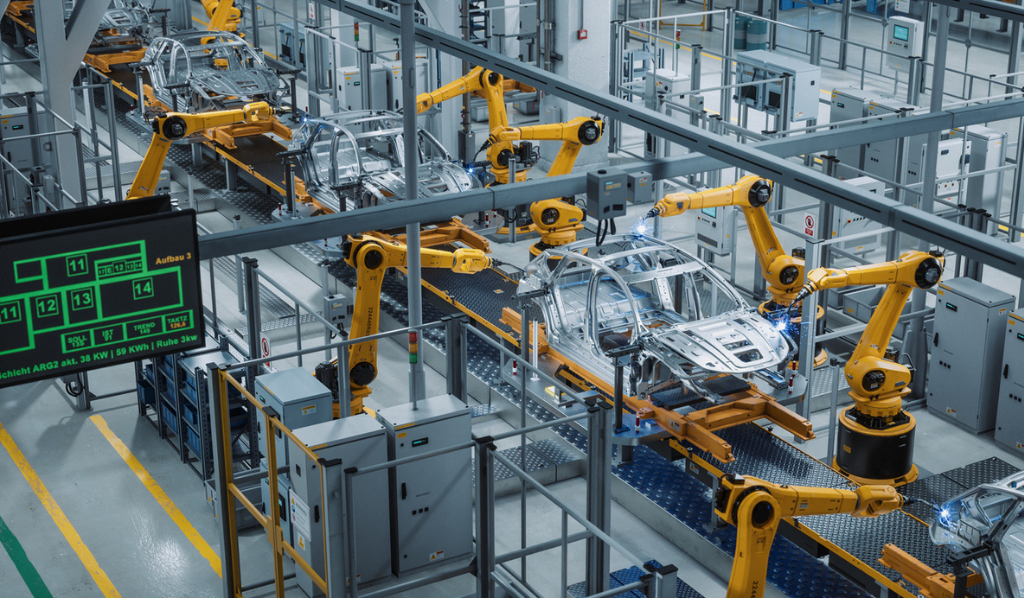
 PwC’s latest industrial manufacturing sector analysis reveals a startling trend: the share of manufacturers expecting to highly automate key processes will more than double from 18% to 50% by 2030. This “doubling effect” represents a fundamental shift in manufacturing strategy and will widen the competitive gap between technology leaders and laggards.\n\n## The Automation Acceleration Thesis\n\nThe shift from 18% to 50% adoption isn’t linear—it reflects an exponential acceleration in automation investment and implementation. Industrial automation has reached cost parity with manual labor in many geographies. Robotic arms, precision equipment, and AI-driven control systems are becoming economically rational investments, not premium add-ons.\n\nPost-pandemic supply chain disruptions have made automation attractive for resilience. Automated facilities require fewer workers, can operate under pandemic conditions, and provide real-time visibility into production processes. The integration of artificial intelligence into manufacturing systems enables predictive maintenance, real-time quality control, and dynamic production optimization, making automation substantially more valuable than previous generations.\n\n## Leaders and Laggards Divergence\n\nThe doubling of automation adoption will create a stark competitive divide. Leaders will achieve 30-40% cost reduction, 15-25% efficiency gains, superior product quality, and flexibility to pivot to new products faster. Laggards will experience cost inflation, margin compression, and difficulty retaining skilled labor.\n\n## Regional Implications for India\n\nIndia’s manufacturing growth story is contingent on automation adoption. Indian manufacturers must invest in automation and compete on quality, speed, and innovation. Recent developments underscore the acceleration: Rockwell Automation introduced AI-driven predictive maintenance solutions in February 2026, and Honeywell expanded its industrial IoT automation portfolio with advanced edge analytics platforms.\n\n## Investment Implications\n\nThe capital requirements for this automation wave are substantial. This creates significant opportunities for automation equipment manufacturers, software vendors, systems integrators, and training providers. By 2030, highly automated manufacturing will be the competitive norm, not the exception.

Technology & Electronics
The Doubling Effect—Industrial Automation Set to Accelerate From 18% to 50% by 2030




Related Articles








Leave a comment