

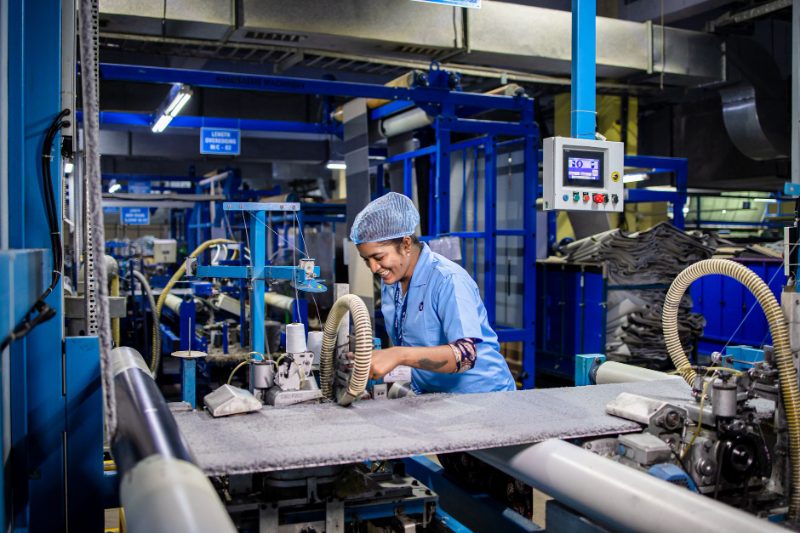
India’s auto PLI scheme allocation was doubled to Rs 5,940 crore (approximately US$672 million) in the February 2026 Union Budget, as the government looks to accelerate electric vehicle and auto component manufacturing. The expanded auto PLI scheme comes at a moment when India EV car sales just crossed 30,000 units in a single month for the first time, underscoring the scale of demand the incentive push is designed to support.
The Production Linked Incentive scheme for the automotive sector rewards manufacturers based on incremental sales of eligible vehicles and components, with a strong emphasis on advanced automotive technology including electric powertrains, battery packs, and specialized components. The budget increase follows a pattern seen across other manufacturing sectors, including food processing, where a similar PLI structure has already created 3.39 lakh jobs nationally.
Why Did India Double the Auto PLI Scheme Allocation?
The increase to Rs 5,940 crore reflects the government’s assessment that the original auto PLI outlay was undersubscribed relative to industry appetite for EV and component manufacturing investment, particularly as automakers race to localize battery and powertrain production. With around 51 new vehicle models expected to launch through 2026, more than 40 of them SUVs, and many featuring electric powertrains, the government appears to be timing the increased allocation to coincide with a wave of new manufacturing capacity commitments from both domestic and global automakers.
What Does This Mean for the Broader Automotive Manufacturing Industry?
A larger auto PLI scheme allocation is likely to benefit component makers supplying batteries, motors, and power electronics, as well as vehicle manufacturers such as Tata Motors and Mahindra that already lead India’s EV passenger vehicle segment with a combined market share above 70 percent alongside JSW MG Motor. It also supports downstream investment such as Maruti Suzuki’s new advanced manufacturing labs in Gujarat ITIs, which are designed to build a skilled workforce pipeline for modern automotive manufacturing roles. Component suppliers that fail to localize production risk losing ground to PLI-eligible domestic manufacturers.
Market Reaction and Industry Response
Automotive industry bodies have welcomed the doubled allocation as a signal of sustained government commitment to EV manufacturing, particularly following record electric car sales in June 2026. Component manufacturers have used the announcement to push for faster disbursement processes, noting that similar PLI schemes in other sectors have seen capacity build-out outpace incentive payout timelines. Industry watchers also note the scheme’s expansion comes as fuel prices have risen over Rs 7 per litre since mid-May 2026, adding another tailwind for EV adoption.
What Happens Next for India’s Auto PLI Scheme?
The Ministry overseeing the auto PLI scheme is expected to detail eligibility criteria and disbursement timelines for the expanded Rs 5,940 crore allocation in the coming months. Watch for new component manufacturing investment announcements, additional automakers committing to India-based EV and battery production, and whether the scheme is further expanded if EV sales momentum continues through the rest of 2026.
Frequently Asked Questions
How much is India’s auto PLI scheme now worth?
India doubled its auto PLI scheme allocation to Rs 5,940 crore, or approximately US$672 million, in the February 2026 Union Budget.
What is the goal of the auto PLI scheme?
The auto PLI scheme aims to accelerate domestic manufacturing of electric vehicles and auto components by rewarding manufacturers based on incremental sales of eligible products.
Why was the auto PLI scheme allocation increased now?
The increase coincides with record EV sales momentum, including India crossing 30,000 monthly electric car sales for the first time, and growing industry demand for battery and component manufacturing incentives.











Leave a comment