

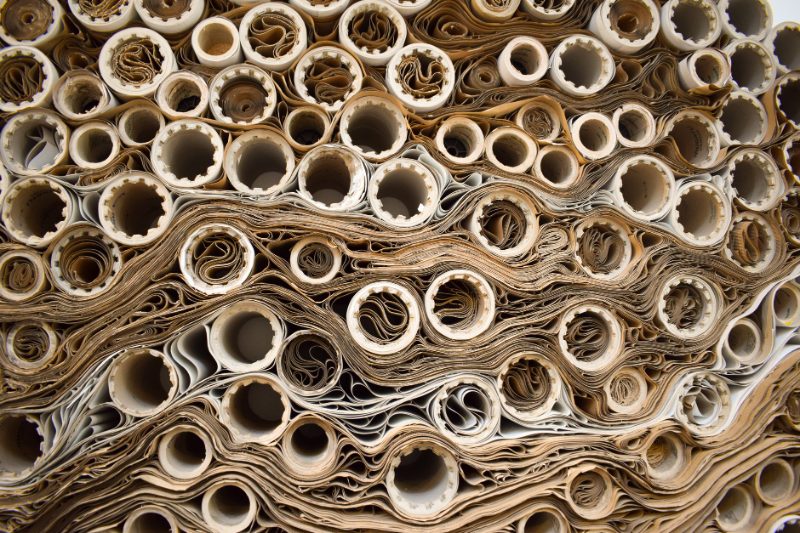
Pudumjee Paper Products has announced plans to develop a 68,000 metric tonne specialty paper facility at Mahad in Maharashtra’s Raigad district, targeting high-growth applications including stronger paper bags, food-contact packaging, and cupcake liners — segments where India currently imports significant volumes and where domestic demand is accelerating alongside food processing sector growth. The Pudumjee Paper Mahad facility represents one of the most significant specialty paper capacity additions in western India in over a decade.
Pudumjee Paper, listed on BSE (scrip: PUDUMJEPAP), is a Pune-based specialty paper maker with a history spanning over 70 years. The company is known for producing tissue, crepe, and food-contact specialty papers. The Mahad greenfield plant — to be developed over a five-year horizon — will nearly triple the company’s current capacity and specifically target import-substitution in food-grade and industrial specialty paper segments.
Why Is Pudumjee Paper Expanding into Specialty Paper at Mahad?
The Pudumjee Paper Mahad facility is a direct response to structural demand signals. India’s food processing sector, backed by ₹4,064 crore in Union Budget 2026-27 support, is expanding its use of paper-based food packaging as alternatives to plastic under EPR mandates. Stronger paper bags (replacing woven HDPE sacks) are seeing 20–25% annual demand growth in the grain, flour, and cement sectors. Food-contact specialty paper — for cupcake liners, baking parchment, burger wraps, and grease-proof sheets — is currently 60–70% import-dependent, with imports primarily from Germany, Finland, and China. At 68,000 MT of planned capacity, the Mahad plant would make Pudumjee Paper one of India’s top three specialty paper producers by volume, alongside ITC Paperboards and Seshasayee Paper and Boards.
What Is the Investment Outlay and Timeline for the Mahad Plant?
Pudumjee Paper has not disclosed a final capital expenditure figure publicly, but industry analysts estimate the 68,000 MT specialty paper greenfield project will require ₹700–900 crore in total investment, given comparable recent capacity additions in the sector. The five-year development timeline suggests phased commissioning: the first paper machine targeting food-contact grades could be operational by FY2028, with full capacity by FY2031. Mahad’s location in Maharashtra’s industrial belt offers logistical advantages — proximity to Mumbai Port (for pulp imports), the Pune–Mumbai Expressway corridor, and access to a skilled industrial labour pool in Raigad district. The Maharashtra Industrial Development Corporation (MIDC) has an active industrial zone at Mahad that already hosts chemical and polymer manufacturers.
Market Reaction and Industry Response
The Pudumjee Paper Mahad facility announcement has been positively received by the specialty paper trade. Shares of Pudumjee Paper outperformed the BSE SmallCap index in the weeks following the announcement, reflecting investor confidence in the company’s transition from a commodity crepe paper maker to a higher-margin specialty paper player. The India Agro and Recycled Paper Mills Association (IARPMA) noted that food-contact paper is the single fastest-growing specialty paper segment in India, with annual import substitution potential of ₹1,200–1,500 crore. Competitor West Coast Paper Mills has also signalled interest in food-grade paper grades, suggesting the segment will attract multiple capacity additions over the next five years.
What Happens Next?
Pudumjee Paper is expected to finalise land acquisition and environmental clearance for the Mahad site within 18 months. The company will likely approach banks for project finance in FY2026-27 and may consider a QIP or rights issue to partially fund equity requirements. Specialty paper capacity in India has historically taken 36–48 months from announcement to commissioning due to equipment lead times (paper machines are typically imported from Europe), so the FY2028 first-phase target is credible but tight. The BIS food-contact paper standards expected in Q3 2026 will also shape the exact product grades the Mahad plant certifies for.
Frequently Asked Questions
What is the Pudumjee Paper Mahad specialty paper plant?
Pudumjee Paper Products plans to build a 68,000 metric tonne specialty paper facility at Mahad, Raigad, Maharashtra over five years. The plant will produce food-contact specialty papers (burger wraps, cupcake liners, grease-proof sheets), stronger paper bags, and industrial specialty grades currently imported from Germany, Finland, and China.
Why is India building more specialty paper capacity in 2026?
India’s specialty paper market is growing at 15–20% annually, driven by EPR mandates reducing plastic packaging usage, food processing sector expansion, and QSR/bakery chains requiring food-grade paper in volume. India currently imports 60–70% of its food-contact specialty paper requirements, creating a large import-substitution opportunity for domestic manufacturers like Pudumjee Paper.
Where is India’s specialty paper industry heading by 2030?
India’s specialty paper segment is expected to become largely self-sufficient in food-contact and industrial grades by 2029-30, as capacity additions from Pudumjee Paper (Mahad), ITC Paperboards, and potential new entrants come online. The segment is expected to grow from approximately ₹4,500 crore in 2025 to over ₹9,000 crore by 2030, driven by the food processing boom and plastic packaging phase-down.







Leave a comment