

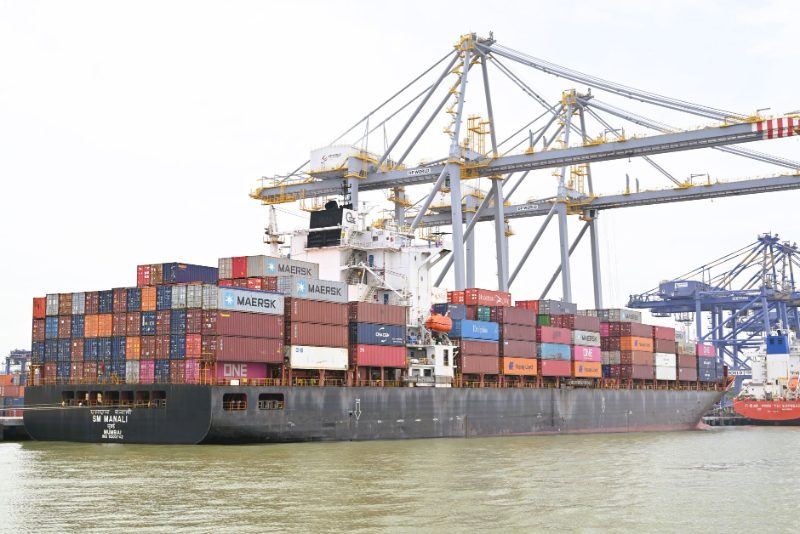
India’s merchandise exports rose 15.5% to $40.41 billion in June 2026, but a surge in imports drove the trade deficit to $30.43 billion — a 59% widening year-on-year — as higher global crude oil prices and strong domestic demand for electronic goods pushed imports to $70.84 billion. The data, released by the Ministry of Commerce, highlights record export performance alongside growing import pressures that traders and policymakers are monitoring closely.
June 2026 marks the fourth consecutive month of double-digit export growth for India, supported by improved market access from the EU-India FTA, strong global demand for Indian pharmaceuticals, and a competitive rupee. On a quarterly basis, exports for April–June 2026 rose 15.9% to $129.32 billion compared to the same period in 2025.
Which Sectors Drove India’s Export Growth in June 2026?
Engineering goods, pharmaceuticals, electronic goods, and textiles led India’s export expansion in June 2026. Pharmaceutical exports rose approximately 18% year-on-year, driven by the US generics market and growing demand in Africa and Southeast Asia. Electronic goods exports — including mobile phones assembled in India under the Production Linked Incentive (PLI) scheme — grew 22%, with Apple supplier Foxconn’s Sriperumbudur facility shipping record volumes. Textiles and garments gained from early EU-India FTA benefits, with European buyers increasing order volumes from Indian manufacturers.
Why Did India’s Trade Deficit Widen to $30.43 Billion in June 2026?
Imports surged 31% to $70.84 billion in June 2026, compared to $54.08 billion in June 2025, driven by three key factors: higher global crude oil prices (Brent at $78–80 per barrel versus $65–68 in June 2025) increased India’s oil import bill by approximately $4 billion; gold and silver imports jumped on festive season pre-buying; and electronic component imports rose as mobile phone manufacturers in India scaled production. The resulting trade deficit of $30.43 billion is the widest in nine months, up 59% from $19.10 billion in June 2025.
Market and Trade Reaction
The rupee weakened marginally to ₹83.5 per dollar on the import surge data before recovering. Exporters’ lobby body FIEO (Federation of Indian Export Organisations) called for faster duty drawback payments to boost exporter liquidity. The RBI, which monitors the Current Account Deficit (CAD), is expected to revise its CAD projection for 2026-27 upward to 1.5–1.8% of GDP from an earlier estimate of 1.2%, according to Motilal Oswal analysts. The BSE Metal and Energy indices were broadly stable, with oil marketing companies pressured by rising crude costs.
What Happens Next?
July 2026 export data will be keenly watched given the India-US trade deal deadline of July 22–24, which could immediately boost forward orders from US buyers. The Ministry of Commerce is expected to release June 2026 services trade data separately this week, which analysts project will show a services surplus of approximately $16–17 billion, partially offsetting the merchandise trade deficit. Full-year merchandise export targets for 2026-27 remain at $600 billion, requiring sustained 14–15% growth for the rest of the year.
Frequently Asked Questions
What were India’s merchandise exports in June 2026?
India’s merchandise exports rose 15.5% year-on-year to $40.41 billion in June 2026. For the April–June 2026 quarter, exports totalled $129.32 billion, a 15.9% increase over the same period in 2025, marking the fourth consecutive month of double-digit export growth.
Why has India’s trade deficit widened in June 2026?
India’s trade deficit widened to $30.43 billion in June 2026, up 59% from $19.10 billion in June 2025, primarily because imports surged 31% to $70.84 billion. Higher global crude oil prices, increased gold imports, and rising electronic component imports were the main drivers of the import surge.
How does the widening trade deficit affect the Indian rupee?
A wider trade deficit increases demand for foreign currency (primarily USD) to pay for imports, creating mild downward pressure on the rupee. However, strong foreign portfolio inflows into Indian equities and the RBI’s active forex management have helped keep the rupee broadly stable at ₹83–84 per dollar in 2026.













Leave a comment