

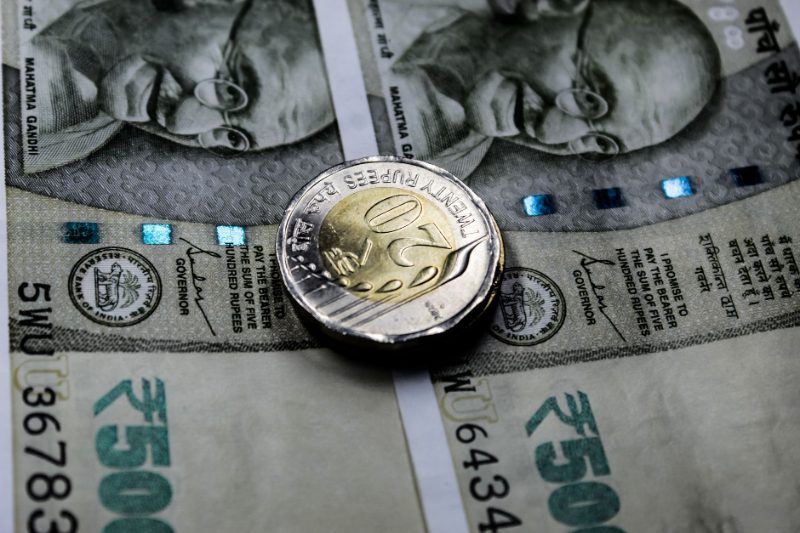
The Reserve Bank of India drew nearly $10 billion through its foreign currency swap window in July 2026 to bolster domestic market liquidity and stabilise the Indian rupee amid persistent exchange rate pressure. The RBI forex swap July 2026 intervention comes as the rupee faces a one-month low against the US dollar, driven by India’s record-high merchandise trade deficit of $30.43 billion in June, elevated crude oil import costs, and global dollar strengthening from ongoing US tariff uncertainty. India’s foreign exchange reserves remain robust at approximately $665 billion, giving the RBI ample firepower to act.
The RBI’s forex swap mechanism allows scheduled commercial banks and primary dealers to swap domestic rupees for US dollars with the central bank at a fixed rate, providing short-term dollar liquidity to the banking system. The $10 billion deployment through this window is among the largest single-window activations in the instrument’s history, reflecting the RBI’s proactive — and non-disruptive — approach to managing forex volatility without direct spot market intervention that could be seen as targeting a specific exchange rate.
Why Is the Indian Rupee Under Pressure in July 2026?
The Indian rupee is under pressure from a confluence of factors. India’s merchandise trade deficit widened 59% year-on-year to $30.43 billion in June, as imports — particularly crude oil (up 40% to $19.33 billion) and electronic goods (up 59% to $13.36 billion) — surged faster than exports. Global dollar strengthening, driven by a delayed US Federal Reserve rate cut outlook, has increased the attractiveness of dollar-denominated assets relative to emerging market currencies. Additionally, foreign portfolio investor (FPI) outflows from Indian debt markets have added to rupee selling pressure. The RBI forex swap July 2026 intervention is designed to address the resulting short-term dollar scarcity in the interbank market without making permanent drawdowns from reserves. Currency analysts at JP Morgan and Nomura have estimated a trading range of ₹84–88 per dollar for H2 FY27, with the RBI expected to prevent excessive volatility at either end of this range.
How Does the RBI Forex Swap Mechanism Work?
The RBI’s foreign currency swap is a liquidity management tool distinct from direct market intervention. Under the mechanism, banks exchange rupees for dollars with the RBI at a set swap rate, with a commitment to reverse the transaction at a future date. This creates a temporary dollar injection without permanently affecting India’s forex reserves, which stand at approximately $665 billion — providing around nine months of import cover. RBI Governor Sanjay Malhotra has characterised the central bank’s forex policy as “dynamic and calibrated,” aimed at preventing excessive volatility rather than targeting a specific exchange rate. The RBI forex swap July 2026 complements the central bank’s June 2026 MPC decision to hold the repo rate at 5.25% with a neutral stance, maintaining overall monetary stability while addressing short-term liquidity dislocations.
Market and Trade Reaction
The RBI’s forex swap window deployment helped stabilise the rupee-dollar rate in mid-July after a brief period of volatility. Banking sector stocks — particularly those with significant dollar-denominated exposure including HDFC Bank, Axis Bank, and Kotak Mahindra Bank — saw modest gains of 0.8–1.5% as the liquidity injection improved dollar availability at competitive rates. India’s IPO market maintained momentum alongside the forex intervention: Indian Gas Exchange filed a DRHP with SEBI for an offer-for-sale IPO, and Adani Properties reached a market capitalisation of ₹90,400 crore, up 72.5% year-to-date. India’s top 100 brands reached a combined value of $252.8 billion in 2026, up 7%, with Tata Group valued at $33.6 billion. The Nifty 50 remained broadly stable in mid-July, hovering around the 26,800 level as the forex intervention reduced a key source of market uncertainty.
What Happens Next for the Indian Rupee?
The RBI will continue monitoring the rupee and deploying forex management tools as needed through Q2 FY27. The next key inflection points include the August 3–5 MPC meeting — where a 25 basis point rate cut, if delivered, could affect rupee dynamics by reducing the interest rate differential with developed markets. India’s July trade data (released in mid-August) will indicate whether the trade deficit begins to normalise as energy prices moderate. The expiry of US Article 122 tariffs on July 24, 2026 is expected to reduce India’s import burden in some categories from August. Corporates with USD payables in the near term should consider hedging strategies given the current volatility environment. India’s participation in the BRICS 2026 summit in September may also generate investment commitments that support capital inflow and rupee stability in Q3.
Frequently Asked Questions
Why did the RBI use a forex swap in July 2026?
The RBI used its foreign currency swap window to inject nearly $10 billion into the domestic banking system in July 2026 to address short-term dollar scarcity caused by India’s elevated trade deficit, global dollar strengthening, and foreign portfolio investor outflows. The RBI forex swap July 2026 reduces USD/INR volatility without permanently depleting India’s foreign exchange reserves, which remain strong at approximately $665 billion.
What are India’s foreign exchange reserves in July 2026?
India’s foreign exchange reserves stood at approximately $665 billion as of early July 2026, providing approximately nine months of import cover. This comfortable reserve position allows the RBI to deploy tools such as forex swaps and direct market intervention as needed to manage exchange rate volatility without risk of reserve depletion.
What is the Indian rupee trading range for H2 FY27?
Currency analysts at JP Morgan and Nomura project the Indian rupee will trade in a range of approximately ₹84–88 per US dollar in H2 FY27 (October 2026–March 2027). The range reflects the balance between India’s current account deficit widening, RBI intervention via the forex swap and other tools, FPI flow dynamics, and global crude oil price movements. The RBI forex swap July 2026 reflects the central bank’s intent to keep volatility within this range.












Leave a comment