

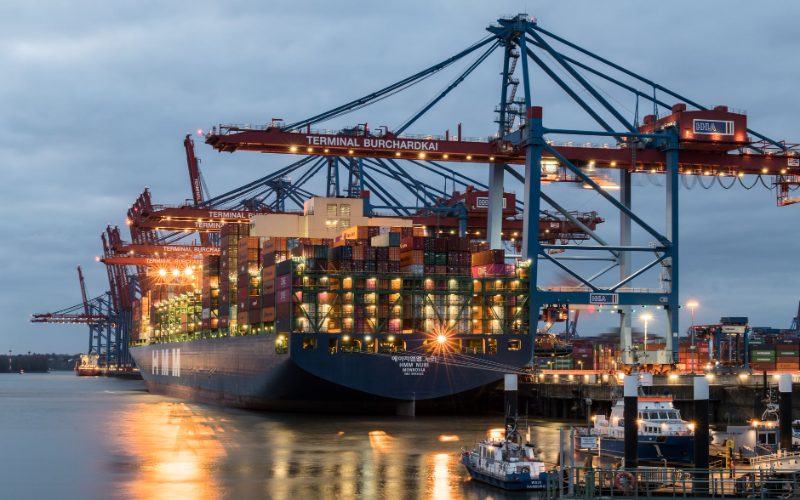
The Federation of Indian Export Organisations, FIEO, has written to Union Minister of Ports, Shipping and Waterways Sarbananda Sonowal seeking urgent intervention as escalating ocean freight surcharges squeeze Indian exporters. The trigger is a fresh Peak Season Surcharge of US$5,000 per container that global carrier CMA CGM has imposed, effective August 15, on cargo moving from India, Pakistan, Sri Lanka, the Middle East Gulf and Red Sea ports to the US East Coast, Gulf Coast and inland US destinations.
FIEO Director General Dr. Ajay Sahai said exporters are facing mounting shipping-related challenges that need timely government intervention, and the body has sought an urgent meeting with the ministry to discuss both immediate relief and long-term fixes to India’s maritime logistics ecosystem. The letter points to continuing West Asia and Red Sea disruptions that have pushed mainline carriers to reduce direct calls at Indian ports, forcing more export cargo through transhipment hubs such as Colombo, Singapore and Jebel Ali.
How Are Rising Freight Surcharges Affecting Indian Exporters?
FIEO’s letter details a chain reaction: reduced direct vessel connectivity is forcing cargo onto feeder services and transhipment routes, which adds transit time, extra handling and container-availability pressure on top of the new $5,000-per-container PSS. Alongside CMA CGM’s move, Maersk has raised its Emergency Contingency Surcharge on Indian Subcontinent-to-North Europe cargo, with South and East India shipments rising to $3,800 per 20-foot container from $2,800, and North West India cargo to $3,500 from $2,500. FIEO says these compounding charges directly erode the price competitiveness of Indian goods just as the country targets $2 trillion in merchandise and services exports by 2032.
What Do Exporters and Officials Say?
FIEO has asked the ministry to rationalise freight rates and improve transparency in freight and contingency charges, restore direct mother vessel calls at Indian ports, ensure adequate vessel availability and build contingency mechanisms against future geopolitical shocks to shipping. The organisation frames this as a structural resilience issue rather than a one-off pricing dispute, arguing that repeated surcharge cycles tied to West Asia tensions leave exporters unable to price contracts with confidence.
Market and Trade Reaction
Freight forwarders and logistics providers serving Indian exporters say bookings to the US Gulf and East Coast, and to North Europe, are seeing higher landed costs pass through to shippers with little room for negotiation given constrained vessel capacity. Exporters in container-heavy sectors such as engineering goods, textiles and chemicals are reporting the sharpest margin pressure, since freight forms a larger share of landed cost for these lower-value, high-volume categories compared with high-value cargo.
What Happens Next?
FIEO is awaiting a response from the shipping ministry on its request for an urgent meeting, and exporters will be watching whether the government engages directly with carriers on rate transparency ahead of the CMA CGM surcharge taking effect on August 15. MSC has separately announced revised South Asia-Europe freight rates effective August 16, valid through the end of the month, meaning exporters face another round of pricing changes within days regardless of the ministry’s response.
Frequently Asked Questions
Why is FIEO seeking government intervention now?
FIEO says compounding freight surcharges from carriers including CMA CGM and Maersk, combined with reduced direct vessel calls due to West Asia disruptions, are raising Indian exporters’ shipping costs and hurting competitiveness, prompting the letter to the shipping ministry.
How much is the new CMA CGM surcharge?
CMA CGM has introduced a Peak Season Surcharge of US$5,000 per container, effective August 15, on cargo from India, Pakistan, Sri Lanka, the Middle East Gulf and Red Sea ports bound for the US East Coast, Gulf Coast and inland destinations.
What is FIEO asking the government to do?
FIEO wants the shipping ministry to rationalise freight rates, improve charge transparency, restore direct mother vessel calls at Indian ports, ensure vessel availability, and build contingency plans against future geopolitical shipping disruptions.












Leave a comment