


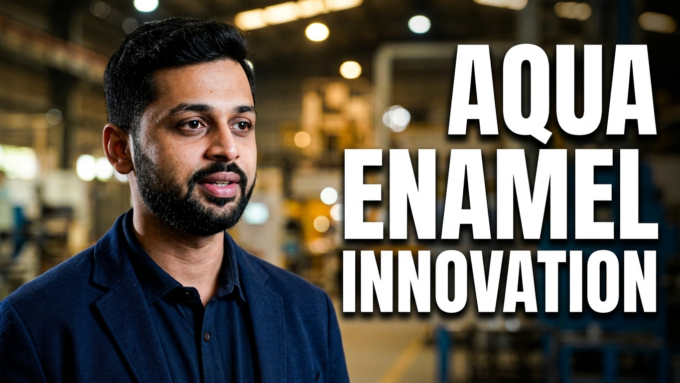
Insights from Mr. Mukund Ramrao Hulyalkar – five decades in industrial chemical engineering, recipient of the Udyog Shri Award, and author of the industry-standard guide “Paint Doctor.”
For most of its history, a coating’s value was measured by two jobs: making a surface look good, and forming a passive barrier against the elements. That definition is no longer enough. As infrastructure grows more complex and regulatory scrutiny intensifies – with materials like fluorosurfactants (Teflon) facing bans and even staples like titanium dioxide under review – the industry is shifting toward what Mr. Hulyalkar, widely known as the “Paint Doctor,” calls the coating’s “third job”: active, smart functionality. This is no longer an optional upgrade. It has become an ROI-driven necessity for asset lifecycle management, starting with the most destructive threat of all – fire.
The Chemistry of Swelling: How Intumescent Paint Defies Fire
Intumescent coatings are the first line of defense in preserving structural integrity during a fire’s critical early window, engineered to deliver fire-resistance ratings ranging from one to three hours – enough time for evacuation and first responders to act.
The mechanism is a precise chemical reaction: when exposed to heat, the coating expands into a thick, carbon-rich char. Three ingredients drive this transformation:
- Monoammonium Phosphate (MAP) – an acid catalyst that initiates carbonisation by forming phosphoric acid.
- Pentaerythritol – the carbon source that builds the physical char barrier.
- DCDA (Dicyandiamide) – a blowing agent that releases gas to expand the coating into a thermal foam, similar to a “firework snake” toy.
Modern standards also demand a move away from hazardous halogen- and chlorine-based compounds. These were historically effective, but release toxic chlorine gas during combustion – in an enclosed high-rise, chlorine inhalation can cause suffocation before flames even arrive. The Paint Doctor’s insistence on chlorine-free formulations is as much a safety mandate as a chemical one, keeping air breathable during emergency evacuations.
Why Metal Needs Fireproofing: Debunking the Myth of Invincible Steel
A common misconception is that steel, being non-combustible, is immune to fire. In reality, structural steel is highly vulnerable to heat: at 600–700°C, it softens and loses roughly half its load-bearing capacity.
The collapse of the Twin Towers remains the most cited case study in this field – the buildings didn’t melt; the intense heat caused the I-beams to soften and bend, triggering a progressive structural collapse. This risk is amplified in modern construction, which has moved from reinforced cement concrete toward lighter, more heat-vulnerable I-beam frameworks. Fireproofing has consequently become a non-negotiable requirement under updated municipal codes – the Brihanmumbai Municipal Corporation (BMC), for instance, now mandates fire-retardant coatings for flat front doors and designated refuge areas in high-rises.
The Silent Guardians: Hygiene and Antimicrobial Coatings
In pharmaceutical labs, food processing units, and operation theatres, surface-level biosecurity is a prerequisite for ISO compliance. Traditional paints are often porous, allowing mold and bacteria to take hold.
One key innovation here is “coving.” Standard 90-degree wall-to-floor junctions act as biological traps – microscopic buildup points that ordinary cleaning can’t reach. By applying high-performance epoxy coatings to create seamless, D-shaped curves at these junctions, manufacturers eliminate the physical niches where pathogens hide. These systems matter for three reasons: they actively inhibit fungal and bacterial growth through integrated antimicrobial agents, their seamless non-porous surfaces are mandatory for facilities seeking international health certifications, and they’re engineered to withstand aggressive chemical sterilisation protocols that would degrade a decorative paint.
The Magic of Encapsulation: Self-Healing and Controlled Release
The cutting edge of coatings technology lies in microencapsulation – trapping active ingredients inside microscopic spheres that release their contents over time, turning a coating into an ongoing service rather than a one-time application.
The most transformative use of this is self-healing coatings. These systems embed microcapsules filled with epoxy resins and latent hardeners. When the coating is scratched or impacted, the capsules rupture at the point of damage and release resin to seal the breach – preventing sub-film corrosion before it can reach the metal substrate and meaningfully extending the asset’s lifespan. The same principle is being applied to pest control: encapsulated herbal insect and mosquito repellents provide a slow, controlled release that stays effective for years, effectively turning a building’s walls into a long-term pest-management system.
Water on Tap: The Extreme Engineering of Pipeline Coatings
Infrastructure projects like India’s “Jal se Nal Tak” scheme represent the far edge of coatings engineering. Protecting drinking water infrastructure from corrosion is both a chemical and logistical challenge – internal linings require BPA-free, solvent-less epoxies (such as Liquid Epoxy GY 250) to guarantee potable water safety.
Applying these coatings relies on an innovative “hot spray” process: heating the epoxy to 50°C temporarily lowers its viscosity, allowing a single-pass application that achieves a thickness of 1,000 microns without sagging or solvent entrapment – a genuine engineering feat that ensures a dense, non-toxic barrier certified for public health.
For aging external pipelines, Mr. Hulyalkar has also pioneered a repair method using canvas bandages soaked in high-performance epoxy and hardener. It’s effective enough that the resulting “epoxy pipe” can maintain full functional integrity and water pressure even after the underlying metal has completely rusted through.
Taken together, these innovations mark a clear direction for the industry: coatings are no longer passive films sitting on a surface, but engineered materials that actively protect, heal, and respond – safeguarding both national infrastructure and public safety in the process.










Leave a comment