

India and Denmark adopted a new five-year India-Denmark Joint Action Plan on Saturday, 28 November 2026, at the 5th India-Denmark Joint Commission Meeting in New Delhi. External Affairs Minister S. Jaishankar and Danish Foreign Minister Lars Løkke Rasmussen co-chaired the meeting at Hyderabad House, where the two sides also signed three memorandums of understanding (MoUs).
According to ETV Bharat, the Ministry of External Affairs said the India-Denmark Joint Action Plan would “guide the next phase of bilateral cooperation”. Jaishankar described the plan as “laying the groundwork of our multidimensional cooperation for the next five years”. The MoUs cover a Cultural Exchange Programme; Skill Development, Vocational Education and Entrepreneurship; and cooperation between India’s International Financial Services Centres Authority (IFSCA) and the Danish Financial Supervisory Authority. Rasmussen also met Commerce and Industry Minister Piyush Goyal separately during the visit.
What Does the India-Denmark Joint Action Plan Cover?
The Joint Commission discussed defence, artificial intelligence and other emerging technologies, space and Arctic cooperation, and new dialogues on technology and climate, ETV Bharat reported. Both sides reviewed the Green Strategic Partnership, launched in 2020 by Prime Minister Narendra Modi and Danish Prime Minister Mette Frederiksen for climate action, clean energy and sustainable development. Jaishankar said the partnership “has given our relationship a very distinctive character”.
The ministers also reviewed implementation of the Migration and Mobility Partnership Agreement signed in 2024. They welcomed steps to operationalise a partnership between the Kerala government and the Danish Ministry of Senior Citizens to recruit nurses and healthcare helpers.
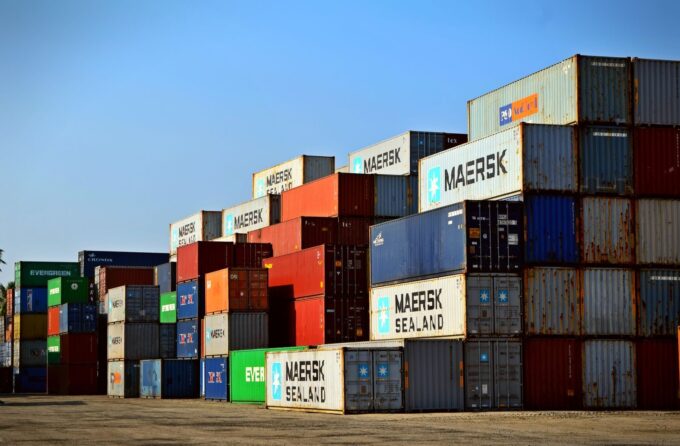
On trade, Goyal said after his meeting with Rasmussen: “We discussed strengthening bilateral trade & economic cooperation.” No new trade or investment figures were announced. ETV Bharat noted that Danish shipping group A.P. Moller-Maersk handles about 19% of India’s container trade.
Why Did Rasmussen Visit Bengaluru First?
Before the Delhi meeting, Rasmussen spent Friday, 27 November, in Bengaluru, ANI reported. He met representatives of C-CAMP, quantum technology firm QpiAI, the Indian Space Research Organisation (ISRO) and Hindustan Aeronautics Limited (HAL). The ISRO discussions covered space-sector cooperation, including openings for Danish small businesses and startups. At HAL, the visit highlighted Danish company HBK, whose components are used in the ALH Dhruv and the Light Combat Helicopter, and in research and development testing of the Tejas fighter jet.
Rasmussen also met Karnataka IT Minister Priyank Kharge and Danish companies to discuss Global Capability Centres (GCCs) and India’s technology workforce. “You have an enormous talent pool with exactly the skills that Danish companies are looking for,” he said. Innovation Centre Denmark released a report titled “Access to Tech Talent in India”, which looks at how Denmark can recruit skilled Indian professionals amid labour shortages at home. ANI reported that Danish companies Carlsberg, PowerCurve and Norican Group are investing in or expanding in Karnataka.
Market and Trade Reaction
No market or trade reaction specific to the Joint Commission was reported by the sources reviewed. The meeting comes as India deepens ties with Europe: ETV Bharat noted that the India-EU Free Trade Agreement, whose negotiations concluded in January, is expected to be signed in December.
What Happens Next?
The new India-Denmark Joint Action Plan replaces the earlier plan that ran up to 2026 and will frame cooperation over the next five years. The signed MoUs, including the IFSCA tie-up with Denmark’s financial regulator, now move to implementation. Indian exporters and service companies will be watching for follow-up on the healthcare recruitment partnership, technology dialogues and Danish investment in GCCs.
Frequently Asked Questions
What is the India-Denmark Joint Action Plan?
It is a five-year plan adopted at the 5th India-Denmark Joint Commission Meeting on 28 November 2026. The Ministry of External Affairs said it will guide the next phase of bilateral cooperation.
Which MoUs did India and Denmark sign?
Three MoUs: a Cultural Exchange Programme; Skill Development, Vocational Education and Entrepreneurship; and an agreement between IFSCA and the Danish Financial Supervisory Authority.
Who led the talks?
External Affairs Minister S. Jaishankar and Danish Foreign Minister Lars Løkke Rasmussen co-chaired the meeting. Rasmussen also met Commerce Minister Piyush Goyal on trade and economic ties.
Source: ETV Bharat, 28 November 2026; ANI via The Tribune, 28 November 2026.











Leave a comment