

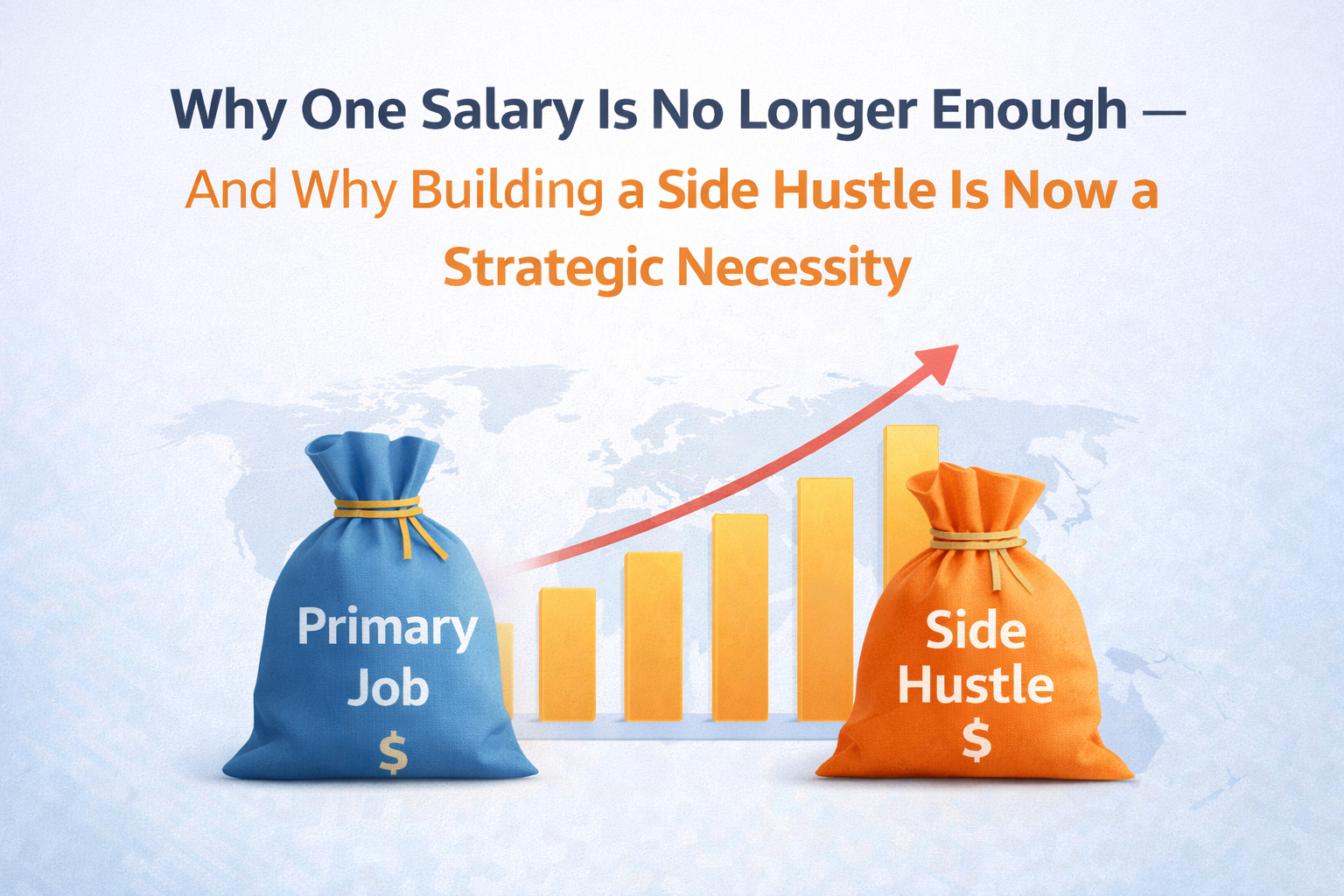
For decades, the formula for financial stability was simple: secure a job, build seniority, retire with savings.
That model no longer reflects reality.
Today’s global economy is defined by volatility. Industries are being reshaped by automation, companies restructure without warning, and inflation consistently outpaces wage growth. Employment still matters — but relying on a single income source has become a financial risk.
This is why professionals across age groups, industries, and geographies are increasingly building side hustles — not as a lifestyle trend, but as a strategic response to economic change.
THE STRUCTURAL SHIFTS BEHIND THE SIDE HUSTLE ECONOMY
Employment security has weakened. Corporate loyalty has been replaced by operational efficiency.
Technology has lowered barriers to entrepreneurship. Anyone can now launch services or digital products.
Real incomes are under pressure as living costs rise faster than salaries.
HOW MODERN PROFESSIONALS STRUCTURE THEIR INCOME
Primary Employment: 55%
Side Hustle: 25%
Investments: 12%
Digital Income Streams: 8%
FROM EMPLOYMENT TO OWNERSHIP THINKING
- Employment Model:
Depend on one employer
Fixed salary
Career progression
Job security
- Ownership Model:
Multiple income sources
Flexible cash flow
Asset creation
Skill security
WHAT COUNTS AS A SIDE HUSTLE
Freelancing, consulting, digital products, newsletters, e-commerce, SaaS, B2B services, content monetisation.
AI AND AUTOMATION
AI removes average performance. Creativity, execution speed, distribution, and expertise now matter more than titles.
INDUSTRIAL FRONT PERSPECTIVE
Side hustles are not rebellion.
They are risk management.
CONCLUSION
A single salary provides stability.
Multiple income streams provide resilience.
The most valuable investment today is ownership of skills, audiences, and opportunities.









Leave a comment