

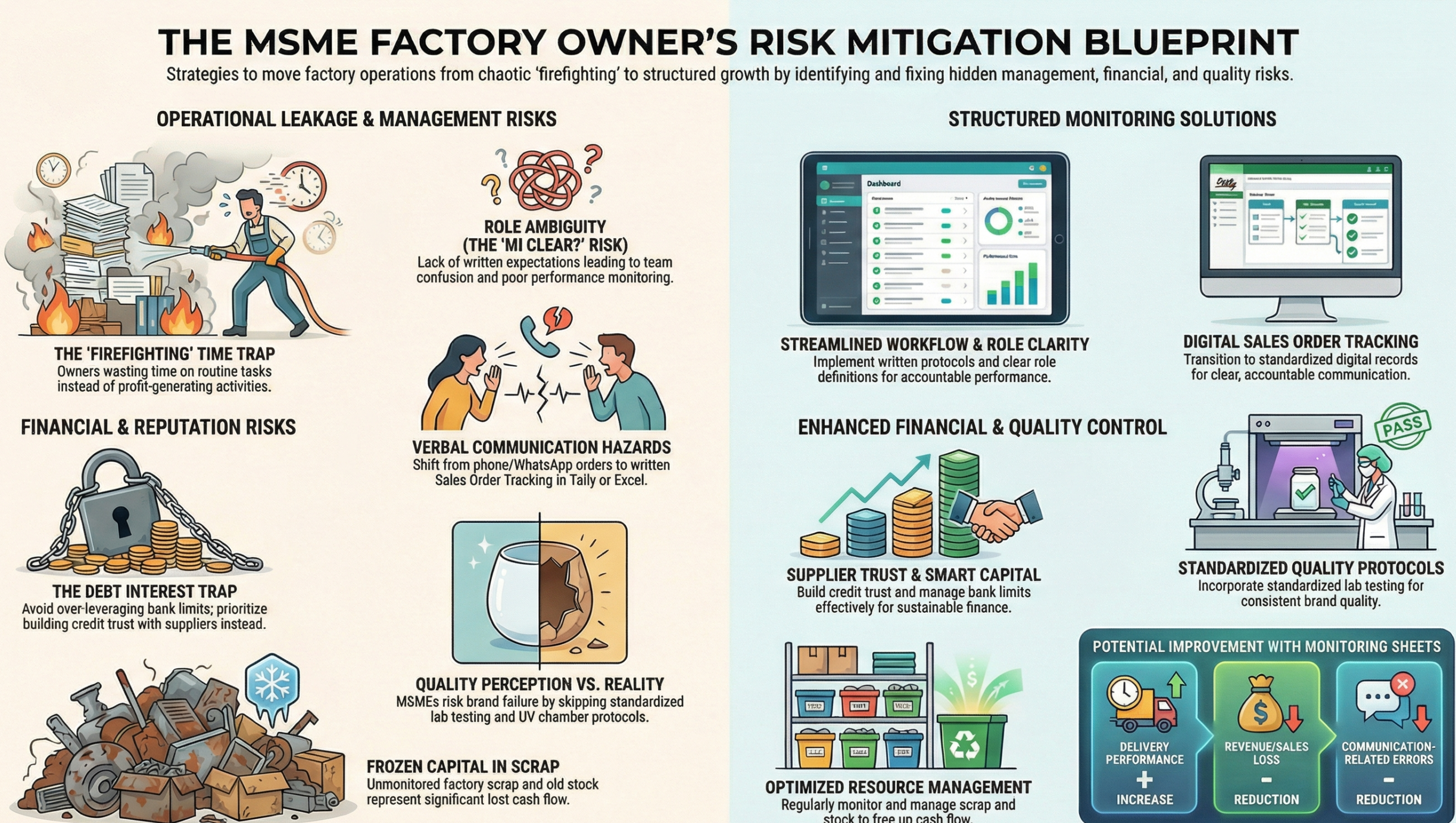
In a technical discussion hosted by PAINTVISION, Vishal Gupta and other industry experts outline critical strategies for factory owners to improve cash flow, quality, delivery, and cost management. The discussion focuses on transitioning from routine “firefighting” to structured, profit-driven growth.
1. Mastering Time and Team Efficiency
A factory owner’s most valuable asset is their time. To maximize productivity, owners must move away from routine tasks and focus on high-impact activities.
- Clarity of Expectations: Many employees are unproductive simply because they lack clarity on their roles. Owners should review their organizational structure and explicitly define what is expected of every core team member.
- The “Rakkha” Concept (KRA): Performance should be monitored through Key Result Areas (KRAs)—or as described in the session, “Rakkha” (Responsibility and Accountability).
- The 80/20 Rule: Out of 50 daily activities, usually only 5 to 6 actually drive wealth and profit. Owners must identify these core tasks and delegate, automate, or eliminate the rest.
- Daily Management Sheets: Implementing a simple sheet to track 5–6 key daily activities for each staff member helps monitor whether time is being spent on value-added work or non-essential routines.
2. Streamlining Orders and Delivery
Efficient delivery performance is critical for revenue protection and customer satisfaction.
- Sales Order Tracking: Owners must always know their “Order Outstanding” position. Using tools like the Sales Order Outstanding Report in Tally allows a business to see exactly what has been received, what is dispatched, and what remains balanced.
- The 15-Minute Standing Meeting: To avoid time-wasting, factories should hold brief standing meetings to track orders line-by-line. This ensures the entire team is synchronized and provides consistent answers to customer inquiries.
- Min/Max Inventory Levels: For regular products, maintaining a Minimum/Maximum (Min/Max) stock level allows for immediate dispatch, separating the pressure of production from the urgency of delivery.
- Digital Communication: Shifting from phone calls to written communication (e.g., WhatsApp or mobile apps) for order updates saves significant time and creates a clear record of commitments.
3. Financial Health and Working Capital
Managing cash flow effectively involves optimizing internal resources rather than just increasing bank debt.
- Physical Stock-Taking: Conducting a physical audit often reveals significant “hidden” capital in the form of ignored raw materials or finished goods, which can reduce the need for new purchases for weeks.
- The “Supplier as a Donor”: By maintaining a reputation for timely payments and strong commitments, MSMEs can build relationships where suppliers prioritize them and offer credit. This essentially makes the supplier a “donor” for the unit’s growth, reducing reliance on high-interest bank loans.
- Scrap Management: Regular disposal of factory scrap prevents it from rusting away and frees up both physical space and immediate cash.
4. Elevating Quality and Market Perception
To compete with large multinational corporations (MNCs), MSMEs must bridge the quality perception gap.
- Consistent Testing: A major weakness in the small-scale sector is the failure to use existing testing equipment. Factories must prioritize batch-by-batch testing (using spray chambers and UV testers) to ensure their products meet the same parameters as top-tier brands.
- Psychological Marketing Shift: The industry suggests a new marketing approach: presenting paint as a disinfectant or health tool rather than just a decorative item. Promoting the idea that a clean, freshly painted home is a “virus-free” and healthy environment can drive significant post-lockdown demand.
5. The Power of the Paint Vision Forum
Individual MSMEs often struggle against the procurement power of large brands. The Paint Vision Forum offers a collaborative solution.
- Bulk Purchasing: Group purchasing and tendering help smaller units reduce raw material costs.
- Technical Support: The forum provides access to laboratory testing, chemist recruitment, and expertise to help MSMEs meet government specifications and improve their product quality.











Leave a comment