

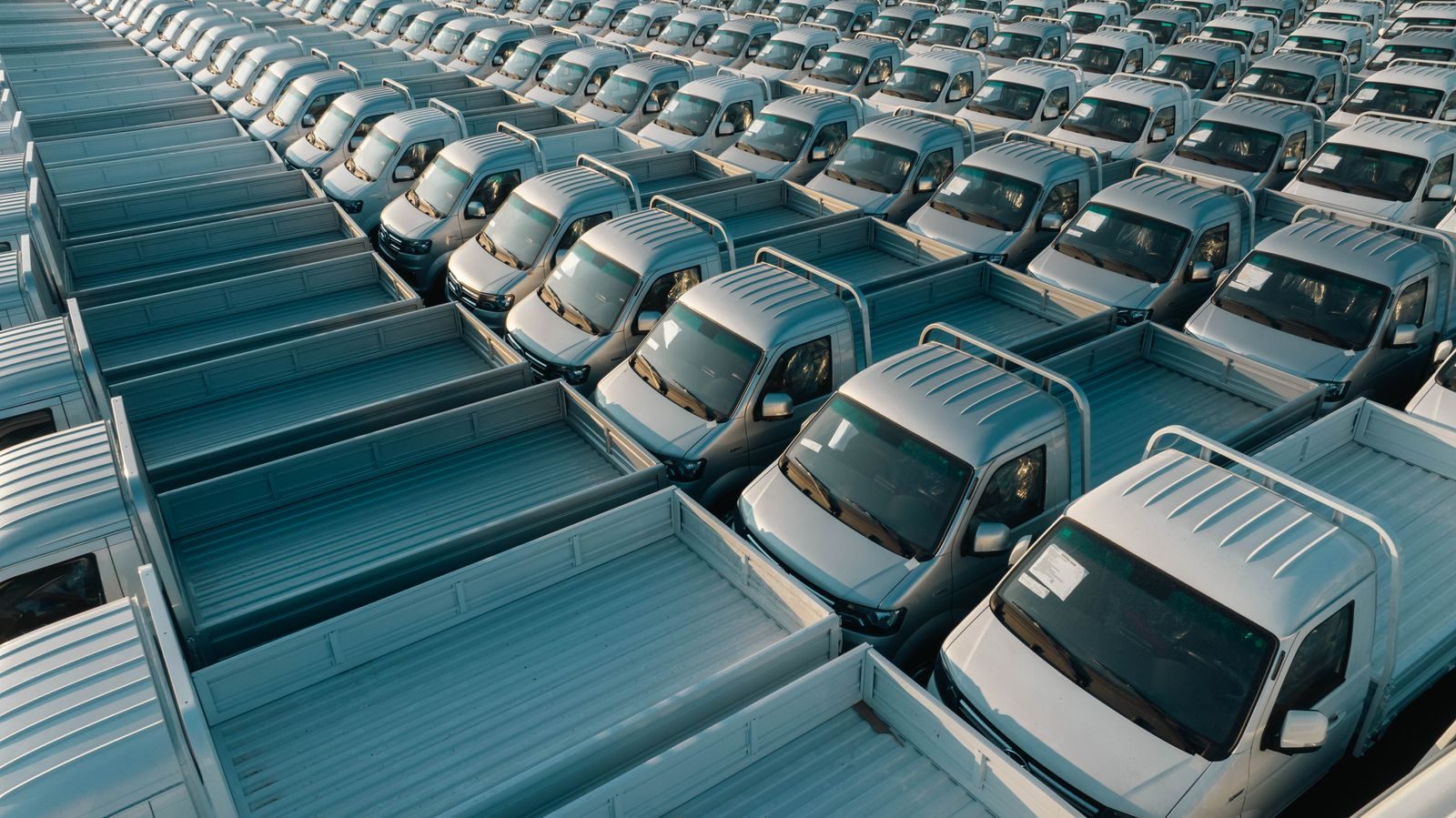
An Ashok Leyland greenfield plant is now under evaluation after its factories ran at close to 90% capacity utilisation in the September quarter. MD & CEO Shenu Agarwal shared the plans on the company’s Q2 FY27 earnings call with analysts, as reported by Autocar Professional on 16 November 2026.
The commercial vehicle maker said demand is being supported by resilient freight activity and fleet replacement. The capacity pressure follows several quarters of sustained volume growth.
Why Is an Ashok Leyland Greenfield Plant Being Considered?
According to Agarwal, the company’s assets ran at “close to 90% capacity utilization” in the quarter. In the near term, Ashok Leyland is carrying out low-capex debottlenecking at its main integrated plants in Hosur (Tamil Nadu), Pantnagar (Uttarakhand) and Ennore (Tamil Nadu).
Alongside this, it is evaluating a new greenfield vehicle plant. The company has not disclosed a location, capacity, investment amount or timeline for it.
Earlier this month, West Bengal Chief Minister Suvendu Adhikari said the state had held preliminary talks with Ashok Leyland on a commercial vehicle unit at Singur, the former Tata Nano site. Speaking at the unveiling of the state’s new investment promotion policy, he said: “We have held preliminary talks with a reputed commercial heavy vehicle manufacturer, Ashok Leyland.” The report did not say whether these talks are connected to the greenfield evaluation.
What Does This Mean for Auto Component Suppliers?
Agarwal said assembly-line output must be matched by capacity upstream. Ashok Leyland is working with key component suppliers to:
- identify Tier-1 bottlenecks
- secure firm capacity commitments
- build alternate sourcing pipelines
- align supplier capex with its medium-term volume forecasts
For component makers, this points to more capacity planning tied directly to the OEM’s volume outlook, rather than order-by-order supply.
How Are Other Truck Makers Handling Capacity?
The report noted different approaches across the industry. Tata Motors has avoided large greenfield chassis plants and is using line rebalancing, flexible manufacturing and shift changes across Jamshedpur, Pune, Lucknow and Pantnagar. VECV, the Volvo Group–Eicher joint venture, is executing Phase 2 expansion at Bagroda (Bhopal) for light-to-medium trucks and electric buses, and building a Rs 544-crore greenfield transmission plant at Vikram Udyogpuri. Mahindra & Mahindra is running phased debottlenecking and plans long-term capacity additions at Chakan and Zaheerabad through FY28.
Ashok Leyland’s own recent projects include a greenfield clean-mobility plant in Lucknow, Uttar Pradesh, which recently became operational, and construction of a 4 GWh captive battery pack assembly unit at Pillaipakkam near Chennai, which could later expand to 8–12 GWh. Its core heavy-duty ICE (internal combustion engine) truck capacity, however, remains tightly used.
Market Reaction and Industry Response
The source report did not cover a share price reaction, and no comment from industry bodies on the plant evaluation was found at the time of writing.
What Happens Next?
Debottlenecking at Hosur, Pantnagar and Ennore continues in the near term. Any decision on the greenfield plant — including its location — has not yet been announced.
Frequently Asked Questions
What is Ashok Leyland’s current capacity utilisation?
MD & CEO Shenu Agarwal said the company’s assets ran at close to 90% capacity utilisation in Q2 FY27.
Where will Ashok Leyland’s new greenfield plant be built?
No location has been announced. West Bengal’s Chief Minister has said preliminary talks were held about a unit at Singur.
Which existing plants are being debottlenecked?
The integrated plants at Hosur and Ennore in Tamil Nadu, and Pantnagar in Uttarakhand.
Source: Autocar Professional, 16 November 2026.










Leave a comment