

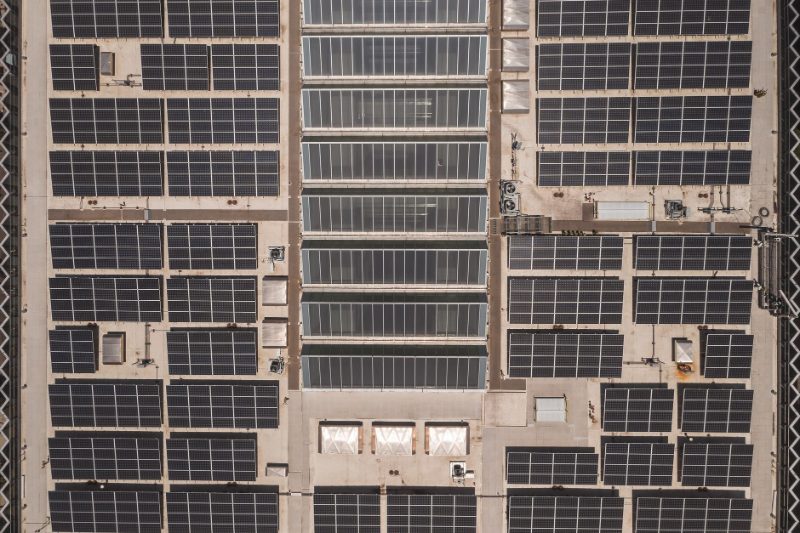
The Chhattisgarh government has launched the DWEEPTI Yojana, India’s first women-led distributed renewable energy policy, to turn rural self-help group members into solar entrepreneurs. The scheme targets 5,000 women-run solar enterprises and 50,000 green jobs, marking one of the most ambitious state-level attempts to combine gender empowerment with clean energy expansion.
DWEEPTI stands for Decentralised Women Empowerment on Energy and Policy for Transformative Inclusion. It was developed by Chhattisgarh’s Panchayat and Rural Development Department together with Transform Rural India under the state’s Green Economy Transition Mission, and is designed to extend clean energy access to 5 lakh families and 10,000 public institutions across the state.
How Does the DWEEPTI Yojana Turn Women Into Solar Entrepreneurs?
Under the DWEEPTI Yojana, 13 Cluster Level Federations across 12 districts have already been registered as authorised vendors under the Pradhan Mantri Surya Ghar Muft Bijli Yojana, working in partnership with the Chhattisgarh State Power Distribution Company Limited. Kabirdham district became the first implementation site, where the Vande Mataram Cluster Level Federation was registered as an authorised solar vendor with support from Zila Panchayat Kabirdham. With Tata’s technical support, around 35 women from self-help groups have already been trained in rooftop solar installation, forming the state’s first batch of “Solar Didis.” Flexible loans are also being extended to help SHG members adopt solar solutions and build sustainable livelihoods under the Lakhpati Didi initiative.
What Do Rural Development Officials Say About the Scheme’s Impact?
State officials describe the DWEEPTI Yojana as a deliberate attempt to move women’s self-help groups beyond micro-enterprises like tailoring or food processing into a higher-value, technical sector: rooftop solar installation and servicing. By linking the scheme to the Pradhan Mantri Surya Ghar Muft Bijli Yojana vendor network, Chhattisgarh is effectively creating a parallel, women-run distribution channel for India’s national rooftop solar push, rather than treating renewable energy entrepreneurship as a male-dominated technical trade.
Market and Trade Reaction
While DWEEPTI is a state-level social policy rather than a listed-market catalyst, solar equipment vendors and financing institutions operating in Chhattisgarh are watching the rollout closely, since 5,000 new small enterprises represent a meaningful expansion of retail demand for rooftop solar panels, batteries, and installation hardware in rural markets that have traditionally been underserved by formal solar retailers. Microfinance lenders tied to the Lakhpati Didi initiative are also expected to see increased loan demand as SHG members take up solar installation work.
What Happens Next?
Chhattisgarh plans to scale the Cluster Level Federation vendor model beyond the current 13 federations across 12 districts, with Kabirdham serving as the template implementation site for replication elsewhere in the state. The next milestones to track are the expansion of trained “Solar Didi” cohorts beyond the initial 35 women, and progress toward the scheme’s 5,000-enterprise and 50,000-green-job targets, which will likely be reported in subsequent state government progress updates.
Frequently Asked Questions
What is the goal of the DWEEPTI Yojana?
The DWEEPTI Yojana aims to create 5,000 women-led solar enterprises and 50,000 green jobs by training rural self-help group members as authorised solar vendors and installers across Chhattisgarh.
Which district implemented the DWEEPTI Yojana first?
Kabirdham district was the first implementation site, where the Vande Mataram Cluster Level Federation was registered as an authorised solar vendor under the scheme.
How are women trained under the DWEEPTI Yojana?
With technical support from Tata, around 35 women from self-help groups have been trained in rooftop solar installation, forming Chhattisgarh’s first group of “Solar Didis,” with flexible loans available to support further adoption.













Leave a comment