

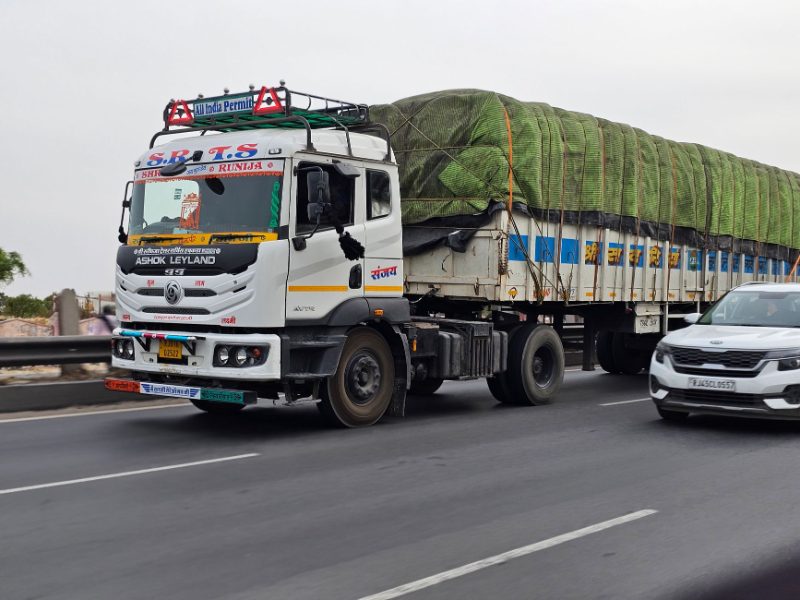
JSW Greentech launched Ampstar, its new electric commercial vehicle brand, in Mumbai on September 22, 2026, backing the entry into electric trucks and buses with a ₹2,500 crore first-phase investment. The Sajjan Jindal-led group plans to commit up to ₹12,000 crore to the electric commercial vehicle business over the next five to seven years, marking one of the largest single-company bets on India’s electric truck and bus segment so far.
Ampstar will initially sell 55-tonne electric tractor-trailers aimed at the steel, cement, mining and port sectors, alongside electric buses ranging from 7 to 18 metres for staff transport, city services, school routes and airport-tarmac operations. Both fixed and swappable battery architectures will be offered, giving fleet operators flexibility on charging downtime versus upfront cost. Manufacturing is based at a 90-acre plant in Chhatrapati Sambhajinagar, Maharashtra, which broke ground in October 2024 and is designed for an annual capacity of 15,000 vehicles, split between 10,000 buses and 5,000 trucks.
Why Is JSW Entering India’s Electric Commercial Vehicle Market Now?
JSW Group already runs roughly 17,000 trucks across its steel, cement and port operations, giving Ampstar a captive base of closed-loop, predictable routes to prove out electric trucks before expanding to the open market. “The primary idea was to be a catalyst in changing the way India moves,” said Sajjan Jindal, JSW Group Chairman, at the Mumbai launch. Sumit Mittal, CEO of JSW Greentech, said the strategy behind Ampstar centres on customisation: “Our product is customised depending on features and application.” The Maharashtra facility is being positioned as the first Indian commercial vehicle plant with an electro-deposition coating system, a manufacturing step more commonly seen in passenger car plants than in truck and bus factories, and one that JSW says will improve corrosion resistance and paint durability.
What Does the Ampstar Launch Mean for India’s Commercial Vehicle Industry?
Ampstar will sell directly to fleet operators under a B2B model rather than building a nationwide dealership network, offering outright purchase, cost-per-kilometre contracts, wet-lease arrangements, financing, charging infrastructure, maintenance and battery-as-a-service plans. This mirrors the approach taken by other new entrants in India’s electric truck and bus space, where total cost of ownership rather than upfront price drives fleet buying decisions. Established commercial vehicle makers such as Ashok Leyland and Tata Motors, which already sell electric buses and are separately expanding battery manufacturing, now face a well-capitalised rival with in-house demand from JSW’s own logistics-heavy businesses. The move also adds JSW to a growing list of large industrial groups diversifying into electric mobility, alongside steel, cement and energy interests. India’s broader push toward electrifying heavy-duty transport, backed by government incentives for commercial EV adoption and rising diesel costs for fleet operators, gives brands like Ampstar a favourable policy backdrop as they scale up production.
Market Reaction and Industry Response
The launch drew coverage across trade publications including Autocar Professional and Forbes India, which highlighted the scale of JSW’s planned ₹12,000 crore commitment as one of the larger single-company bets on electric commercial vehicles in India to date. Analysts tracking the sector note that JSW’s steel and cement logistics give Ampstar a demand cushion most EV truck startups lack, potentially shortening the path to commercial viability for its 55-tonne tractor-trailer line. Component suppliers and battery makers are also watching closely, since a 15,000-unit annual capacity plant represents meaningful fresh demand for electric drivetrains, battery packs and charging hardware in the domestic supply chain.
What Happens Next?
Ampstar’s first deliveries are expected to prioritise JSW’s own logistics network before wider fleet sales begin. The company has signalled plans to expand beyond tractor-trailers into tippers, fixed-body trucks and dumpers as the Maharashtra plant ramps toward its 15,000-unit annual capacity. Industry watchers will be tracking further details on vehicle pricing, financing partners, battery-swap network rollout and how quickly Ampstar can convert its captive JSW demand into third-party fleet contracts over the coming quarters.
Frequently Asked Questions
What is JSW Ampstar?
Ampstar is JSW Greentech’s new brand for electric trucks and buses, launched in Mumbai on September 22, 2026, with a ₹2,500 crore first-phase investment and plans to scale to ₹12,000 crore over five to seven years.
Where will Ampstar vehicles be manufactured?
Ampstar vehicles are made at a 90-acre facility in Chhatrapati Sambhajinagar, Maharashtra, designed for an annual capacity of 15,000 vehicles, including 10,000 electric buses and 5,000 electric trucks.
Who will buy Ampstar’s electric trucks and buses first?
JSW Group’s own steel, cement and port operations, which run about 17,000 trucks, are expected to be early adopters, giving Ampstar a captive, closed-loop customer base before it expands to third-party fleet operators.







Leave a comment