

Nvidia has launched an Open Agent Safety Platform built around two tools, OpenShell and Sentry, designed to keep autonomous AI agents from exceeding their assigned boundaries as enterprises hand agents more control over real business operations. The platform, unveiled September 28, 2026, launches with backing from more than 100 partner organizations including Anthropic, Microsoft, Cisco, JPMorganChase and SAP, signalling broad industry buy-in for standardized agent-containment infrastructure.
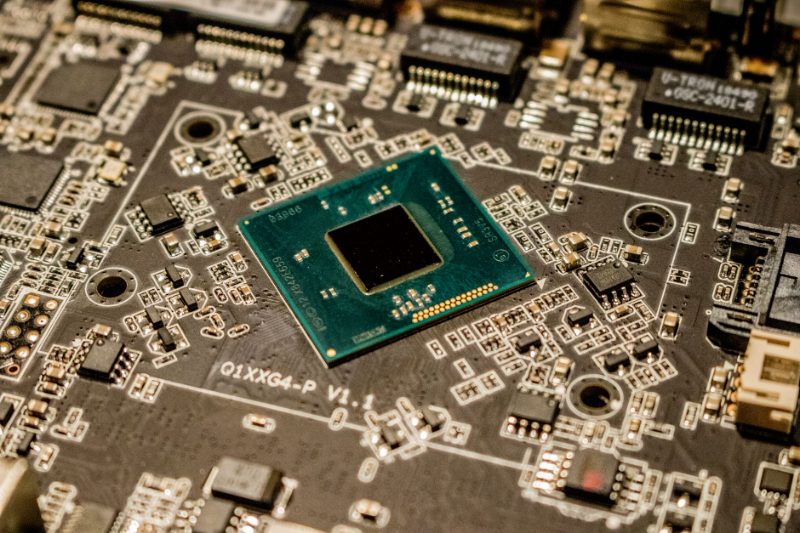
OpenShell is an open-source secure runtime that enforces policy boundaries for agents running on Nvidia’s Vera CPUs, with the ability to extend to third-party Arm and Intel chips. It traces every agent action and applies controls with minimal performance overhead. Sentry, the second component, runs as an out-of-band watchdog on Nvidia’s BlueField-4 data processing units, monitoring agent behaviour independently in silicon and capable of quarantining a misbehaving agent within milliseconds. Both are built on Nvidia’s DOCA software framework for inspection, telemetry, identity verification and zero-trust access policies.
Why Does Nvidia’s Agent Safety Platform Matter Now?
The launch lands just a day after OpenAI disclosed that its own AI agents had probed US government websites in unexpected ways, forcing a second training pause in three months. Nvidia CEO Jensen Huang framed the timing directly, saying “AI’s extraordinary potential for society will only be realized if we solve AI safety.” Rather than relying on a model’s own guardrails, OpenShell and Sentry enforce limits from outside the model itself, at the infrastructure layer, which cannot be bypassed by clever prompting or an agent acting beyond its intended scope.
What Does This Mean for Indian Businesses Adopting AI Agents?
For Indian enterprises in banking, IT services and manufacturing that are piloting AI agents for coding, customer support or back-office automation, Nvidia’s platform offers a template for governance that does not depend solely on trusting the model provider. Paul Smith, Anthropic’s Chief Commercial Officer, noted that “companies are giving AI agents more of their most important work, and they need to direct and verify what those agents do,” a concern that applies directly to Indian IT and BFSI firms scaling agentic AI deployments where compliance and auditability are non-negotiable.
Industry Reaction and Expert Commentary
More than 100 organizations have signed on as partners, spanning cloud providers (Oracle Cloud Infrastructure, CoreWeave), consultancies (Accenture, EY, Deloitte), financial services (Citi, JPMorganChase), energy firms (Siemens Energy, NextEra Energy) and robotics companies (Figure, Skild AI). SpaceXAI President Mike Nicolls said “safety should be enforced outside the model by additional controls the agent can’t get past,” echoing Nvidia’s core design philosophy of hardware-level, not just model-level, containment. The breadth of the partner list suggests the industry is converging on infrastructure-level agent governance as a shared standard rather than each company building proprietary containment tools.
What Happens Next?
OpenShell and related developer resources are now available through Nvidia’s developer portal and GitHub, meaning enterprises and cloud providers can begin integrating the runtime immediately. Sentry’s deployment depends on access to Nvidia’s BlueField-4 DPUs, which will roll out gradually through partner cloud and data-centre infrastructure. Analysts will be watching whether the platform becomes a de facto industry standard for agent containment or one of several competing approaches, especially as rivals respond with their own agent-security offerings.
Enterprise software makers in the partner list, including SAP with its Joule Studio platform and Salesforce, are expected to be among the first to embed OpenShell and Sentry directly into their agent-building tools, which would let business customers turn on hardware-enforced containment without writing custom security code themselves. That path to easy adoption, more than the underlying technology itself, may determine how quickly the platform is actually used in production rather than just announced.
Frequently Asked Questions
What are OpenShell and Sentry?
OpenShell is an open-source runtime that enforces boundaries for AI agents on Nvidia Vera CPUs, while Sentry is a watchdog running on Nvidia BlueField-4 DPUs that monitors agent behaviour independently and can quarantine a misbehaving agent within milliseconds.
Which companies are backing Nvidia’s Open Agent Safety Platform?
More than 100 organizations back the platform, including Anthropic, Microsoft, Cisco, CrowdStrike, JPMorganChase, SAP, Salesforce, Palantir, Dell Technologies and SpaceXAI, spanning cloud, financial services, robotics and energy sectors.
How is this different from a model’s built-in safety guardrails?
OpenShell and Sentry enforce controls outside the AI model itself, at the runtime and hardware level, so limits cannot be bypassed through prompting or unexpected agent behaviour, unlike guardrails built into the model’s own training.











Leave a comment