

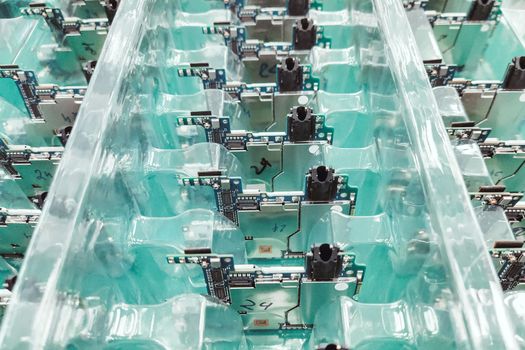
Prime Minister Narendra Modi inaugurated India’s first major semiconductor packaging plant — the CG Semi Outsourced Semiconductor Assembly and Test (OSAT) facility in Sanand, Gujarat on July 4, 2026. The ₹7,600 crore facility, backed by a joint venture between CG Power and Industrial Solutions, Japan’s Renesas Electronics America, and Thailand’s Stars Microelectronics, marks a defining milestone in India’s semiconductor manufacturing ambitions.
The OSAT facility is currently transitioning to active commercial production with a capacity of 20 crore chip units annually, scaling to a peak of 4.7 billion units over the next five years. The plant serves the automotive, industrial, consumer electronics, telecom, 5G, IoT, and power sectors — covering the full breadth of India’s electronics manufacturing ecosystem.
What Is India’s CG Semi OSAT Facility and Why Does It Matter?
The CG Semi OSAT facility in Sanand is India’s first commercial-scale semiconductor assembly and test plant under the India Semiconductor Mission. OSAT — Outsourced Semiconductor Assembly and Test — handles the critical post-fabrication stages of chip manufacturing: packaging silicon wafers into chips and testing them for functionality. While India has not yet built a full chip fabrication (fab) plant, OSAT is a strategically significant first step, enabling Made-in-India semiconductors to be packaged and shipped to global OEMs in Japan, the US, and Europe. The ₹7,600 crore investment represents roughly $870 million — one of India’s largest electronics manufacturing commitments to date.
How Will India’s Semiconductor OSAT Facility Impact AI and Tech Industries?
India’s AI ambitions depend heavily on chip availability. With global semiconductor supply chains still recovering from post-COVID disruptions and US-China chip trade tensions tightening access to advanced semiconductors, India’s domestic OSAT capability provides a degree of supply chain independence. The Sanand facility targets chips for IoT, 5G, and power management — all foundational to India’s AI infrastructure rollout. Nasscom estimates India’s AI services sector already generates $10–12 billion in annual revenue, and local chip packaging will progressively reduce the import cost of semiconductor components that underpin India’s data centres, 5G towers, and EV powertrains.
Industry Reaction and Expert Commentary
PM Modi called the facility “a beacon of international collaboration bridging domestic, Japanese, and Thai industry partners — a robust model of technological trust and cross-border partnership.” CG Power’s management described the plant as “India’s first real step toward semiconductor self-reliance.” BusinessToday reported that Made-in-India chips from Sanand will be exported to Japan, US, and Europe, making this not just an import-substitution play but a genuine export opportunity. Analysts at CLSA noted the facility puts India on track to capture 4–5% of the global OSAT market by 2030.
What Happens Next?
The Sanand OSAT plant is expected to reach its initial capacity of 20 crore annual units by end of 2026, with a five-year roadmap to 4.7 billion units annually. The India Semiconductor Mission has approved three additional OSAT and chip packaging projects that are expected to break ground before 2027. A full silicon fabrication facility — requiring investment of $10 billion or more — remains India’s longer-term ambition, with Tata Electronics and Tower Semiconductor actively progressing plans for a fab in Gujarat.
Frequently Asked Questions
What is an OSAT facility and what does CG Semi do?
An OSAT (Outsourced Semiconductor Assembly and Test) facility handles the packaging and testing of semiconductor chips after the wafers are fabricated. CG Semi, a joint venture between CG Power, Japan’s Renesas, and Thailand’s Stars Microelectronics, packages chips for automotive, consumer electronics, 5G, and IoT applications at its Sanand, Gujarat plant.
How much did India invest in the CG Semi semiconductor facility?
The CG Semi OSAT facility in Sanand, Gujarat represents a ₹7,600 crore ($870 million) investment, making it one of India’s largest electronics manufacturing commitments. The facility was inaugurated by PM Modi on July 4, 2026 and is capable of producing 20 crore chip units annually.
Will India export semiconductors from the Sanand facility?
Yes. Made-in-India chips from the CG Semi OSAT facility in Sanand are targeted for export to Japan, the US, and Europe, in addition to serving India’s domestic electronics and EV manufacturing industries. This positions the facility as both an import-substitution asset and an export revenue generator.












Leave a comment