

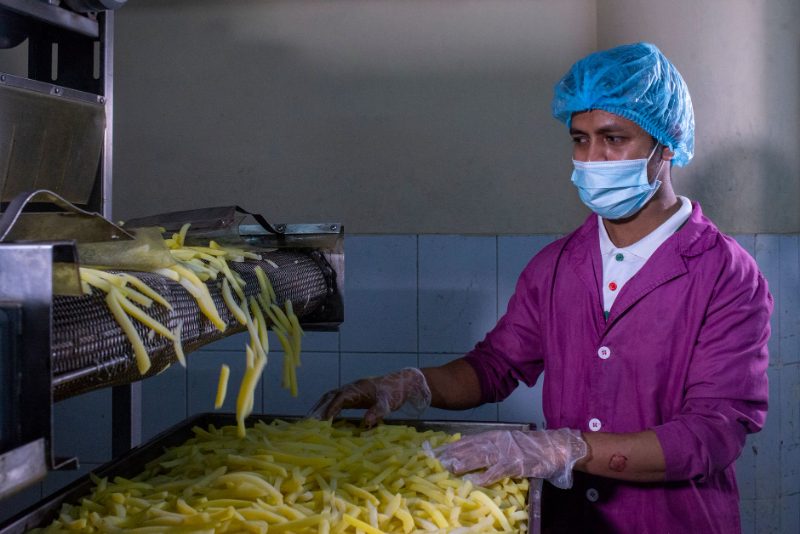
Delhi-based frozen food brand Protein Pantry has raised Rs 9 crore in a seed funding round led by Sharrp Ventures, the family office of the Mariwala family, the company confirmed on September 22, 2026. The high-protein, ready-to-cook food maker will use the capital to scale in-house manufacturing, expand its supply chain and deepen research and development.
Founded in November 2025 by Disha Bhattacharya and Prashanth Bhushan, Protein Pantry makes clean-label, high-protein frozen foods free of refined flour, preservatives and palm oil, with products engineered to a 1:10 protein-to-calorie ratio. The round also saw participation from Peercheque, Consumer Collective by Atrium, Indian Silicon Valley Capital, and angel investors including Varun Alagh, Rishubh Satiya, Avnish Anand, Arush Chopra and Saurabh Munjal.
Why Are Investors Backing a High-Protein Frozen Food Startup Now?
Protein Pantry has already built a base of more than 30,000 households across Delhi, Mumbai, Bengaluru and Jaipur, selling directly to consumers and through quick-commerce platforms including Blinkit, FirstClub and Flipkart Minutes, with what the company describes as strong repeat purchase rates. All manufacturing is currently done in-house, a structure investors see as key to maintaining product quality and protein-to-calorie consistency as the company scales. The funding comes as demand for high-protein, convenience-led food formats continues to grow across urban India, with quick-commerce platforms accelerating the path to market for niche, better-for-you food brands.
What Does This Mean for India’s Frozen and Packaged Food Segment?
Protein Pantry’s seed round adds to a wave of investor interest in India’s frozen and functional food segment, where brands are competing to combine health positioning with the speed of quick commerce. The company’s focus on eliminating refined flour, preservatives and palm oil places it within a broader clean-label trend reshaping India’s packaged food industry, as consumers increasingly scrutinise ingredient lists even for convenience formats. With manufacturing kept in-house rather than outsourced, Protein Pantry is positioning itself to control quality and unit economics more tightly than brands relying on contract manufacturers, a model likely to be tested as it scales into new cities.
Market Reaction and Industry Response
The round’s investor mix, spanning a strategic family office in Sharrp Ventures alongside consumer-focused funds and a roster of angel investors from India’s D2C ecosystem, reflects continued confidence in India’s better-for-you food category despite a broader slowdown in early-stage consumer funding through 2026. Sharrp Ventures, the Mariwala family’s investment vehicle, has backed multiple consumer and wellness brands in recent years, and its lead role in this round signals continued appetite for functional food bets even at the seed stage.
What Happens Next?
Protein Pantry plans to expand into six additional cities, Pune, Kolkata, Lucknow, Chandigarh, Ludhiana and Chennai, by the end of 2026, alongside continued investment in manufacturing capacity and product development. The company’s ability to maintain quality and repeat purchase rates while scaling into new geographies over the next 12-24 months will be a key test of whether its in-house manufacturing model can support rapid growth.
The seed round also underscores how quick commerce has reshaped the go-to-market playbook for India’s newer food brands, letting a company founded less than a year ago reach 30,000-plus households without first building a large direct-to-consumer logistics operation of its own. By listing on platforms such as Blinkit, FirstClub and Flipkart Minutes from an early stage, Protein Pantry has been able to test demand across multiple cities quickly, data that likely informed the six-city expansion plan investors are now backing.
Founders Disha Bhattacharya and Prashanth Bhushan have positioned the brand within a broader shift in Indian packaged food toward high-protein, minimally processed formats, a category that has drawn increasing consumer and investor attention as fitness and nutrition awareness grows in urban India. With in-house manufacturing as a core differentiator, the company will need to balance capacity additions carefully against demand growth in each new city to avoid the operational strain that has affected some rapidly scaling direct-to-consumer food brands in the past.
Frequently Asked Questions
How much funding did Protein Pantry raise and who led the round?
Protein Pantry raised Rs 9 crore in a seed round led by Sharrp Ventures, the Mariwala family’s investment office, with participation from several other investors and angels.
What makes Protein Pantry’s products different?
The brand makes high-protein, ready-to-cook frozen foods with no refined flour, preservatives or palm oil, engineered to a 1:10 protein-to-calorie ratio, and manufactured entirely in-house.
Where does Protein Pantry plan to expand next?
The company plans to expand into Pune, Kolkata, Lucknow, Chandigarh, Ludhiana and Chennai by the end of 2026, building on its current presence in Delhi, Mumbai, Bengaluru and Jaipur.











Leave a comment