

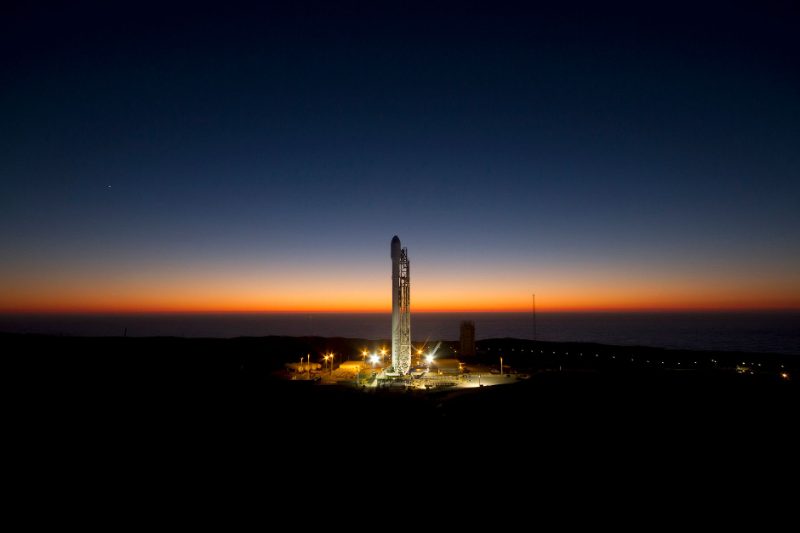
Hyderabad-based Skyroot Aerospace has announced a launch window between July 12 and August 4 for the maiden orbital flight of Vikram-1, positioning the startup to become the first Indian private company to send a rocket into orbit. The announcement marks a milestone nearly six years in the making for the company, which began as a small team of former ISRO scientists and has since grown into the best-funded rocket startup in the country.
From Sounding Rocket to Orbital Ambition
Skyroot first drew international attention in 2022 when its Vikram-S sounding rocket became the first privately built Indian rocket to reach space, a suborbital test flight that lasted just a few minutes but proved the company’s propulsion and guidance systems worked. Vikram-1 is a different order of challenge: a three-stage, solid-fuel-driven orbital launch vehicle designed to carry payloads of up to 480 kilograms to low-earth orbit, built almost entirely from indigenous components and manufactured using 3D-printed engine parts to cut production time.
The upcoming flight will attempt to place a cluster of small satellites into a sun-synchronous orbit, serving customers who have signed on for rideshare slots over the past two years. Company executives have described the mission as validation not just of the rocket itself but of India’s broader push to build a commercial space industry independent of the Indian Space Research Organisation’s launch infrastructure.
A Crowded but Still Nascent Field
Skyroot is not alone in the race. Chennai-based Agnikul Cosmos has also been testing its own small-lift vehicle, and the Indian National Space Promotion and Authorisation Centre has licensed a growing roster of private players since the sector was opened to commercial competition in 2020. But Skyroot’s Vikram-1 window is the most concrete near-term test yet of whether an Indian private company can execute a full orbital mission on a compressed timeline and at a fraction of the cost of state-run launches.
Industry analysts note that a successful flight would validate India’s low-cost manufacturing approach to orbital launch — echoing, on a smaller scale, the disruption SpaceX brought to the launch market in the US. It would also give Indian satellite operators and foreign smallsat customers an alternative to booking rides on PSLV missions, which have seen growing demand outstrip available slots in recent years.
Industry Reaction
Space industry executives and government officials have called the launch window a proof point for India’s New Space policy, which has attracted more than a hundred registered private space startups since liberalisation. Investors who backed Skyroot’s earlier funding rounds, including its $51 million Series C, are watching the mission closely as a signal for follow-on capital into the broader Indian space-tech ecosystem, which remains far smaller than its counterparts in the US and China.
A successful Vikram-1 mission would also feed into India’s ambitions around its own space station and deep-space programs, by demonstrating that commercial suppliers can reliably deliver launch capacity alongside ISRO’s government missions.
What Comes Next
Skyroot has said final pre-launch checks, range clearances and weather assessments will determine the exact date within the announced window. If Vikram-1 reaches orbit successfully, the company has indicated it will move quickly toward a higher launch cadence, with additional vehicles already in production. A delay or setback, while not unusual for debut orbital missions anywhere in the world, would nonetheless be closely scrutinised given the symbolic weight the flight carries for India’s private space sector.














Leave a comment