

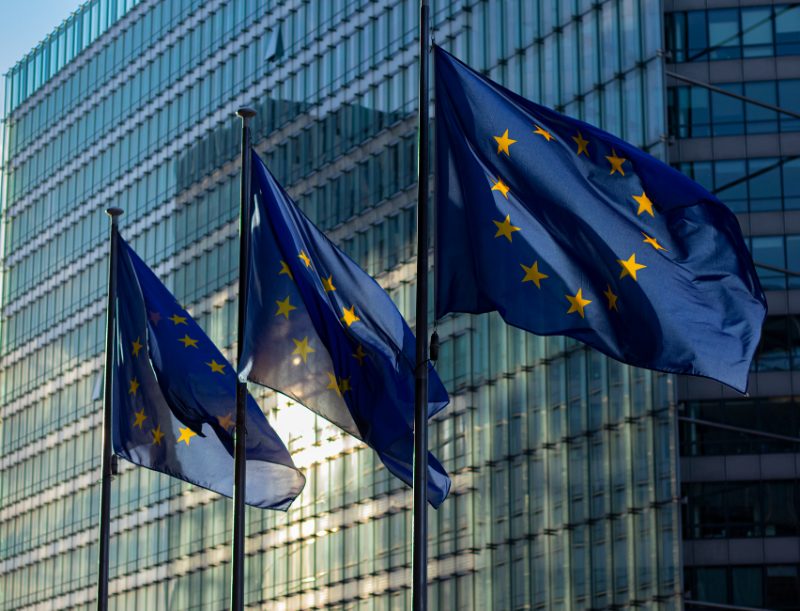
Six months after India and the European Union signed their long-negotiated Free Trade Agreement on January 27, 2026, exporters across textiles, engineering goods and pharmaceuticals are beginning to adjust supply chains to capture the deal’s duty-free access provisions, which cover 70.4 percent of Indian tariff lines immediately and 90.7 percent of India’s total export value. Once fully implemented, 99 percent of Indian exports are set to enter the EU without duties, marking one of the most consequential trade agreements in India’s recent history.
A Landmark Year for Indian Trade Diplomacy
The EU deal arrived within weeks of another major agreement — the US-India trade deal announced on February 2, 2026, under which Washington slashed tariffs on Indian goods from a punitive 50 percent to a consolidated 18 percent. In exchange, India committed to a $500 billion “Buy American” programme and agreed to halt imports of Russian oil, a geopolitically significant concession that reshapes India’s energy sourcing strategy even as it unlocks preferential access to the world’s largest consumer market.
Trade officials describe the near-simultaneous conclusion of both agreements as the culmination of years of painstaking negotiation, executed against a backdrop of rising global protectionism elsewhere. For Indian exporters long accustomed to navigating tariff disadvantages relative to competitors such as Vietnam and Bangladesh in the EU market, and China and Mexico in the US market, the twin deals represent a potentially transformative shift in competitiveness.
Sector-Level Winners and Adjustment Costs
Labour-intensive sectors such as textiles and leather goods, engineering exports, and generic pharmaceuticals are expected to be among the largest beneficiaries of the EU FTA, given their significant tariff exposure prior to the agreement. However, industry bodies caution that realising the full benefit will require Indian manufacturers to meet the EU’s stringent quality, environmental and labour compliance standards — a non-trivial adjustment for many small and mid-sized exporters accustomed to less demanding regulatory regimes.
On the US side, the $500 billion Buy American commitment implies substantial Indian purchases of American goods and services over the coming years, potentially spanning defence equipment, energy products and technology, which trade analysts say could partially offset the export gains India secures from lower tariffs, at least in net trade balance terms.
Market and Diplomatic Reaction
Exporter associations have broadly welcomed both agreements, though some have flagged concerns about compliance costs eating into competitiveness gains, particularly for smaller firms. Diplomatically, the decision to cease Russian oil imports as part of the US deal marks a notable pivot for India, which had leaned heavily on discounted Russian crude since 2022 to manage its energy import bill; the shift is expected to have ripple effects on global crude markets and India’s own energy diversification strategy.
As implementation of both agreements progresses through 2026, trade economists say the coming quarters will be a critical test of whether India can convert preferential market access into durable export share gains, rather than seeing the benefits eroded by compliance costs, currency movements or renewed protectionist pressure from trading partners.












Leave a comment