

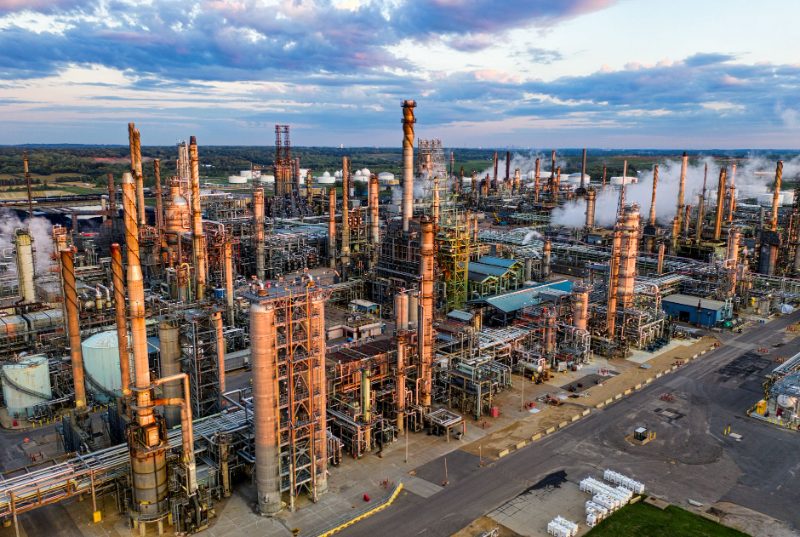
Reliance Industries has signed a 15-year green ammonia supply agreement with South Korea’s Samsung C&T Corporation valued at approximately ₹26,512 crore ($3 billion), one of the largest long-term clean-chemicals offtake deals struck by an Indian conglomerate to date. The agreement lands alongside a separate announcement that Reliance will invest ₹75,000 crore ($8.57 billion) in its Oil-to-Chemicals (O2C) business while simultaneously accelerating a clean energy push that includes plans for 20 gigawatts of solar module manufacturing capacity.
A Long-Dated Bet on Green Chemicals
The 15-year duration of the Samsung C&T agreement is itself significant. Long-term offtake agreements of this length provide Reliance with predictable, contracted revenue visibility for green ammonia production capacity that would otherwise carry meaningful demand-side uncertainty, given that green ammonia remains a nascent commercial category globally relative to conventional, carbon-intensive ammonia production used widely in fertilisers and industrial chemicals. For Samsung C&T, the deal secures long-term supply of a lower-carbon feedstock as the South Korean conglomerate faces its own decarbonisation commitments across shipping, construction and industrial operations.
The scale of the commitment reflects a broader pattern among Indian conglomerates: pairing large-scale conventional petrochemical investment — in Reliance’s case, the ₹75,000 crore O2C commitment — with parallel bets on emerging low-carbon chemical categories, rather than treating the energy transition as a threat to core hydrocarbon-based chemicals businesses. That dual-track approach allows companies to capture near-term cash flow from existing petrochemical demand while building option value in categories like green ammonia and green hydrogen that are expected to scale significantly over the next decade.
A Sector-Wide Growth Story
Reliance’s announcements arrive as India’s broader chemicals industry charts an ambitious growth trajectory. According to McKinsey & Company, India’s chemical industry is projected to expand from its current $155-165 billion size to $230-255 billion by 2030, with the consultancy identifying 18 potential growth arenas, including eight “high-growth” categories expected to unlock $30-35 billion in incremental demand collectively by the end of the decade.
Government policy is reinforcing that momentum. The Union Budget for 2026-27 introduced a new scheme allocating ₹600 crore to support states in establishing three dedicated Chemical Parks, designed as cluster-based, plug-and-play manufacturing hubs offering shared infrastructure to chemical manufacturers, an initiative aimed at lowering the capital barrier for mid-sized chemical companies to establish new production capacity without each individually building out full infrastructure from scratch.
Other Majors Are Moving in Parallel
Reliance is not alone in committing fresh capital to the sector. Tata Chemicals has announced a ₹515 crore investment to establish a greenfield Iodised Vacuum Salt Dried (IVSD) manufacturing facility in Tamil Nadu, with a planned capacity of 210 kilotonnes per annum — a smaller but illustrative example of the kind of specialty and value-added chemical capacity that is being added alongside the mega-deals struck by Reliance.
Taken together, the combination of a landmark long-term green ammonia offtake agreement, an $8.57 billion O2C investment commitment, targeted government infrastructure support, and continued specialty chemical investment from peers like Tata Chemicals paints a picture of an Indian chemicals sector moving simultaneously on multiple fronts — scaling conventional petrochemical capacity, building genuine green-chemistry supply chains, and lowering barriers for smaller players to participate in the sector’s projected growth toward the $230-255 billion mark by 2030.








Leave a comment