

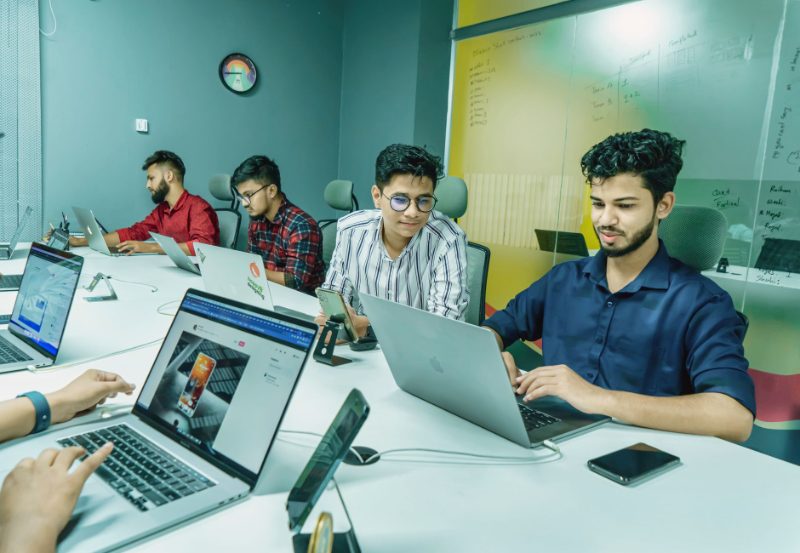
Indian AI startups raised $676 million across 57 deals in the first half of 2026, more than four times the $162 million raised across 30 deals in the same period a year earlier, according to industry funding data. The surge marks one of the sharpest year-on-year jumps in India’s AI investment history and comes as the government pushes a parallel effort to build sovereign, India-specific foundation models.
Capital Is Chasing a Different Kind of AI Bet
Unlike the wave of generic AI-wrapper startups that drew scepticism from investors in 2023 and 2024, the current round of Indian AI funding is concentrated in companies building foundational infrastructure — multilingual models, enterprise AI agents, and vertical-specific applications in sectors such as healthcare, financial services and manufacturing. Investors interviewed by industry trackers say they are increasingly favouring startups with defensible data advantages or deep integration into enterprise workflows over thin layers built on top of third-party foundation models.
The jump in deal count, from 30 to 57 year-on-year, suggests the funding increase is not simply a handful of outsized rounds skewing the average, but a broader deepening of early-stage conviction across the ecosystem.
A National Push for Sovereign Models
The funding surge is unfolding alongside a coordinated government effort to reduce India’s reliance on foreign foundation models. Twelve startups and research institutions — including Sarvam AI, Gnani AI, BharatGen at IIT Bombay, Fractal Analytics, and Tech Mahindra’s Maker’s Lab — have been selected to build large multimodal models trained specifically on Indian languages and data, part of a broader IndiaAI Mission initiative.
Supporting that effort, AIKosh, the country’s national AI dataset and model repository, now hosts more than 7,500 datasets and over 270 AI models spanning 20 sectors, giving startups a shared foundation of India-specific training data that has historically been a bottleneck for building models attuned to the country’s linguistic diversity.
Cheap Compute Is Changing the Calculus
India has also onboarded more than 38,000 high-end GPUs under a subsidised compute programme, offering access at roughly ₹65 per hour — about a third of the global average cost. That pricing has materially lowered the barrier for early-stage startups to train and fine-tune large models domestically, rather than renting far more expensive compute from international cloud providers, a factor several founders cite as central to unlocking new categories of AI product built specifically for Indian markets.
Is It Enough to Compete Globally?
Even after the fourfold jump, India’s $676 million in H1 2026 AI funding remains a fraction of what US and Chinese AI labs raise in single rounds, and analysts caution that capital intensity — not just deal volume — will determine whether Indian foundation-model efforts can compete at the frontier. Building genuinely large-scale multimodal models requires sustained, multi-year investment in compute, talent and data pipelines that dwarfs what most Indian venture rounds currently provide.
That has led some industry watchers to argue India’s near-term advantage lies less in chasing frontier-scale models and more in application-layer AI tailored to domestic industries and languages — a strategy that plays to the country’s strengths in enterprise software and IT services while sidestepping a capital arms race it is unlikely to win outright.
What Comes Next
With government-backed model development running in parallel to a resurgent private funding market, the second half of 2026 will test whether India’s AI ecosystem can convert this capital influx into products with genuine differentiation, rather than repeating the wrapper-heavy funding cycle of the previous two years.













Leave a comment