

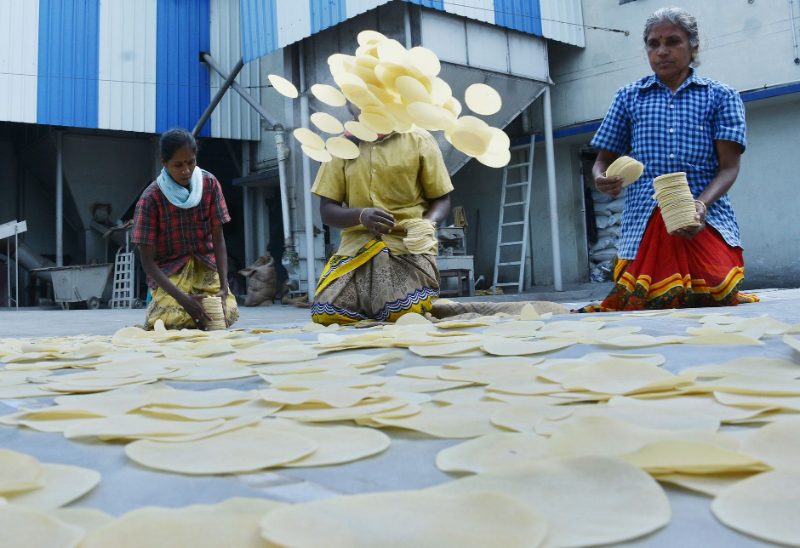
India’s food processing levels rose to nearly 17% in 2023, up from around 10% in 2016, according to a report released at the SAPLING 2026 dialogue in Ahmedabad, as the government’s Production Linked Incentive Scheme for Food Processing Industries (PLISFPI) continues to draw private investment into the sector. Union Food Processing Industries Minister Chirag Paswan inaugurated the dialogue, calling the PLI food processing scheme a key driver behind rising formalization across dairy, marine, and grain-based processing.
The SAPLING 2026 dialogue brought together policymakers, industry leaders, development agencies, researchers, and entrepreneurs from across South Asia to discuss food security and processing capacity. The PLISFPI, launched with a $1.23 billion outlay, has so far attracted $1.04 billion in committed investment, created roughly 3.5 lakh MT of new processing capacity, and generated an estimated 3.3 lakh jobs across the country.
Why Are India’s Food Processing Levels Rising in 2026?
The jump from 10% to 17% processing reflects a combination of PLI-linked capital expenditure, growing organized retail demand, and export incentives for value-added food products. Sales of PLI-supported food processing products rose 10.58% year-on-year, while export sales from PLI beneficiaries increased 7.41%, supported by a cumulative ₹9,000 crore in investment. Millet-based products have been a standout category, benefiting from both the PLI scheme and the government’s broader push to position India as a global millet hub following the International Year of Millets.
What Does This Mean for the Broader Food Processing Industry?
Higher processing penetration reduces post-harvest losses, which have historically run into billions of dollars annually for perishables like fruits, vegetables, and marine products. As more raw agricultural output moves through organized processing chains, smaller unorganized units may face pressure to consolidate or upgrade to meet quality and traceability standards demanded by larger buyers and export markets. The Ministry of Food Processing Industries has indicated it will continue to prioritize seafood, dairy, and grain processing capacity in the next phase of incentive schemes.
Market Reaction and Industry Response
Industry bodies at SAPLING 2026 broadly welcomed the processing-level increase but flagged that India still lags well behind processing rates of 30% to 50% seen in some developed food economies. The Marine Products Export Development Authority (MPEDA) separately announced it will host the second National Seafood Skill Olympiad during Seafood Expo Bharat 2026, aimed at improving value addition and skill development to strengthen India’s seafood export competitiveness alongside the PLI push.
What Happens Next?
The government is expected to release more granular PLISFPI disbursement data through 2026 as more approved projects reach commercial production. Watch for follow-on state-level incentive announcements, particularly from eastern and southern states seeking to attract food processing capital, as well as updates from Seafood Expo Bharat 2026 on export-oriented investment commitments.
Frequently Asked Questions
What is India’s current food processing level?
India’s food processing level reached nearly 17% in 2023, up from about 10% in 2016, according to the SAPLING 2026 dialogue report.
How much investment has the PLI food processing scheme attracted?
The PLISFPI, with a $1.23 billion outlay, has attracted $1.04 billion in committed investment and generated an estimated 3.3 lakh jobs so far.
Which food categories benefited most from the PLI scheme?
Millet-based products, dairy, and marine processing have seen the strongest growth, with PLI-supported product sales rising over 10% year-on-year.








Leave a comment