

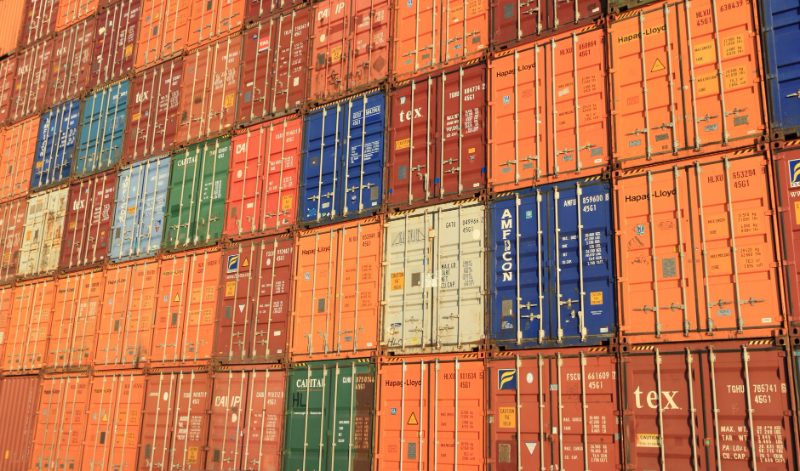
India’s food processing exports reached US$7,886.62 million in FY 2024-25, marking a diversified export basket spanning spices, marine products, dairy, and ready-to-eat foods. The growth comes as the Ministry of Food Processing Industries (MoFPI) was allocated Rs 4,064 crore (US$459.86 million) in the Union Budget 2026-27, reinforcing government commitment to scaling processed food manufacturing and export capacity.
The FY 2024-25 export figures, tracked by India’s food processing ministry and trade bodies, show steady expansion driven by strong domestic demand alongside export orientation. The Rs 4,064 crore budget allocation for 2026-27 is earmarked for schemes covering cold chain infrastructure, food parks, and the Production Linked Incentive (PLI) scheme for food processing, which has been credited with drawing new manufacturing investment into the sector over the past three years.
Why Are India’s Food Processing Exports Growing in 2026?
India’s food processing exports are growing because manufacturers have scaled value-added production, moving beyond raw agricultural commodities toward processed and packaged goods that command higher margins overseas. The US$7,886.62 million export figure for FY 2024-25 reflects contributions from marine exporters, spice processors, dairy cooperatives, and ready-to-eat meal manufacturers, several of which have expanded capacity using PLI incentives. Government officials point to sustained policy support, including the Rs 4,064 crore budget allocation, as a key driver keeping exporters competitive against processors in Southeast Asia and China.
What Does This Mean for the Broader Food Processing Industry?
Rising exports put pressure on domestic food processors to meet international food safety and traceability certifications, which typically require investment in modern equipment and quality control systems. Smaller manufacturers without export certifications risk being squeezed out of higher-margin overseas contracts as larger, PLI-backed competitors capture that demand. At the same time, sustained export growth strengthens the case for continued infrastructure investment, particularly in cold chain and port-side processing facilities, since perishable exports lose value quickly without reliable refrigeration.
Market Reaction and Industry Response
Industry bodies representing food exporters have welcomed the Rs 4,064 crore budget allocation, though several have flagged that cold chain and logistics infrastructure still lag export ambitions, particularly for perishable categories like marine products and dairy. Processors participating in the PLI scheme have reported stronger order books from overseas buyers seeking Indian suppliers, while smaller exporters continue to call for simplified compliance procedures to access global markets more easily.
What Happens Next?
With the Rs 4,064 crore allocation now confirmed for 2026-27, expect MoFPI to announce specific scheme guidelines and disbursement timelines for cold chain and food park projects over the coming months. Export data for the first half of FY 2025-26 will be a key indicator of whether the current growth trajectory holds, particularly given global trade uncertainty. Manufacturers evaluating PLI participation will be watching subsequent budget cycles for confirmation that incentive support continues beyond the current scheme period.
Frequently Asked Questions
How much did India’s food processing exports total in FY 2024-25?
India’s processed food exports reached US$7,886.62 million in FY 2024-25, spanning spices, marine products, dairy, and ready-to-eat foods.
How much has the government allocated to food processing for 2026-27?
The Ministry of Food Processing Industries has been allocated Rs 4,064 crore (US$459.86 million) in the Union Budget 2026-27.
What is driving growth in India’s food processing exports?
Growth is driven by increased value-added manufacturing, PLI scheme incentives, and rising overseas demand for packaged and processed Indian food products.










Leave a comment