

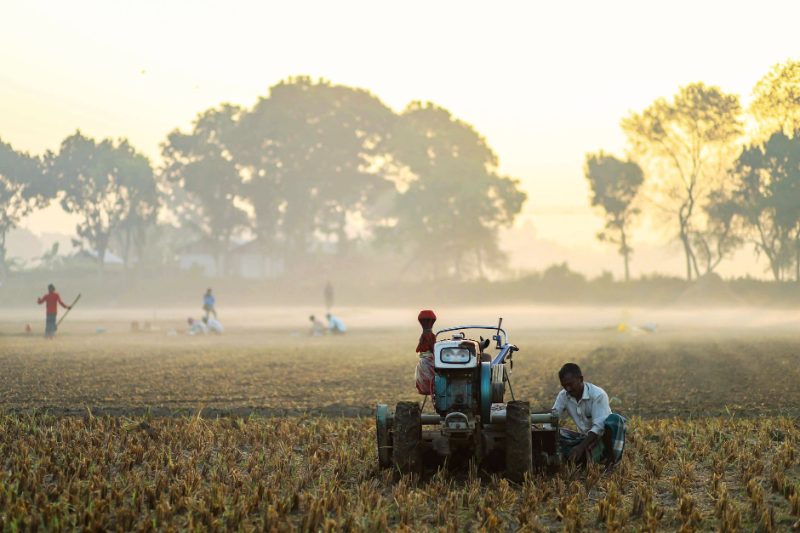
India has replaced its two-decade-old rural jobs guarantee law with a new wage structure that fixes the national floor wage at ₹300 per day. The Viksit Bharat-Guarantee for Rozgar and Ajeevika Mission (Gramin) Act, 2025 — VB-G RAM G — took effect on July 1, 2026, formally retiring the Mahatma Gandhi National Rural Employment Guarantee Act, 2005, in what is now India’s key MGNREGA replacement wage reform.
The new law is administered by the Ministry of Rural Development and applies to rural households across all states and union territories. Unlike MGNREGA’s state-wise wage notifications that ranged from roughly ₹230 to ₹374 a day, VB-G RAM G sets a uniform national floor of ₹300 per day, with states permitted to notify higher rates linked to local consumer price indices.
How Does the ₹300 Wage Floor Change Rural Employment Guarantees?
Under VB-G RAM G, every rural household is still entitled to 100 days of guaranteed unskilled manual work per year, but wage revisions are now tied to an annual cost-of-living formula rather than the discretionary state-by-state notifications used under MGNREGA. Workers in states that previously paid below ₹300, including several eastern and central states, will see an immediate increase, while high-wage states such as Haryana and Kerala continue at their existing higher rates. The Ministry estimates the floor wage will benefit more than 5.5 crore active job card holders nationwide.
What Do Economists and Rural Development Experts Say?
Economists tracking the transition note that the floor wage mechanism removes the multi-year lag that plagued MGNREGA wage revisions, where rates often failed to keep pace with inflation. Rural development researchers have welcomed the shift to an indexed formula but caution that the fiscal cost — projected to rise as more states converge toward the ₹300 floor — will need to be absorbed within existing budget allocations for the scheme. Industry bodies such as CII have also flagged that a higher wage floor could tighten farm labour supply during peak sowing and harvest seasons in several agrarian states.
Market and Trade Reaction
The policy shift has drawn attention from agricultural commodity markets and rural consumer goods companies, both of which track rural wage trends as a proxy for rural demand. FMCG and tractor manufacturers view a higher wage floor as supportive of rural consumption in the second half of 2026, while some agri-processing firms flagged concerns about rising labour costs during the kharif season. No material currency or equity market reaction has been tied directly to the notification, as the change was largely anticipated following the passage of the Code on Social Security-linked reforms.
What Happens Next?
States now have until the end of the current quarter to align their local implementing rules and payment software with the new wage floor. The Ministry of Rural Development is expected to issue implementation guidelines for fund disbursal under the Public Financial Management System, and the first quarterly review of wage compliance across states is expected before the Monsoon Session review in August 2026.
Frequently Asked Questions
What is the new minimum wage under India’s rural employment scheme?
Under the VB-G RAM G Act, 2025, the national floor wage for rural guaranteed employment is ₹300 per day, effective July 1, 2026, replacing the variable state-wise rates set under MGNREGA.
Has MGNREGA been completely scrapped?
Yes. The Mahatma Gandhi National Rural Employment Guarantee Act, 2005 has been repealed and replaced by the VB-G RAM G Act, 2025, though the core guarantee of 100 days of paid rural work per household continues under the new law.
Which states are most affected by the wage change?
States that previously paid below ₹300 per day, largely in eastern and central India, will see the biggest immediate wage increases, while states already paying above the new floor continue at their existing higher rates.










Leave a comment