

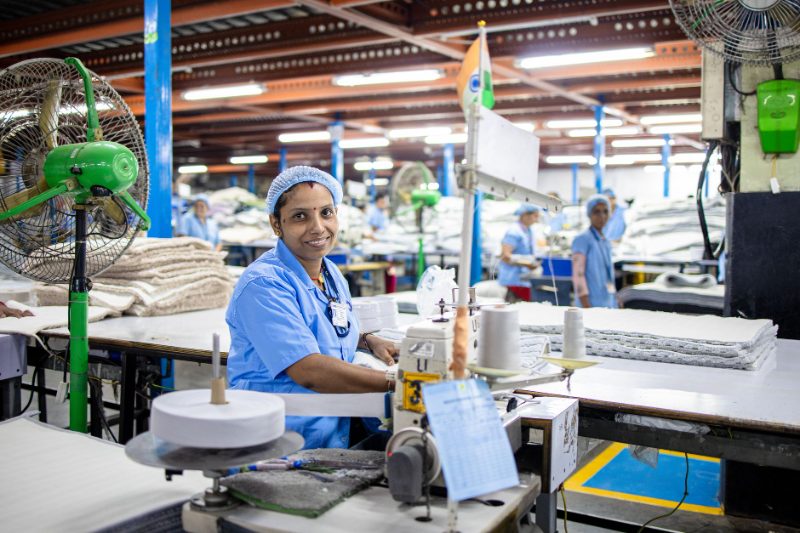
India’s textile exporters are bracing for a hit from a newly imposed 25% US tariff, which is expected to squeeze margins for leather, footwear, textile and shrimp exporters that rely heavily on the American market. The US tariff India textile exports impact comes even as the government’s PM MITRA textile parks are beginning to deliver a 15-20% reduction in operational costs for factories located within them, partially offsetting the export headwind.
The tariff move places renewed pressure on an industry that contributes about 2% of India’s GDP and roughly 11% of manufacturing gross value added as of early 2026. Exporters selling apparel, home textiles and made-ups to US retailers now face a materially higher landed cost for their products, potentially pushing buyers toward competing sourcing hubs unless Indian manufacturers can absorb part of the increase through efficiency gains.
Why Is the US Imposing a 25% Tariff on Indian Textiles?
The tariff forms part of a broader US trade action affecting several Indian export categories, including leather, footwear and shrimp alongside textiles. For textile exporters specifically, the increase raises the cost of Indian-made garments and fabrics landing in the US, one of India’s largest textile export destinations, at a time when the sector was already navigating a “testing” 2025, according to industry commentary.
Can PM MITRA Parks Offset the Tariff Impact?
The first PM MITRA (Mega Integrated Textile Region and Apparel) parks in Tamil Nadu, Telangana and Madhya Pradesh are attracting major players, with companies including Reliance Industries and the Adani Group showing interest in setting up large-scale units. Early data from factories operating within these parks shows a 15-20% reduction in operational costs, driven by shared utilities and streamlined logistics — savings that could help exporters partially absorb the new US tariff burden without passing the full cost to buyers.
Market Reaction and Industry Response
Export bodies have flagged concern that the 25% tariff could erode India’s recent competitiveness gains, even as the country recorded the strongest improvement in the Global Textile Sourcing Risk Index 2026, aided by free trade agreements and PLI-scheme investment. Manufacturers are watching closely to see whether the government negotiates any relief or transition period, while simultaneously accelerating automation — including AI-driven quality control and robotic cutting that cuts material waste by up to 10% — to protect margins.
What Happens Next for India’s Textile Exporters?
Industry attention now turns to whether trade negotiations soften the tariff’s impact, and whether more textile manufacturers relocate or expand into PM MITRA parks to capture the cost savings on offer. Export volume and value data over the next two to three quarters will show how much of the US tariff burden Indian exporters have managed to absorb versus losing orders to competing countries.
Frequently Asked Questions
Which Indian export sectors are hit by the new US tariff?
The 25% US tariff affects several Indian export categories including leather, footwear, textiles and shrimp, raising landed costs for Indian goods sold into the US market.
How much do PM MITRA parks reduce textile manufacturing costs?
Factories operating within PM MITRA parks in Tamil Nadu, Telangana and Madhya Pradesh are seeing a 15-20% reduction in operational costs due to shared utilities and streamlined logistics.
Is India still competitive in global textile sourcing despite the tariff?
Yes — India recorded the strongest improvement in the Global Textile Sourcing Risk Index 2026, backed by free trade agreements and PLI investments, though the new US tariff adds fresh cost pressure on exporters.








Leave a comment