

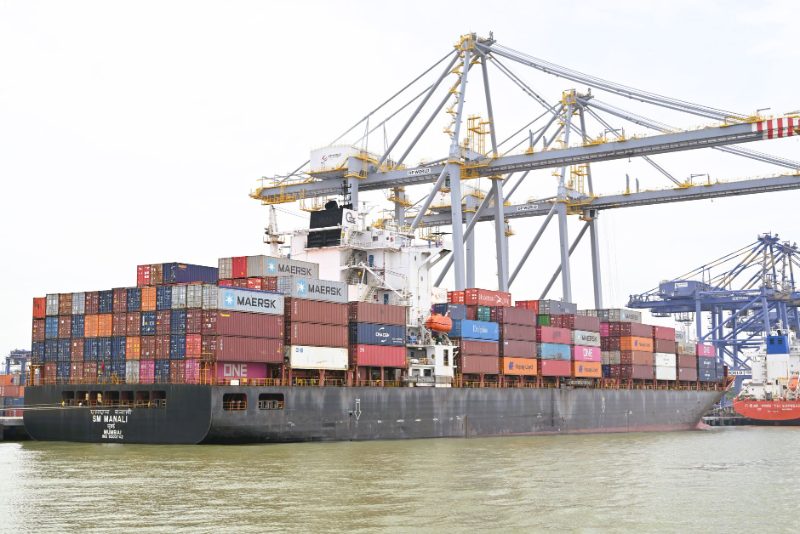
India has set a $1 trillion export target for FY2026–27, with Commerce Minister Piyush Goyal targeting 16–17% growth in merchandise exports to $530 billion and 11–12% growth in services exports to $470 billion. The India export target FY27 comes on the back of strong Q1 performance — merchandise exports grew 15% year-on-year and services exports grew 11% in the April–June 2026 quarter — and is supported by landmark trade deals with the US, EU, and UK entering force this year.
The target was announced by Commerce and Industry Minister Piyush Goyal at the annual meeting of the Export Promotion Councils in New Delhi on July 3, 2026. India’s total exports (goods plus services) in FY 2025–26 reached approximately $900 billion, making the $1 trillion target a 11% overall jump — achievable but requiring sustained momentum across manufacturing, IT services, pharmaceuticals, and new sectors like electronics and green energy equipment.
Which Sectors Will Drive India’s $1 Trillion Export Target?
Electronics and semiconductors have emerged as the fastest-growing export category, growing 38% year-on-year to $35 billion in FY 2025–26, driven by Apple’s iPhone manufacturing expansion in Tamil Nadu and Karnataka. Engineering goods remain India’s largest merchandise export at $112 billion. Pharmaceuticals contribute $27 billion, with significant upside from zero-tariff US access under the new bilateral deal. IT and IT-enabled services account for $220 billion and continue to grow at 10–12% annually. Textiles and apparel ($45 billion), chemicals ($28 billion), and gems and jewellery ($32 billion) are also expected to grow faster under the new EU and UK trade agreements. India Exim Bank forecasts merchandise exports of $108.1 billion in Q2 (July–September) of FY 2026–27.
What Do Export Bodies and Economists Say?
The Federation of Indian Export Organisations (FIEO) Director General Ajay Sahai said the $1 trillion target is “ambitious but achievable” given the convergence of favourable trade deals, a competitive rupee, and strong global demand for Indian pharmaceuticals and electronics. CRISIL Research estimates that the India-EU FTA alone could contribute $8–10 billion in additional merchandise exports annually once fully in force. However, economists at the RBI have flagged risks: a slowdown in advanced economy demand, disruption in Red Sea shipping routes (which has added 15–20 days and 25% extra cost to India-Europe trade), and global commodity price volatility could all weigh on export growth in H2 FY27.
Market and Trade Reaction
India’s merchandise imports also grew significantly — to $776 billion in FY 2025–26, up from $721 billion — reflecting strong domestic investment demand and higher energy import bills. The trade deficit remains a structural feature, but the current account swung to a $4.7 billion surplus in April 2026 on the back of strong services exports and record remittances of $16 billion in a single month. The rupee has remained stable in the ₹83–85 range, supporting export competitiveness without triggering imported inflation.
What Happens Next?
The Ministry of Commerce will review export performance at the end of Q2 (September 2026) and may introduce additional export incentives if the pace falls below trajectory. The Production Linked Incentive (PLI) scheme disbursements for electronics, pharmaceuticals, and textiles are expected to accelerate in FY27, providing an additional push. India Exim Bank’s Q2 forecast of $108.1 billion in merchandise exports will be the first major checkpoint for the $1 trillion ambition.
Frequently Asked Questions
What is India’s export target for FY27?
India has set a $1 trillion total export target for FY 2026–27, comprising $530 billion in merchandise exports (16–17% growth) and $470 billion in services exports (11–12% growth). The target was announced by Commerce Minister Piyush Goyal in July 2026.
What sectors will contribute most to India’s $1 trillion export target?
Electronics ($35 billion, growing 38%), engineering goods ($112 billion), IT and ITES services ($220 billion), pharmaceuticals ($27 billion), gems and jewellery ($32 billion), and textiles ($45 billion) are the primary drivers. Electronics growth is led by Apple iPhone exports from Tamil Nadu and Karnataka.
What is India Exim Bank’s export forecast for Q2 FY27?
India Exim Bank forecasts India’s merchandise exports at $108.1 billion for Q2 FY 2026–27 (July–September 2026), with non-oil exports at $92.1 billion. This trajectory, if sustained, would put India on track to achieve the $530 billion annual merchandise export target.











Leave a comment