

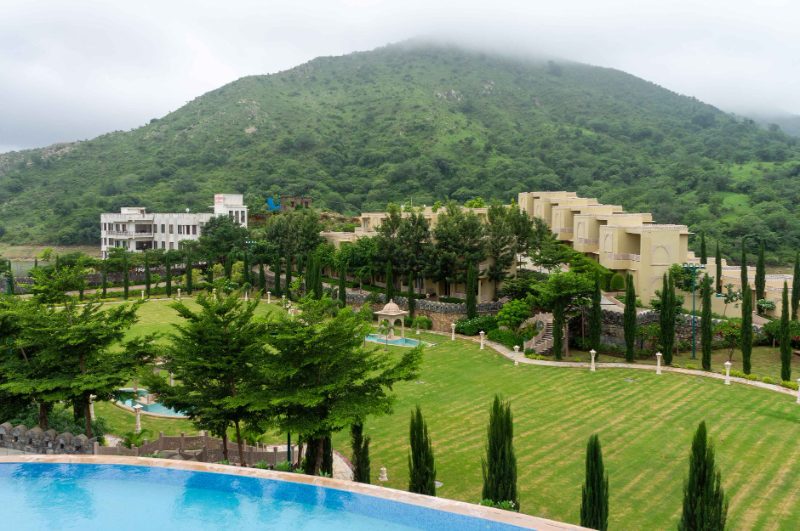
India’s hotel industry growth 2026 is entering one of its most expansive phases in decades, with listed hotel operators projected to add over 70,000 branded rooms by 2030 as domestic tourism demand reaches record levels. India’s hospitality market, currently valued at approximately $24.6 billion, is expected to reach $31 billion by 2029, fuelled by rising middle-class incomes, an expanding aviation network, and government investment in tourism infrastructure across pilgrimage circuits, hill stations, and coastal destinations.
India recorded approximately 2.9 billion domestic tourist visits in 2024, a figure that hospitality analysts expect to approach 5 billion before the end of the decade — creating structural demand for branded accommodation in markets historically dominated by unorganised guesthouses and lodges.
Which Hotel Brands Are Driving India’s Room Supply Growth?
The India hotel industry growth 2026 expansion is led by India’s listed hotel majors: IHCL (Taj Hotels), Lemon Tree Hotels, and Chalet Hotels. IHCL alone has a pipeline of over 255 properties with a significant portion under the budget Ginger brand and upscale Gateway brand targeting Tier 2 and Tier 3 cities. Lemon Tree Hotels is expanding aggressively into highway hospitality and pilgrimage corridors. International chains including Marriott, Hilton, Accor, and IHG are also scaling India portfolios, with Marriott targeting 200+ properties in India by 2026. The majority of new room supply is concentrated in emerging leisure destinations including Ayodhya, Kedarnath, Lakshadweep, Goa, Coorg, and Coimbatore.
What Is Driving India’s Domestic Tourism Surge?
India’s domestic tourism surge is driven by four structural factors. First, a fast-growing middle class — India added approximately 25 million new middle-class households between 2020 and 2025, each with significantly higher travel spending. Second, aviation expansion — India’s commercial aviation network now covers over 150 cities, with regional connectivity schemes like UDAN bringing air travel to Tier 2 cities at prices competitive with premium train fares. Third, aspirational travel — post-pandemic Indian consumers are prioritising experiences over goods, with travel spending growing at 18% annually. Fourth, government infrastructure investment — projects like the Ayodhya Ram temple complex, the Kashi Vishwanath Corridor in Varanasi, and coastal road development in Kerala and Goa are creating new high-traffic tourism nodes.
Industry Reaction and Expert Commentary
Hotel industry analysts noted that Revenue Per Available Room (RevPAR) for branded hotels in India grew 12–15% in FY2026, with leisure destinations recording even stronger gains of 20–25%. Supply of branded rooms remains insufficient to meet demand, which is why occupancy rates at branded hotels in Tier 1 cities remained above 70% for most of FY2026. Hospitality investors are increasingly drawn to India’s mid-market segment — hotels in the ₹3,000–7,000 per night range — which is growing at 22% annually as the aspirational travel market expands beyond metro high-earners.
What Happens Next?
The next 12 months will see accelerated openings in spiritual tourism destinations, with Ayodhya alone expected to add 5,000 branded hotel rooms by end of 2026 as developers respond to the 50 million annual visitors the city has attracted since the Ram temple inauguration. India’s National Tourism Policy 2026, expected later this year, is set to include new incentives for hotel developers in underserved tourism regions. The government’s target of $250 billion in tourism revenue by 2030 requires significant hotel room supply expansion that industry experts say is currently on track.
Frequently Asked Questions
How many hotel rooms will India add by 2030?
India’s listed hotel operators are expected to add over 70,000 branded hotel rooms by 2030. Including unorganised supply and boutique properties, total new room supply over the same period could exceed 1.5 lakh rooms, with the highest growth in Tier 2 cities and spiritual tourism destinations.
What is the value of India’s hospitality market in 2026?
India’s hospitality market is valued at approximately $24.6 billion and is projected to reach $31 billion by 2029, growing at approximately 5–6% CAGR. The domestic tourism segment drives the majority of this value, with 2.9 billion domestic tourist visits recorded in 2024.
Which cities are seeing the most hotel development in India in 2026?
Ayodhya, Varanasi, Lakshadweep, Goa, Hyderabad, and emerging Tier 2 leisure destinations like Coorg, Shillong, and Rishikesh are seeing the most hotel development in India in 2026. Pilgrimage circuits and nature destinations are attracting the fastest hotel room supply growth as domestic spiritual tourism booms.









Leave a comment