

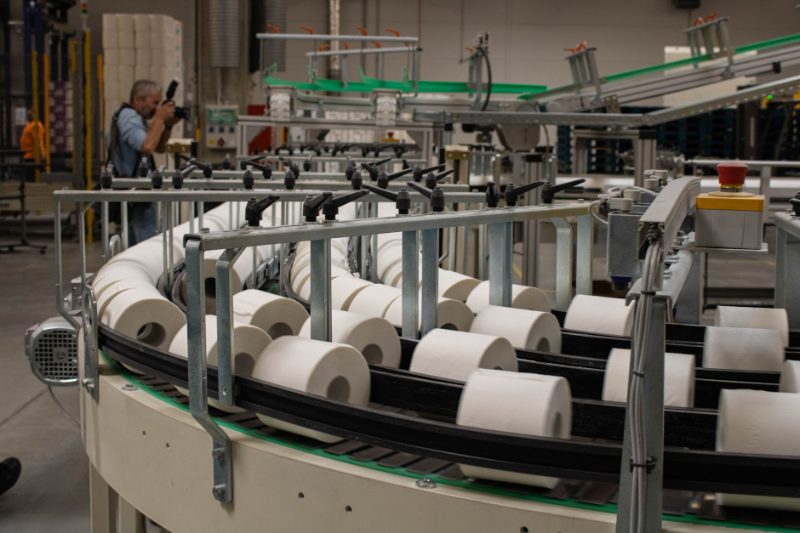
Andhra Paper is proceeding with an INR 178 crore capital expenditure programme to expand its Rajahmundry plant capacity by 60% and commission a new tissue paper plant at its Kadiyam facility in Andhra Pradesh, even as the company posted a net loss of INR 20.26 crore in recent quarterly results. The Andhra Paper capacity expansion 2026 investment signals management confidence in long-term demand recovery despite near-term financial headwinds facing the broader Indian paper industry.
The Rajahmundry plant, one of Andhra Pradesh’s largest integrated paper mills, will see its production capacity increase significantly upon completion of the expansion project. The addition of a tissue paper manufacturing line at Kadiyam is a strategic diversification move into a segment recording some of the fastest growth rates in the Indian paper sector, as rising income levels and urbanisation drive tissue paper penetration from a still-low base of approximately 0.3 kg per capita annually versus the global average of 4.5 kg.
Why Is Andhra Paper Investing ₹178 Crore Despite Reporting a Net Loss?
The Andhra Paper capacity expansion 2026 decision reflects a long-cycle investment logic common in capital-intensive industries: capacity additions take 18–36 months to commission and the business case is built on multi-year demand projections rather than current-quarter results. Andhra Paper’s management is betting on several structural demand drivers — India’s paper demand growing at 5–7% annually, tissue paper penetration accelerating from a low base, and the NEP-driven education sector sustaining writing paper consumption — to deliver improved returns once the current import-pressure cycle normalises. The Rajahmundry expansion will also lower Andhra Paper’s per-unit fixed cost burden, improving margin structure at normalised capacity utilisation once commissioned.
Why Is Tissue Paper a Strategic Growth Bet for Indian Paper Mills?
Tissue paper is one of the fastest-growing segments within India’s paper sector, with annual consumption growth exceeding 12–15% as urban consumers upgrade from traditional cloth-based alternatives. India’s tissue paper market, currently valued at approximately INR 4,500 crore, is projected to double by 2030. The segment is also relatively insulated from the commodity-grade import pressure that is affecting writing, printing, and newsprint segments, since tissue paper requires specialised manufacturing equipment and consumer-facing brand building that most import competitors have not yet established in India. Several other Indian paper mills including TNPL and West Coast Paper have similarly made tissue paper line additions a priority in their recent capex programmes.
Market Reaction and Industry Response
Andhra Paper’s capital investment decision has been noted positively by industry analysts as a sign of long-term sector confidence, even amid short-term earnings disappointments. The company’s net loss of INR 20.26 crore — a reversal from the prior year profit — is attributed primarily to elevated imported pulp costs and competitive pricing pressure from cheaper imports rather than any demand-side deterioration. Domestic paper demand in Andhra Pradesh and Telangana, which Andhra Paper serves as its primary market, remains healthy, supported by strong government procurement for educational institutions and a growing print media market in Telugu-language publications. The INR 178 crore capex will likely be funded through a combination of internal accruals, term loans, and potentially a rights issue, details of which are expected to be announced in Q2 FY2026-27.
What Happens Next?
The Rajahmundry capacity expansion and Kadiyam tissue plant are expected to be commissioned in phases over the next 18–24 months, with partial production from expanded facilities likely by Q2 FY2027-28. In the near term, Andhra Paper’s results will continue to reflect the current challenging import environment, with any government anti-dumping action on imported paper providing a potential positive catalyst. The broader paper industry will also be watching for global pulp price moderation, which could begin if South American plantation supply recovers in H2 2026 following weather-related disruptions in early 2026. Tissue paper capacity, once commissioned at Kadiyam, is expected to be at full utilisation within 12 months given the segment’s strong demand trajectory.
Frequently Asked Questions
What is Andhra Paper’s ₹178 crore capex plan for 2026?
Andhra Paper is investing INR 178 crore to expand its Rajahmundry plant’s paper production capacity by 60% and commission a new tissue paper manufacturing plant at its Kadiyam facility in Andhra Pradesh. The investment is proceeding despite the company reporting a net loss of INR 20.26 crore in recent quarterly results, reflecting management confidence in long-term demand growth.
Why is tissue paper a growth opportunity for Indian paper mills?
India’s tissue paper consumption is growing at 12–15% annually from a low base of approximately 0.3 kg per capita versus the global average of 4.5 kg. The tissue paper market in India is valued at around INR 4,500 crore and is projected to double by 2030, driven by urbanisation, rising incomes, and consumer lifestyle changes. The segment is also less exposed to import competition than commodity paper grades.
How will Andhra Paper fund its ₹178 crore capital expenditure?
Andhra Paper’s INR 178 crore capex is expected to be funded through a combination of internal accruals, term loans from banks, and potentially a rights issue to shareholders. Detailed funding plans are expected to be announced in Q2 FY2026-27. The company has existing credit relationships with major public and private sector banks that have historically supported its capital investment programmes.











Leave a comment