

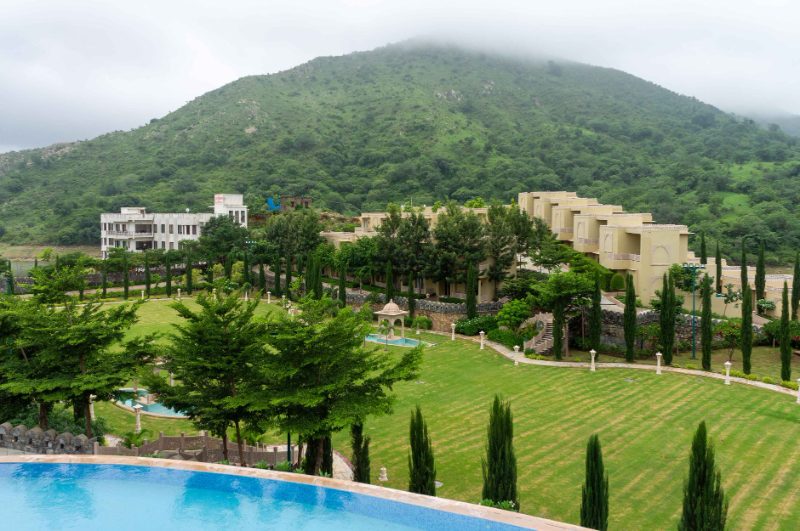
India’s listed hotel companies are on track to add more than 70,000 new hotel rooms by 2030, driven by surging domestic travel demand, expanding aviation connectivity, and rising middle-class spending on leisure and business travel. The hospitality boom is extending well beyond major metros, with Tier 2 and Tier 3 cities, pilgrimage hubs, and regional leisure destinations absorbing the bulk of new supply—a structural shift that is reshaping India’s hospitality sector landscape.
According to data compiled by Skift and hospitality consultancy HVS, India’s branded hotel pipeline is the fastest-growing in Asia, with IHCL (645 hotels targeting 700 by 2030), Lemon Tree Hotels, Marriott, and IHG all filing aggressive expansion plans fuelled by India’s domestic travel boom.
What Is Driving India’s 70,000 New Hotel Rooms Pipeline by 2030?
India’s hotel room addition pipeline by 2030 is underpinned by four converging demand drivers. First, domestic air travel: India’s airports handled over 160 million passengers in 2025, with new airports opening under the UDAN regional connectivity scheme bringing air travel to cities that previously had none—each new airport creates immediate demand for branded accommodation. Second, pilgrimage tourism: the inauguration of the Ram Mandir in Ayodhya, expanded Char Dham connectivity, and growing interest in spiritual tourism have created year-round demand in markets like Varanasi, Tirupati, Shirdi, and Dwarka. Third, corporate travel: India’s expanding manufacturing sector—driven by PLI schemes in electronics, pharmaceuticals, and automotive—is generating business travel to industrial cities including Pune, Surat, Coimbatore, and Bengaluru’s peripheral zones. Fourth, leisure travel: a growing upper-middle class with rising disposable incomes and passport penetration is spending more on domestic holidays, weekend getaways, and experiential travel.
Which Hotel Brands and Segments Are Leading India’s Expansion?
The India hotel rooms pipeline by 2030 is dominated by midscale and upper-midscale brands rather than luxury. IHCL’s Ginger brand, Lemon Tree’s core and Premier properties, Marriott’s Fairfield and Four Points, and IHG’s Holiday Inn Express are all actively signing properties in Tier 2 markets. The conversion segment—independent hotels rebranding under established flags to access global distribution and loyalty programmes—is also growing rapidly, offering hotel groups a lower-capital route to scale. Luxury supply is also expanding: Hyatt, Four Seasons, Marriott’s Westin and Le Méridien, and IHCL’s Taj brand are adding properties in emerging luxury leisure markets including the Andaman Islands, Rajasthan desert destinations, Kerala backwaters, and Goa’s north-south corridor.
Industry Reaction and Expert Commentary
Hospitality researchers at HICSA 2026 (the Hotel Investment Conference South Asia) highlighted India’s “regional renaissance” as the defining theme of the sector. Skift reported that India’s hospitality boom is now expanding beyond major cities, with smaller markets demonstrating demand metrics—occupancy above 65%, RevPAR growth above 15%—that justify branded supply. International hotel companies that historically avoided India’s complex real estate environment are now actively partnering with domestic developers and REITs to access the pipeline. The franchise model, where hotel companies license their brand to local owners without owning the asset, has been transformational—IHCL’s Ginger and Lemon Tree both use this model to scale without the capital constraints of owned properties.
What Happens Next?
The 70,000-room pipeline will come online progressively through 2026, 2027, and into 2030. Near-term openings are concentrated in markets with infrastructure already in place—expanded airports, new expressways, completed railway station redevelopments. The Indian government’s Amrit Bharat station programme, which is upgrading 1,300 railway stations into modern transit hubs, is expected to generate co-located hotel demand at scale. Watch for REIT-backed hotel portfolios to emerge as a new investment vehicle in India, following the success of Nexus Select Trust’s retail REIT model, and for international hotel brands to announce additional master franchise agreements for India through H2 2026.
Frequently Asked Questions
How many hotel rooms is India expected to add by 2030?
India’s listed hotel companies are on track to add more than 70,000 new hotel rooms by 2030, according to Skift and HVS data. This pipeline is spread across luxury, upscale, midscale, and economy segments, with the majority of new supply in Tier 2 and Tier 3 cities.
Which cities in India are seeing the most hotel development in 2026?
Beyond the major metros of Mumbai, Delhi, and Bengaluru, hotel development in India is growing fastest in pilgrimage destinations (Ayodhya, Varanasi, Tirupati), industrial cities (Pune, Surat, Coimbatore), and leisure markets (Goa, Rajasthan, Kerala). New airports under UDAN are also catalysing hotel investment in Tier 3 cities.
What is driving India’s domestic travel growth?
India’s domestic travel growth is driven by rising disposable incomes, expanding aviation under the UDAN scheme (160M+ passengers in 2025), surging pilgrimage and spiritual tourism, growing corporate travel to manufacturing hubs, and a younger population spending more on travel experiences than previous generations.










Leave a comment