

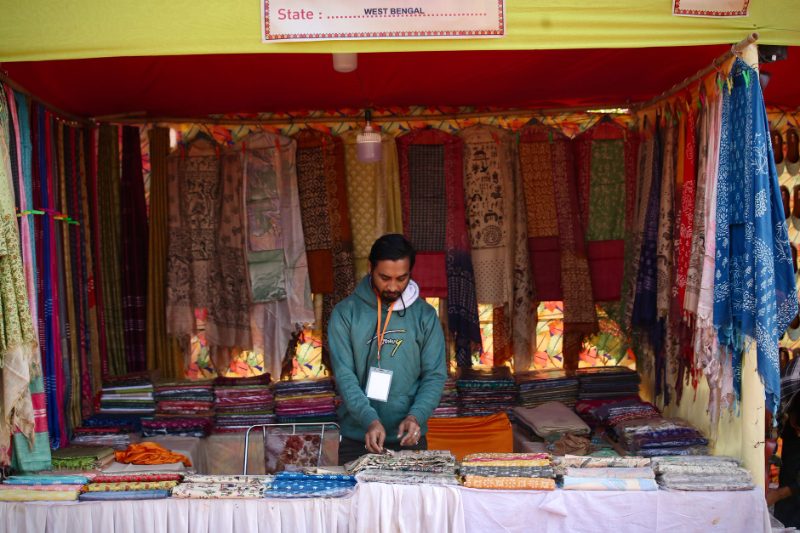
Bharat Tex 2026, India’s largest global textile and apparel trade exhibition, opens on July 14 at Bharat Mandapam in New Delhi, running through July 17 with over 7,000 international buyers, 1,600 exhibitors, and 1.3 lakh trade visitors expected over four days. The Bharat Tex 2026 event is being positioned as the defining showcase of India’s $40 billion textile export ambition and its push to become the world’s most competitive sourcing destination for global fashion, home textiles, and technical textiles.
Organised by the Bharat Tex Trade Federation — a consortium of Textile Export Promotion Councils and Industry Bodies — with full support from the Ministry of Textiles, Government of India, this third edition of Bharat Tex spans 1.6 million square feet of exhibition space and will feature over 20,000 textile products. International exhibitors from 14 countries including the United States, United Kingdom, Japan, South Korea, Portugal, Spain, Nepal, and South Africa are participating alongside Indian manufacturers across the entire textile value chain.
What Makes Bharat Tex 2026 Different From Previous Editions?
The third edition of Bharat Tex builds on its predecessors with a sharper focus on sustainability, digital manufacturing, and global market access. Exhibitors are showcasing eco-friendly fibres, recycled textiles, low-impact dyeing technologies, water-efficient manufacturing systems, and circular economy business models. The event is expected to facilitate approximately 3,500 curated B2B meetings, over 100 B2G meetings, and the signing of more than 20 MoUs spanning trade, investment, technology, and sustainability. Commerce Minister Piyush Goyal has used the platform to push India’s target of $1 trillion in total exports in FY2026-27, with textiles and apparel at $40 billion representing about 10% of that goal.
Why Are Indian Textile Stocks Surging Ahead of Bharat Tex 2026?
Indian textile exporters have climbed more than 30% in 2026 compared to an 8% decline in the NSE Nifty 50 Index, making them among the year’s standout stock market performers. The outperformance is directly linked to India’s recent trade agreements that improved tariff access in key buying markets, making Indian suppliers of T-shirts, bed linen, and towels more competitive versus Bangladesh, Vietnam, and China. Companies supplying global retailers like Walmart have seen order books strengthen as procurement teams diversify supply chains. Bharat Tex 2026 is expected to formalise several large sourcing commitments during its B2B meetings programme.
Market Reaction and Industry Response
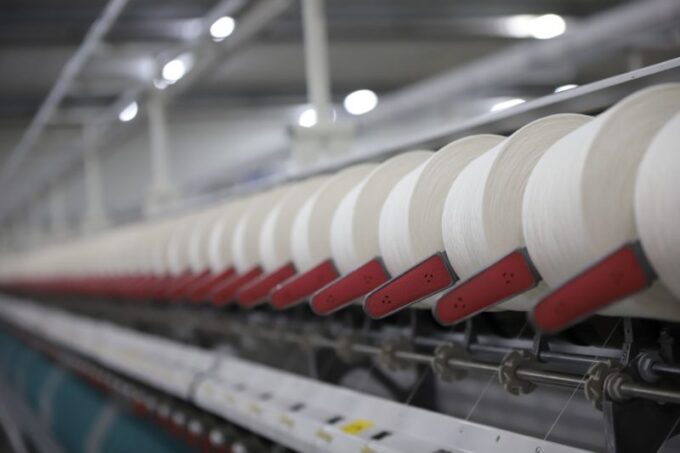
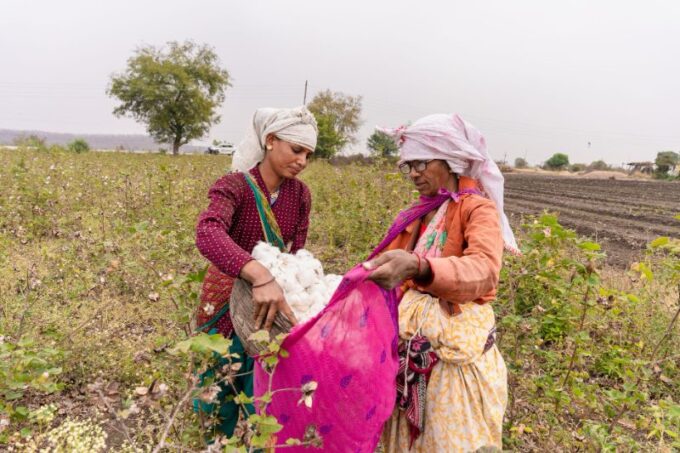
PM MITRA (PM Mega Integrated Textile Region and Apparel) parks are reporting early-stage data showing 15-20% reductions in operational costs for factories within the parks, validating the cluster-based manufacturing approach. Automation is reshaping the sector with larger players adopting AI-driven quality control cameras for real-time fabric defect detection. India’s new cotton crop for October 2026-September 2027 is projected above 320 lakh bales (of 170 kg each), supported by good monsoon rainfall in Karnataka and Maharashtra, which could ease spinning mill input costs from Q4 2026.
What Happens Next?
The four days of Bharat Tex 2026 (July 14-17) will set the tone for India’s textile export pipeline through FY27. Post-event MoU signings, buyer commitments, and investment announcements will be tracked by the Ministry of Textiles as leading indicators. The October 2026 cotton arrival season is the next key supply-side event. India’s Q1 FY27 textile export data from DGCI&S will provide the first hard numbers on whether trade deal tailwinds are translating into actual shipment growth.
Frequently Asked Questions
When and where is Bharat Tex 2026?
Bharat Tex 2026 is held from July 14-17, 2026, at Bharat Mandapam in New Delhi. The event spans 1.6 million square feet and is expected to host over 7,000 international buyers, 1,600 exhibitors, and 1.3 lakh trade visitors.
How big is India’s textile export industry in 2026?
India’s textile and apparel exports stand at approximately $40 billion in FY2026-27, about 10% of India’s total export target of $1 trillion. Textile stocks have outperformed the Nifty 50 by over 30 percentage points in 2026, driven by new trade deals and improved tariff access.
What is the PM MITRA scheme for Indian textiles?
PM MITRA parks are government-backed integrated textile manufacturing zones offering shared utilities, logistics, and infrastructure. Early 2026 data shows factories in PM MITRA parks achieving 15-20% reductions in operational costs, improving global competitiveness for Indian textile manufacturers.








Leave a comment