

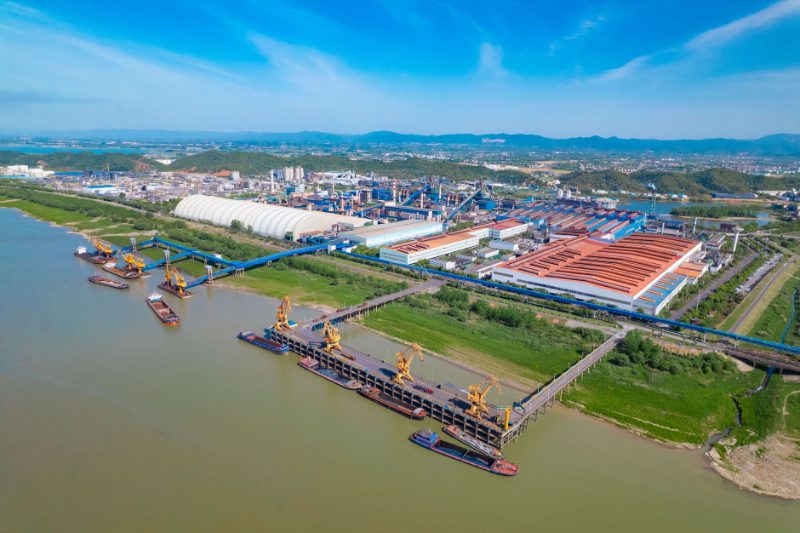
China’s Ministry of Commerce and General Administration of Customs jointly announced an immediate, temporary ban on helium exports on July 10, 2026, with no fixed lifting date — delivering a significant shock to global helium supply chains already strained by the ongoing West Asia conflict that has disrupted Qatar’s helium flows through the Strait of Hormuz. China supplies approximately 20% of global helium output, and the China helium export ban has triggered emergency responses across semiconductor, healthcare, and aerospace industries worldwide.
The China helium export ban follows a broader pattern of Beijing using critical mineral and resource export controls as geopolitical leverage — previously applied to gallium (2023), germanium (2023), and rare earths (2025). Helium is a strategically important industrial gas used in MRI machines, semiconductor chip fabrication, fibre optic cable production, rocket propulsion, and deep-sea diving, with no commercially viable large-scale substitute existing for most of these applications.
How Severe Is the Global Helium Supply Crisis After China’s Export Ban?
The global helium supply situation was already critical before the China helium export ban. The United States accounts for approximately 43% of global helium supply, Qatar for about 33%, and China for 20%, with the remainder from Russia, Algeria, and Canada. The West Asia conflict has intermittently disrupted Qatar’s helium exports through the Strait of Hormuz since late 2025. China’s ban removes a further 20% from available global supply, creating a combined supply shortfall estimated at 30–35% of global demand in the worst-case scenario. Spot helium prices in the US industrial market rose 40–60% within 48 hours of the China helium export ban announcement, according to industry sources.
Which Industries and Countries Are Most Affected by the China Helium Ban?
Semiconductor manufacturers — especially in Taiwan, South Korea, Japan, and the Netherlands — face the most acute impact from the China helium export ban, as liquid helium is used in the superconducting magnets of electron beam lithography tools and quantum computing research facilities. Global chip-making giants including TSMC, Samsung, and ASML have initiated emergency procurement protocols. India’s domestic helium supply is almost entirely import-dependent, with semiconductor parks in Bengaluru, Hyderabad, and Pune at risk of input shortages if the ban persists beyond 60–90 days. Hospitals globally that operate MRI scanners — which use liquid helium to cool superconducting magnets — are also on alert, though most maintain 3–6 month helium inventories.
Market and Geopolitical Reaction
US Secretary of State Marco Rubio called the China helium export ban “an escalatory and destabilising act” and pledged accelerated support for domestic US helium production from Bureau of Land Management reserves. The European Commission convened an emergency meeting of its Critical Raw Materials Board. Japan’s METI activated its strategic helium reserve, estimated at 45 days of domestic supply. Helium producers in Australia — which has rapidly growing helium deposits in the Northern Territory — saw shares surge 20–35% on the ASX as buyers sought alternative long-term supply. India’s Ministry of Petroleum and Natural Gas had not yet issued a statement as of July 13, 2026.
What Happens Next?
The duration of the China helium export ban is uncertain — Beijing has described it as “temporary” without specifying conditions for lifting it. Geopolitical analysts link the ban to ongoing US-China tensions over Taiwan and semiconductor export controls. If the ban continues beyond 90 days, semiconductor production timelines for advanced chips (3nm and below) could be disrupted globally, with cascading impacts on AI hardware supply. The US is accelerating development of helium reserves in Kansas and Wyoming, but new production capacity takes 12–24 months to bring online. International diplomatic channels are reportedly active, with intermediaries seeking a resolution to the China helium export ban.
Frequently Asked Questions
Why did China ban helium exports in July 2026?
China’s Ministry of Commerce and General Administration of Customs announced the China helium export ban on July 10, 2026, describing it as “temporary” with no fixed end date. Analysts believe the ban is linked to ongoing US-China geopolitical tensions, particularly over semiconductor export controls and Taiwan policy, following China’s earlier pattern of using critical resource export restrictions as strategic leverage.
How does the China helium export ban affect semiconductor manufacturing?
Liquid helium is essential for cooling the superconducting magnets in advanced semiconductor fabrication equipment, including electron beam lithography tools used in producing chips at 3nm and below. A prolonged China helium export ban could slow chip production at major fabs in Taiwan (TSMC), South Korea (Samsung), and emerging facilities in Europe and Japan, tightening global supply of advanced semiconductors used in AI, smartphones, and data centres.
What percentage of global helium does China supply?
China supplies approximately 20% of global helium output. Combined with West Asia supply disruptions affecting Qatar (approximately 33% of global supply), the total supply gap from the China helium export ban could reach 30–35% of global demand in the worst-case scenario. The United States (43% of global supply) and Australia (an emerging supplier) are the primary alternative sources.













Leave a comment