

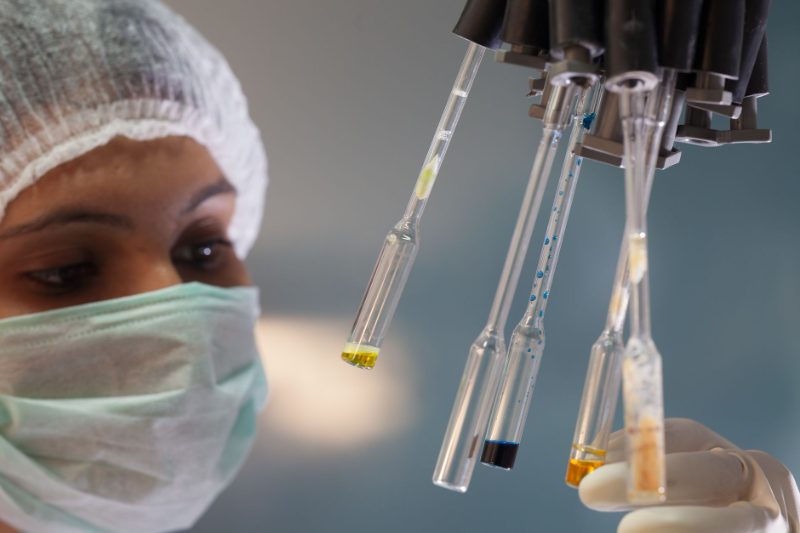
Union Minister of State for Science and Technology Jitendra Singh inaugurated three new advanced research and development facilities at the CSIR-Indian Institute of Chemical Technology (CSIR-IICT) in Hyderabad, marking a significant step in India’s push to build indigenous capabilities in specialty chemicals, sustainable manufacturing, and industrial waste management.
The three newly commissioned facilities are an Effluent Treatment Plant designed for textile wastewater, a Facility for Continuous Processing Technologies, and a Sustainable Engineering Complex. The inauguration, which took place in early July 2026, underscores CSIR-IICT’s expanding role as India’s primary hub for translational chemical research and technology development.
What Are the Three New Facilities at CSIR-IICT Hyderabad?
The Effluent Treatment Plant for textile wastewater addresses a long-standing environmental challenge: the highly coloured, chemically complex wastewater produced by India’s large textile dyeing and processing industry. The facility is designed to develop and demonstrate scalable treatment processes that can be transferred to industrial operators. The Facility for Continuous Processing Technologies is aimed at developing flow chemistry and continuous manufacturing methods — an area of growing importance for pharmaceutical and specialty chemical manufacturing, where continuous processes offer significant advantages in safety, yield, and energy efficiency. The Sustainable Engineering Complex provides a dedicated environment for research into green chemistry, circular economy processes, and industrial ecology.
Why Is This Significant for India’s Chemical Industry?
CSIR-IICT is already one of India’s most productive chemical research institutions, and the addition of these three facilities meaningfully expands its capacity for applied, industry-relevant research. The Continuous Processing Technologies facility in particular is expected to attract collaboration from India’s growing pharmaceutical and agrochemical sectors, where continuous manufacturing is replacing batch processes to improve quality and reduce costs. Meanwhile, the effluent treatment capability directly supports compliance with tightening environmental regulations on textile and dye wastewater discharge — a pressure point for several Indian industrial clusters in Gujarat, Maharashtra, and Tamil Nadu. CSIR-IICT had earlier in 2026 also developed India’s first indigenous process technology for manufacturing hydrofluoroolefins (HFOs), next-generation low-global-warming-potential refrigerants and foam-blowing agents, further cementing its position at the forefront of Indian chemical innovation.
Market Reaction and Industry Response
The inaugurations were welcomed by chemical industry bodies as evidence of sustained government commitment to building India’s scientific infrastructure. India’s chemical production is projected to grow 10.9% in 2026, supported by robust domestic demand and a strengthening China-plus-one sourcing narrative among global buyers. The specialty chemicals segment, which has faced margin pressure in recent quarters due to high raw material costs and export pricing headwinds, is expected to benefit from improved domestic technology access as CSIR-IICT increasingly bridges the gap between laboratory research and commercial deployment.
What Happens Next?
CSIR-IICT’s expanded infrastructure is expected to generate new technology licensing opportunities and pilot-scale demonstration projects in collaboration with Indian chemical manufacturers. The institute is also expected to play a role in India’s push to become a major global supplier of fluorochemicals, following its breakthrough HFO process technology. Separately, the government’s sustained focus on green chemistry and sustainable industrial practices — reflected in the Sustainable Engineering Complex — is aligned with India’s commitments under the Kigali Amendment to the Montreal Protocol, which mandates a phase-down of high-GWP hydrofluorocarbons (HFCs).
Frequently Asked Questions
What is CSIR-IICT and where is it located?
CSIR-IICT (Council of Scientific and Industrial Research – Indian Institute of Chemical Technology) is a premier chemical research institute located in Hyderabad, Telangana. It operates under the CSIR and focuses on applied research in chemicals, pharmaceuticals, agrochemicals, and materials.
What is continuous processing technology in chemicals?
Continuous processing technology refers to manufacturing methods in which chemical reactions are carried out in a steady, uninterrupted flow rather than in discrete batch cycles. It offers advantages in safety, consistency, energy efficiency, and scalability, and is increasingly adopted in pharmaceutical and specialty chemical manufacturing.
What is India’s HFO technology breakthrough at CSIR-IICT?
CSIR-IICT developed India’s first indigenous process technology for manufacturing hydrofluoroolefins (HFOs) — next-generation refrigerants and foam agents with very low global warming potential — reducing India’s dependence on imported HFO technology and positioning the country to become a domestic producer of these critically important specialty chemicals.











Leave a comment