

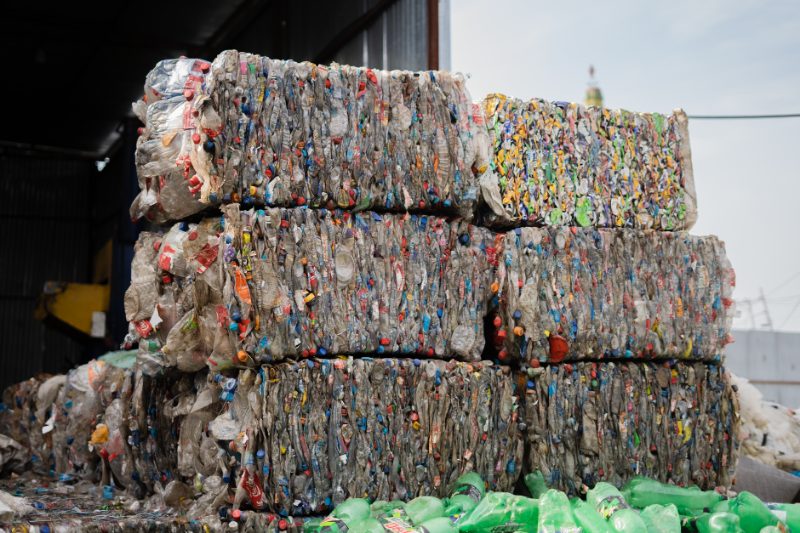
India is raising the bar on plastic sustainability by requiring rigid plastic packaging to contain a minimum of 60% recycled content by financial year 2028–29, under the country’s Extended Producer Responsibility (EPR) framework. The mandate, which applies to producers, importers, and brand owners operating in one of the world’s largest packaging markets, is set to fundamentally reshape demand for recycled polymers and drive significant investment across India’s plastics recycling value chain.
The recycled content obligation is part of a stepped schedule under India’s Plastic Waste Management Rules, which has progressively tightened requirements on plastic packaging since its introduction. Buyers of rigid plastic packaging — from FMCG companies and food and beverage brands to pharmaceutical and industrial packaging users — must now integrate certified recycled content into their supply chains or face compliance risk.
Why Is India’s Recycled Plastic Packaging Mandate Significant?
India is among the world’s largest packaging markets, making its EPR-linked recycled content mandate one of the most consequential sustainability policy moves in the global plastics industry. The 60% target by FY28–29 is ambitious relative to current recycled content levels in most rigid plastic packaging, which typically range from 10% to 30% depending on the application. Achieving the mandate will require a substantial build-out of collection infrastructure, sorting capacity, and reprocessing facilities — creating significant investment opportunities across the plastics recycling sector. Industry analysts note that demand for certified recycled polymers that meet consistent technical, safety, and environmental standards will sharply outpace current supply, creating a structural growth opportunity for quality-focused recyclers.
What Does This Mean for India’s Plastics Industry?
The India Plastic Industry is projected to reach USD 47.04 billion in 2026 and grow to USD 63.69 billion by 2031, at a CAGR of 6.24%. Within this, the recycling sub-sector is poised for accelerated growth as EPR compliance requirements bite. Brand owners sourcing packaging from Indian converters will need to verify recycled content claims, putting pressure on the entire supply chain to adopt traceability systems and quality certification. The All India Plastics Manufacturers’ Association (AIPMA) and the Chemicals and Petrochemicals Manufacturers’ Association (CPMA) jointly hosted the 3rd Global Conclave on Plastics Recycling and Sustainability in early July 2026, positioning recycled content compliance as the defining issue for India’s plastics sector in the second half of the decade.
Market Reaction and Industry Response
Recycling industry players and material recovery specialists are responding by scaling up infrastructure and certifications. The next phase of India’s plastics recycling evolution, industry leaders note, cannot rely on volume alone — it must deliver cleaner feedstock streams, better sorting, improved material design, and higher-grade recyclates that meet packaging industry standards. International plastics buyers and multinational FMCG companies sourcing from India are already factoring EPR compliance into their vendor qualification processes, raising the bar for Indian converters and packaging manufacturers. The recently published PPRDC Plastics Recycling Handbook has been cited as a key knowledge resource for industry players navigating the technical and regulatory transition.
What Happens Next?
The stepped recycled content schedule leading to 60% by FY28–29 means companies have approximately three financial years to build compliant supply chains. Regulators are expected to tighten monitoring and enforcement progressively, making early investment in certified recycled material sourcing a competitive advantage. India’s upcoming HIPLEX 2026 — the country’s third-largest plastics expo, set for Hyderabad in August — is expected to feature significant coverage of recycling technology, EPR compliance solutions, and circular economy applications as the industry mobilises around the mandate.
Frequently Asked Questions
What is India’s recycled plastic content mandate for packaging?
India’s EPR framework requires rigid plastic packaging to contain a minimum of 60% recycled content by financial year 2028–29. The rule applies to all producers, importers, and brand owners and is part of India’s Plastic Waste Management Rules.
Which types of plastic packaging are covered by India’s EPR recycled content rules?
The EPR recycled content mandate applies to rigid plastic packaging across all categories, including packaging used in food and beverages, personal care, pharmaceuticals, and industrial applications. Producers, importers, and brand owners are all obligated to comply.
What is India’s plastics market size in 2026?
India’s plastics industry is projected to be worth USD 47.04 billion in 2026, growing to USD 63.69 billion by 2031 at a CAGR of 6.24%, making it one of the largest and fastest-growing plastics markets in the world.










Leave a comment