


India’s paints and coatings industry, currently valued at approximately USD 9.6 billion, is on a structural growth trajectory toward USD 16.5 billion — but the path there has been complicated by the margin stress that defined FY25, according to a new analysis by Rubix Data Sciences. The report identifies FY25 as “a clear inflection point” for the sector, exposing intensifying competition, supply chain vulnerabilities, and compressed profitability even as the industry’s long-term demand story remains intact.
India’s paint market is projected to grow from USD 11.45 billion in 2025 to USD 12.51 billion in 2026, expanding at a CAGR of 9.28% to reach USD 19.5 billion by 2031. The decorative segment continues to dominate, accounting for over 70% of total paint consumption, while industrial and specialty coatings are gaining ground on the back of infrastructure development, automotive production, and sustainability-driven reformulation requirements.
What Caused FY25 Margin Stress in India’s Paint Industry?
The Rubix Data Sciences analysis identifies multiple converging pressures in FY25: raw material cost inflation driven by crude oil price volatility, heightened competitive intensity following the entry of new-age players like Birla Opus into the market, and a slowdown in premium urban housing demand that dampened volumes in the high-margin decorative segment. Crude oil derivatives — including titanium dioxide, resins, and solvents — account for 40–50% of paint production costs, making the sector acutely sensitive to crude price movements. The US-Iran conflict pushed crude sharply higher through the first half of 2026, extending the margin pressure into FY26. Established players such as Asian Paints, Berger Paints, and Kansai Nerolac all reported margin compression in recent quarters as price hikes lagged cost increases.
What Are the Key Growth Drivers for India’s Paint Market?
Despite near-term challenges, the structural growth case for India’s paint industry remains compelling. The Bureau of Indian Standards (BIS) and Central Pollution Control Board (CPCB) enforcement of volatile organic compound (VOC) limits is accelerating the shift to water-borne and eco-friendly formulations, opening a new premium segment. The government’s infrastructure push — including smart cities, affordable housing, and expressway development — is driving industrial and protective coatings demand. The automotive coatings segment is benefiting from rising vehicle production and the growing refinish market. PPG’s extension of its joint venture with Asian Paints through 2041 — covering industrial, protective, marine, packaging, automotive, and powder coatings — signals long-term confidence in India’s market from one of the world’s largest coatings companies. Nippon Paint’s entry into India’s automotive surface protection segment with its n-SHIELD Paint Protection Film range adds another dimension of innovation and competition to the market.
Market Reaction and Industry Response
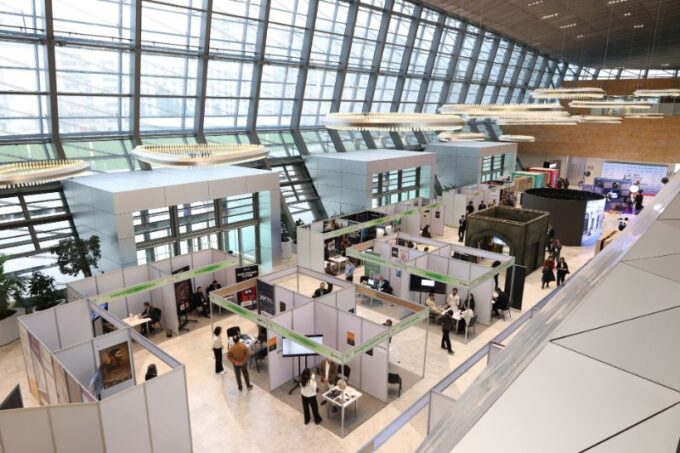
Industry stakeholders remain broadly optimistic about demand revival in the current fiscal year and beyond. Most paint companies have implemented multiple price increases to recover margins, and with crude oil now declining — down over 15% in the past month on US-Iran peace talk developments — the margin outlook for FY27 is improving. The Paint India 2026 event in Mumbai earlier this year featured a wave of product launches and technology showcases, underscoring the industry’s forward momentum despite near-term pressures. The organised sector — led by Asian Paints, Berger Paints, Kansai Nerolac, Birla Opus, and Indigo Paints — continues to consolidate market share from the unorganised segment, a structural trend that supports top-line growth even in challenging conditions.
What Happens Next?
The Rubix Data Sciences analysis projects that India’s paint industry will need to navigate three near-term imperatives: stabilising margins as input costs normalise, managing the competitive disruption from new entrants, and capitalising on the shift toward eco-friendly water-borne products. Companies that invested in distribution expansion, premium product portfolios, and water-based technology during the margin downcycle are expected to emerge with stronger competitive positions. The medium-term target of USD 16.5 billion — and the broader industry aspiration of a USD 19.5 billion market by 2031 — remains achievable if demand conditions in housing and infrastructure continue to support volume growth.
Frequently Asked Questions
What is the current size of India’s paint industry?
India’s paint industry is valued at approximately USD 9.6 billion at the production level, with the broader market projected at USD 11.45 billion in 2025, growing to USD 12.51 billion in 2026. The sector is targeting USD 16.5 billion in the medium term and USD 19.5 billion by 2031.
Who are the major players in India’s paint industry?
India’s paint industry is led by Asian Paints — the country’s largest and among the top eight coatings companies globally with revenues of ₹33,797 crore — followed by Berger Paints, Kansai Nerolac, AkzoNobel India, Indigo Paints, and the recently launched Birla Opus, which has disrupted competitive dynamics since its entry.
What is driving the shift to water-borne paints in India?
Enforcement of VOC (volatile organic compound) emission limits by the BIS and CPCB is the primary regulatory driver pushing Indian paint formulators toward water-borne and eco-friendly chemistries. Consumer preference for low-odour, low-emission interior paints in urban markets is also accelerating the transition to water-based products.











Leave a comment