

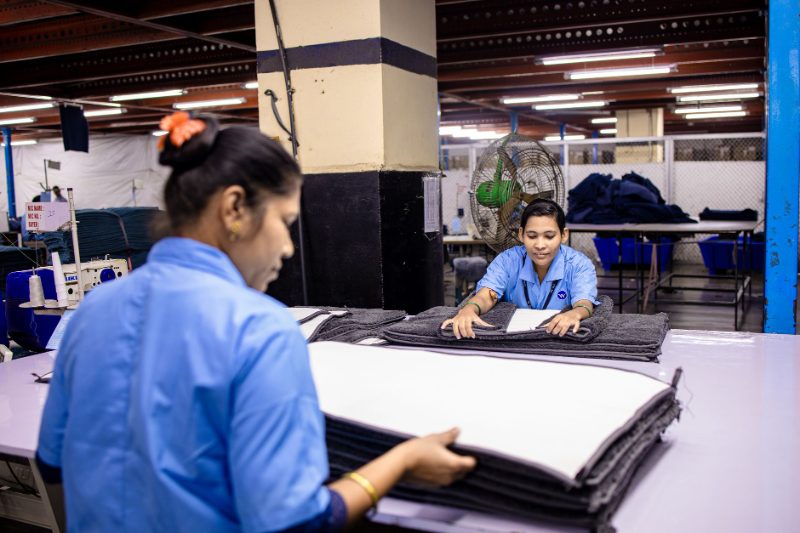
India exports FY26 are projected to inch up to roughly $850 billion from $825 billion in FY25, according to the Global Trade Research Initiative (GTRI), as rising protectionism, slowing global demand, and new climate-linked trade barriers converge to squeeze growth. The think tank’s latest assessment adds to a run of cautious trade data, including a 2.2 percent decline in textile and garment exports to $35.8 billion.
GTRI’s report points to a combination of pressures: US tariffs that pushed India’s exports to America down about 21 percent between May and November 2025 under a 50 percent duty regime, and the European Union’s Carbon Border Adjustment Mechanism (CBAM), which took effect January 1, 2026 and imposes an effective carbon tax on steel and other carbon-intensive imports. The think tank noted India has now signed 18 free trade agreements, but argues the priority must shift from signing new deals to making existing FTAs deliver measurable export gains.
Which Sectors Are Driving the India Exports FY26 Slowdown?
Textiles and garments, historically among India’s largest labour-intensive export categories, fell 2.2 percent in dollar terms and 2.1 percent in rupee terms, GTRI found. Engineering goods exporters have separately warned that a doubling of US steel and aluminium tariffs could further squeeze margins, while CBAM compliance costs are beginning to weigh on metal exporters shipping to the EU.
What Does GTRI Recommend for Indian Exporters?
GTRI’s core recommendation is that India stop prioritising the signing of new trade pacts and instead focus on utilisation, ensuring exporters actually claim the tariff preferences available under the 18 FTAs already in force. The think tank argues that low FTA utilisation rates have historically left billions of dollars in potential tariff savings unclaimed by Indian exporters.
Market and Trade Reaction
Export-oriented stocks in textiles and metals saw mixed trading as the GTRI figures circulated, with some investors weighing the modest overall export growth against sector-specific weakness. Industry bodies representing engineering exporters echoed concerns that India is entering one of the toughest global trade environments in recent years, one that could persist through the rest of FY26.
What Happens Next?
The Commerce Ministry is expected to review sector-wise export performance data through the remainder of the fiscal year, with exporter associations pushing for expanded interest subvention and CBAM-compliance support schemes. Analysts will watch whether the 18 existing FTAs see improved utilisation rates in the coming quarters.
Frequently Asked Questions
How much are India’s exports projected to grow in FY26?
GTRI projects India exports FY26 will rise only modestly to about $850 billion from $825 billion in FY25, reflecting a tough global trade environment.
Why did textile exports decline?
India’s textile and garment exports fell 2.2 percent to $35.8 billion, pressured by weak global demand and rising competition in key markets.
What is GTRI’s main recommendation?
GTRI recommends India focus on improving utilisation of its 18 existing free trade agreements rather than prioritising new deals, to capture unclaimed tariff savings.









Leave a comment