

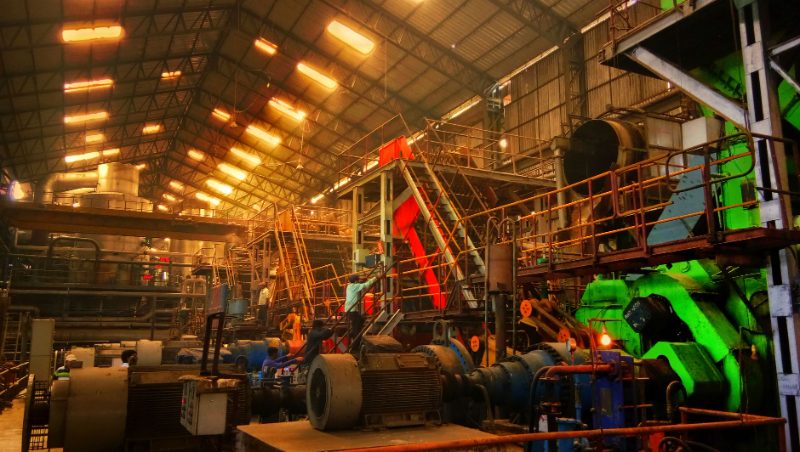
Maruti Suzuki has commenced commercial production at Plant D of its Hansalpur manufacturing facility in Gujarat, taking the site’s total annual capacity to 1 million units — a milestone no other Suzuki plant anywhere in the world has reached at a single location. The new line, operational from July 30, 2026, will initially build the company’s flagship battery electric vehicle, the e Vitara.
The commissioning of Plant D adds 250,000 units of annual capacity to the Hansalpur facility, run by subsidiary Suzuki Motor Gujarat, lifting it from 750,000 to 1 million units a year. With Plant D online, Maruti Suzuki’s total manufacturing capacity across its Indian plants — spanning Gurugram, Manesar and Hansalpur — now stands at 2.9 million units annually, cementing Hansalpur’s position as the largest passenger vehicle manufacturing plant at a single location in the country. The Hansalpur complex, spread across roughly 600 acres, has been built up in phases since Suzuki Motor Gujarat began operations there in 2017, with each successive plant (A, B, C and now D) adding fresh capacity as demand grew.
Why Did Maruti Suzuki Expand Hansalpur Plant Capacity Now?
The expansion arrives as Maruti Suzuki works to meet rising demand for SUVs and electric vehicles following GST 2.0 rate cuts that have lowered on-road prices across several segments since late 2025. The e Vitara, the company’s first mass-market BEV, has drawn strong booking interest domestically and is also central to Maruti Suzuki’s export strategy for Europe, Japan and other right-hand-drive markets. Housing EV production at Hansalpur, rather than retrofitting an existing petrol line, lets the company scale battery-electric output without disrupting production of its high-volume compact cars such as the Baleno, Fronx and Brezza, which continue to be assembled at the same complex.
What Does This Mean for India’s Automotive Manufacturing Sector?
Hansalpur touching 1 million units of annual capacity reinforces Gujarat’s role as one of India’s core automotive manufacturing hubs, alongside Chennai, Pune and the Delhi-NCR belt. The expansion is expected to benefit the region’s component and tooling suppliers who feed Suzuki Motor Gujarat’s assembly lines, and it adds fresh momentum to India’s push to become a global small-car and EV export base. Rival automakers, including Hyundai, Tata Motors and Kia, have also been ramping up EV capacity in India over the past year, making Plant D’s launch part of a broader industry-wide capacity build-out rather than an isolated event. For component suppliers and logistics providers around Hansalpur, the additional 250,000-unit line also means steadier order volumes heading into the festive season.
Market Reaction and Industry Response
Industry trackers and auto analysts have flagged the milestone as evidence that India’s passenger vehicle industry is on course for record volumes in calendar year 2026, supported by softer financing costs and steady urban demand. The Society of Indian Automobile Manufacturers (SIAM) has previously highlighted capacity expansion by leading OEMs as a key indicator of sustained investor confidence in India’s auto manufacturing base. For Maruti Suzuki specifically, the Hansalpur milestone follows a string of capacity and product announcements through 2026 aimed at defending its market leadership as competition intensifies in the compact SUV and EV segments, where rivals have been chipping away at the company’s traditionally dominant share.
What Happens Next?
Plant D is expected to ramp up e Vitara output gradually through the rest of calendar 2026 as Maruti Suzuki calibrates production to booking volumes and export orders. Industry watchers will be tracking whether the company adds further EV nameplates to the Hansalpur line as its BEV portfolio expands, and whether the 2.9-million-unit national capacity is sufficient to meet festive-season and export demand later this year. Maruti Suzuki’s upcoming quarterly results are likely to offer the next concrete update on how quickly the new line is scaling, and on early export volumes for the e Vitara from the Hansalpur facility.
Frequently Asked Questions
What is Maruti Suzuki’s total manufacturing capacity now?
With Plant D operational, Maruti Suzuki’s combined annual manufacturing capacity across its Gurugram, Manesar and Hansalpur facilities in India has reached 2.9 million units.
What will Plant D at Hansalpur manufacture?
Plant D will initially produce Maruti Suzuki’s flagship battery electric vehicle, the e Vitara, adding 250,000 units of annual capacity to the Hansalpur facility.
Why is the Hansalpur plant’s 1 million unit capacity significant?
It is the first manufacturing site in Suzuki’s global history to reach 1 million units of annual capacity at a single location, making Hansalpur the largest single-site passenger vehicle plant in India.







Leave a comment