

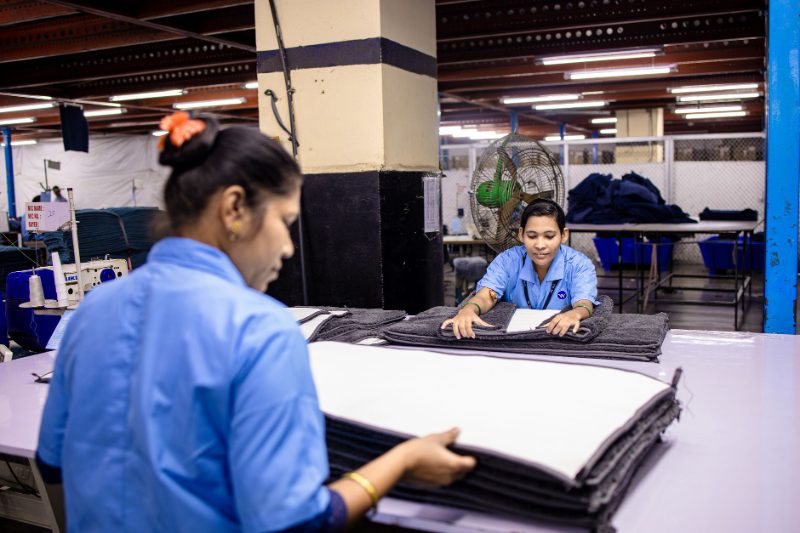
Vietnam and India have agreed to ease market-access barriers and work towards a $25 billion bilateral trade target, a deal that carries direct implications for the India Vietnam textile trade corridor connecting apparel manufacturers, fabric suppliers and sourcing offices in both countries. The agreement was reached at the 19th session of the Vietnam-India Joint Commission Meeting on Trade, Economic, Scientific and Technological Cooperation, held in New Delhi on 17 September 2026.
Vietnam’s Politburo Member and Minister of Foreign Affairs Le Hoai Trung and India’s External Affairs Minister Subrahmanyam Jaishankar co-chaired the meeting. The two sides reviewed progress since the 18th session held in Hanoi in October 2023 and agreed to coordinate on high-level commitments, remove trade obstacles, and advance cooperation projects with timely, tangible results, according to Fibre2Fashion, citing local media reports.
Why Does the Vietnam-India Trade Deal Matter for Textiles?
For apparel and textile supply chains specifically, the ministers flagged improvements in direct flights, road, rail and seaport links, as well as two-way QR-code retail payment connectivity, as priorities that could streamline sourcing and logistics between the two countries. Jaishankar proposed that Vietnam facilitate greater access for Indian-origin goods including pharmaceuticals, fruits and meat, while both sides agreed to take up specific technical and market-access procedures at the 2026 meeting of the Subcommittee on Bilateral Trade Cooperation.
What Does This Mean for India’s Textile Industry?
Vietnam is one of the world’s largest garment exporters and a major competitor to India in apparel manufacturing, but it is also an important sourcing and investment partner for Indian textile firms looking to diversify supply chains. Easier market access and improved logistics connectivity would help Indian textile and apparel exporters, whose shipments grew 6.39 per cent year-on-year to $3.119 billion in August 2026, better compete on delivery times against regional rivals. India’s textile and apparel sector’s share of total exports had declined to 7.12 per cent in August 2026 from 8.44 per cent a year earlier, making new trade-facilitation channels like this one more significant for the sector’s recovery.
Market Reaction and Industry Response
Trung welcomed Indian investment in infrastructure, pharmaceuticals and energy in Vietnam with a long-term view, while both ministers agreed to increase direct flights and expand road, rail and seaport connectivity tied to the Asia-Europe shipping route. Industry bodies such as CITI and TEXPROCIL have previously pushed for exactly this kind of expanded market access as India works to offset the impact of elevated US tariffs on textile and apparel shipments, which raised total duties on Indian goods to over 60 per cent earlier in 2025 before the India-US trade deal eased the burden.
What Happens Next?
The 2026 Subcommittee on Bilateral Trade Cooperation meeting will take up the specific technical and market-access issues raised at the New Delhi session, with both governments expected to formalise timelines for improved logistics and connectivity. Textile exporters and sourcing agents on both sides will be watching for concrete announcements on flight routes, port connectivity and payment infrastructure that could translate the $25 billion trade target into faster order fulfilment.
Frequently Asked Questions
What did Vietnam and India agree on for trade?
Vietnam and India agreed to ease market-access issues and work towards a $25 billion bilateral trade target, with improvements to flights, logistics and payment connectivity identified as priorities.
How does this affect India’s textile industry?
Better logistics and market access between India and Vietnam, a major garment-exporting rival, could help Indian textile and apparel exporters compete more effectively on delivery times and sourcing flexibility.
When will the technical details of the deal be finalised?
Specific technical and market-access procedures will be discussed further at the 2026 meeting of the Subcommittee on Bilateral Trade Cooperation, following the 17 September ministerial meeting in New Delhi.







Leave a comment