

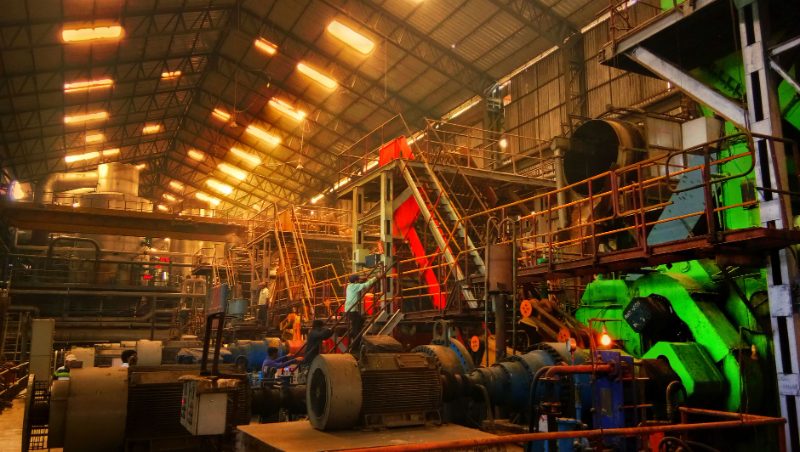
Grasim Industries’ Birla Opus brand has recorded ₹1,661 crore in paints revenue for Q1 FY27, declaring a double-digit combined market share in India’s organised decorative paint market. The result vindicates the group’s ₹100 billion capex bet — the largest single investment in Indian paints history — which has created 1,096 million litres per annum of installed capacity across multiple states.
The competitive disruption is structural, not cyclical. With per-litre production costs falling as utilisation improves, and a distribution network exceeding 25,000 touchpoints, Birla Opus can sustain aggressive dealer incentives through at least FY28. Asian Paints has responded through tactical discounting in Tier-2 and Tier-3 markets. The CCI’s ongoing probe into exclusive dealer arrangements adds a regulatory dimension to what was previously a purely commercial battle.
How Has Birla Opus Disrupted the Indian Paint Market?
Birla Opus entered the Indian paint market in early 2024 backed by a ₹10,000 crore capex programme across states including Maharashtra, Rajasthan, Andhra Pradesh, and Uttar Pradesh. By Q1 FY27, it has scaled to 1,096 MLPA installed capacity — placing it among the top capacity holders in the country within just three years. Its double-digit market share claim signals that the days of the four-player oligopoly (Asian Paints, Berger, Kansai Nerolac, Indigo) may be numbered.
What Are the Implications for Asian Paints and Competitors?
Asian Paints, which held over 40% market share before Birla Opus’s entry, has seen margin pressure as the new entrant uses volume pricing and dealer incentives to capture shelf space. Berger Paints and Kansai Nerolac face a similar squeeze. Industry analysts estimate that every 1% market share gain by Birla Opus translates to roughly ₹600–800 crore in annual revenue movement across the sector, making this a significant structural shift for all listed paint companies.
Market Reaction and Industry Response
Asian Paints’ stock declined approximately 12% over the past year as Birla Opus grew its footprint. Berger Paints is countering with a ₹2,000 crore capex push of its own. Trade bodies have flagged concerns about dealer exclusivity arrangements, which the CCI is now investigating. The Indian Paint Association (IPA) has called for a level playing field on raw material procurement and dealer margin norms.
What Happens Next?
Birla Opus is expected to commission additional capacity in FY28, targeting utilisation above 50% of the 1,096 MLPA base. The company has indicated ambitions to cross ₹7,000 crore in revenue by FY29, which would place it firmly in second position in the Indian decorative paint market. Watch for its Q2 FY27 results and any CCI developments on the dealer exclusivity probe.
Frequently Asked Questions
What is Birla Opus’ revenue for Q1 FY27?
Birla Opus recorded ₹1,661 crore in paints revenue for Q1 FY27, with a double-digit market share in India’s organised decorative paint segment. This reflects rapid scaling after the brand’s 2024 launch.
How much has Grasim invested in Birla Opus?
Grasim Industries has committed approximately ₹10,000 crore (around ₹100 billion) in capex for Birla Opus, creating 1,096 MLPA of installed manufacturing capacity across multiple Indian states.
Is Birla Opus profitable?
Birla Opus is in an investment phase and has not yet turned profitable, as the company continues to prioritise market share capture and capacity utilisation over near-term margins. Profitability is expected as utilisation rates improve toward FY29.








Leave a comment