

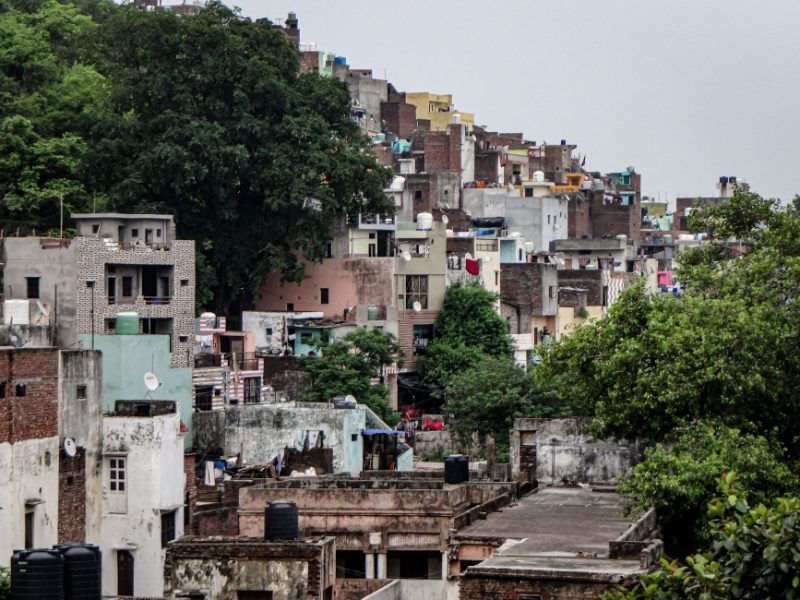
The Government of India’s SWAMIH (Special Window for Affordable and Mid-Income Housing) fund is driving architectural paint demand by targeting completion of 1 lakh previously stalled residential units across urban India. As construction resumes on dormant projects, the SWAMIH fund housing programme is generating structured, institutional-scale coating and waterproofing procurement that does not follow normal seasonal demand patterns.
SWAMIH completions are particularly attractive for paint manufacturers because units completed simultaneously in large housing societies fall under institutional procurement — enabling bulk supply agreements at scale. The average painting cost per 1,000 sq ft of residential space runs ₹15,000–25,000, implying a total addressable spend of ₹1,500–2,500 crore across the 1 lakh target units.
How Does the SWAMIH Fund Create Paint Demand?
The SWAMIH fund provides last-mile financing to stalled residential housing projects, enabling developers to restart construction and complete delivery to homebuyers. When a large housing society completes simultaneously — as happens with SWAMIH-funded projects — the painting requirement comes as a single institutional order rather than individual flat-by-flat demand. This creates a B2B procurement pipeline for paint companies willing to bid for bulk supply contracts. For paints companies with institutional sales teams, such as Asian Paints (through its Ezycolour Home Solutions division) and Berger Paints, SWAMIH completions represent a high-value, low-competition sales channel.
Which Paint Companies Benefit Most?
Asian Paints and Berger Paints, which have dedicated B2B institutional coating divisions, are best positioned to capture SWAMIH-linked procurement. Birla Opus, with its 25,000-plus dealer touchpoints and active institutional outreach, is also targeting large housing project completions as part of its market share ramp-up strategy. Waterproofing product specialists like Pidilite and Dr. Fixit benefit from the pre-painting waterproofing requirement on most stalled projects, as moisture damage is common in units that have been structurally complete but unfinished for years.
Market Reaction and Industry Response
The Indian Paint Association has flagged SWAMIH completions as a structural demand driver in its FY27 sector outlook. Paint company managements have mentioned SWAMIH and government housing completions as demand tailwinds in their Q4 FY26 earnings calls. Analyst estimates suggest that government-linked housing completions (SWAMIH, PMAY Urban, Pradhan Mantri Awas Yojana) could collectively account for 12–15% of incremental decorative paint demand in FY27.
What Happens Next?
SWAMIH’s target of 1 lakh unit completions is spread across FY27 and FY28. Paint procurement orders for stalled housing society completions typically lag construction resumption by 6–9 months, meaning most SWAMIH-linked paint demand will materialise in H2 FY27 and H1 FY28. Companies with institutional tender teams and ability to supply waterproofing, primer, and finish coats as a package will have a competitive edge in capturing this demand.
Frequently Asked Questions
What is the SWAMIH fund?
SWAMIH (Special Window for Affordable and Mid-Income Housing) is a government-backed fund that provides last-mile financing to stalled residential housing projects in India. Its goal is to help developers complete delivery of units to homebuyers who had paid but not received possession due to financial distress or regulatory issues.
How much paint demand does SWAMIH generate?
Based on an average painting cost of ₹15,000–25,000 per 1,000 sq ft and the target of 1 lakh residential units (assuming an average size of 700–1,000 sq ft each), the total addressable paint spend from SWAMIH completions is estimated at ₹1,500–2,500 crore.
How does SWAMIH-linked procurement differ from retail paint sales?
SWAMIH projects create institutional bulk procurement rather than individual consumer purchases. Entire housing societies are painted simultaneously, allowing paint companies to supply large volumes under a single contract. This B2B model typically offers lower margins per litre but higher volume certainty and lower distribution costs compared to retail sales through dealer networks.









Leave a comment