

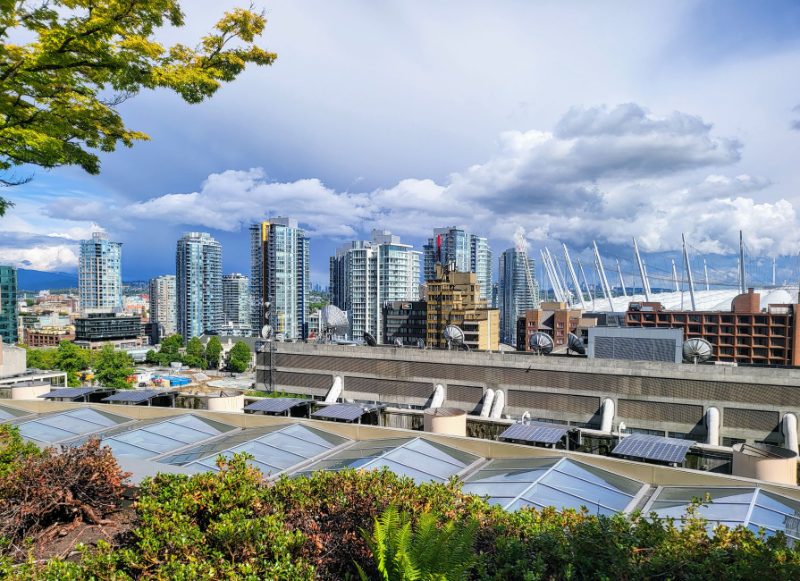
Post-heat-dome regulatory guidance sets new SRI and emissivity benchmarks for liquid-applied cool roofs.
Climatological studies examining the 2021 Pacific Northwest heat dome event — which caused unprecedented mortality in Vancouver and Portland — are driving new regulatory guidance on building thermal performance. Liquid-applied cool roof coatings with high Solar Reflective Index (SRI > 82) and thermal emissivity (> 0.90) have emerged as the primary recommended intervention for mitigating indoor overheating without mechanical cooling.
At these specifications, surface temperatures on a coated roof can be 30–40°C lower than an uncoated dark membrane under peak solar irradiance — reducing indoor temperatures by 5–8°C and cooling energy demand by 15–25%. For Indian paint manufacturers, this regulatory trajectory is a preview of where GRIHA and BEE rating schemes are heading. Manufacturers with validated SRI certifications will be first-mover beneficiaries when mandates arrive.
Industry Implications and Market Context
Cool roof coatings are a growing segment in the Indian paint market, with AEEE and BEE promoting adoption through energy codes. Vancouver’s experience validates the market case for cool roofs in hot climates — a directly applicable lesson for India’s tier-2 and tier-3 cities.
What Happens Next?
Watch for GRIHA and BEE updating cool roof specifications for India, with manufacturers needing SRI > 82 certification for premium market access.
Frequently Asked Questions
What is SRI (Solar Reflectance Index)?
SRI is a measure of a material’s ability to reject solar heat, combining solar reflectance and thermal emissivity into a single index. Higher SRI means cooler roofs; LEED certification typically requires SRI > 82 for low-slope roofs.
How do cool roofs benefit Indian buildings?
Cool roof coatings can reduce indoor temperatures by 5–8°C and cut air conditioning energy demand by 15–25% in Indian climates, directly addressing rising energy costs and urban heat island effects in cities like Mumbai, Delhi, and Chennai.
Where can I find more information?
The Alliance for an Energy Efficient Economy (AEEE), Bureau of Energy Efficiency (BEE), and Indian Paint Association (IPA) provide guidance on cool roof specifications and certification for the Indian market.










Leave a comment