

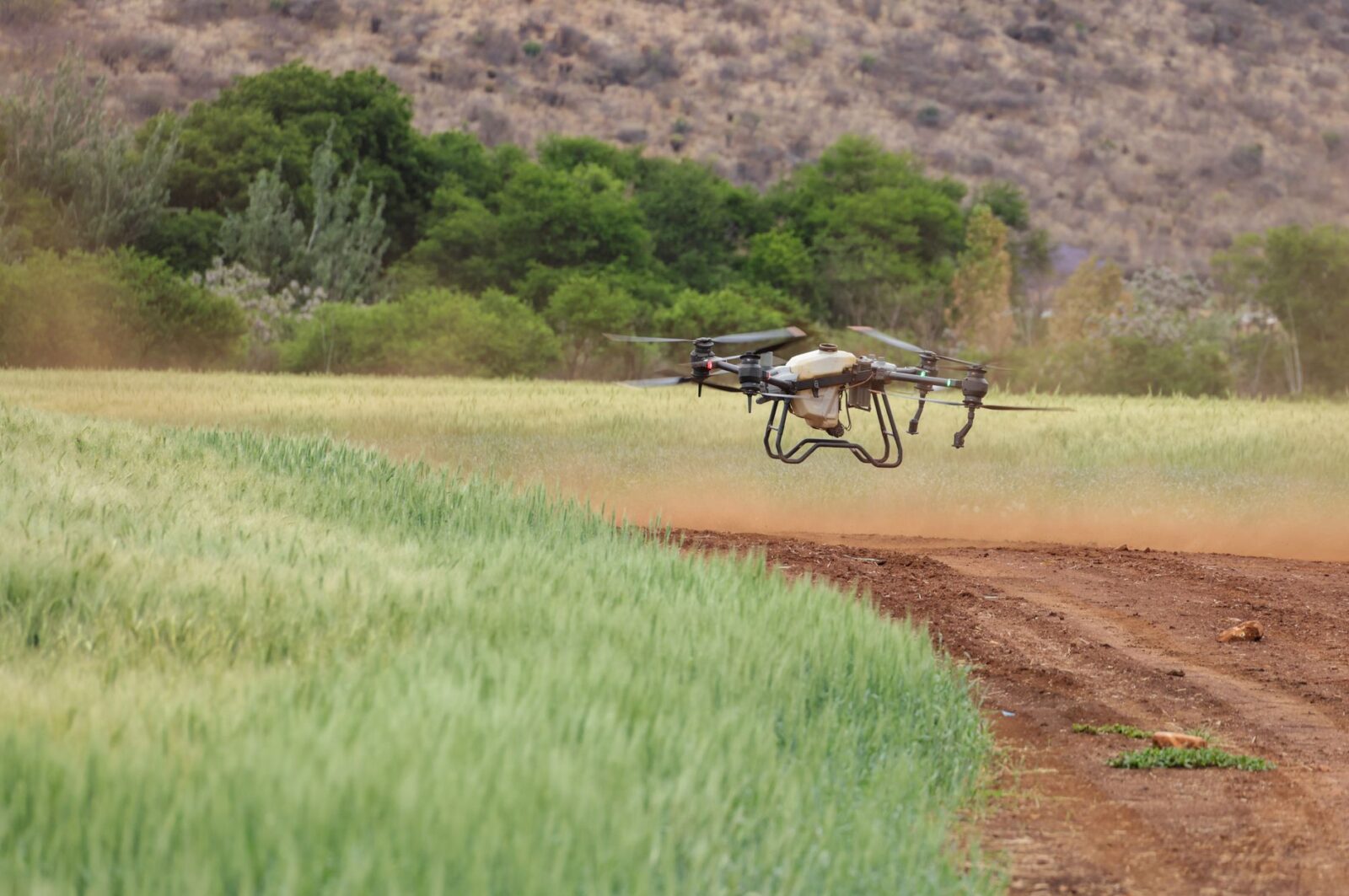
Artificial intelligence can add nearly ₹70,000 crore to India’s agricultural economy, Union Minister Jitendra Singh declared at a government AI summit in July 2026 — positioning agriculture as the next frontier for India’s AI revolution after urban tech and startup ecosystems. Singh asserted that the next phase of India’s startup boom should emerge from farms rather than from tech hubs in Bengaluru or Gurugram, with AI in agriculture India poised to transform productivity, supply chain efficiency, and farmer income at scale.
This announcement coincides with a wave of agri-AI funding: multiple startups are deploying AI-driven solutions in precision farming, crop disease detection, yield prediction, and rural supply chain optimisation. India’s 140 million farming families represent one of the largest untapped markets for AI applications globally, and both government policy and private capital are now converging on this opportunity.
How Can AI Add ₹70,000 Crore to India’s Agricultural Economy?
The ₹70,000 crore AI agriculture opportunity in India spans multiple value chains. In precision farming, AI-powered sensors and satellite imagery can help farmers optimise irrigation, fertiliser application, and pest control — reducing input costs by 15–25% while improving yields. In crop disease detection, AI models trained on millions of images can diagnose plant diseases from a smartphone photo in under 10 seconds, potentially saving crops worth thousands of crores that are lost annually to undetected disease outbreaks. Supply chain AI can reduce post-harvest losses — estimated at ₹92,000 crore annually in India — by predicting spoilage, optimising cold chain logistics, and better matching supply with demand. AI-enabled price discovery platforms are also helping farmers get better prices by connecting them directly to mandis and institutional buyers using real-time market intelligence.
Which AI Agriculture Startups Are Leading India’s Rural Tech Revolution?
Several Indian startups are building specifically for the AI agriculture India market. CropIn Technology, backed by Asian Development Bank, uses satellite data and machine learning to provide farm management and crop intelligence to over 7 million farmers across 52 countries. DeHaat has raised over $115 million and uses AI to provide personalised agronomy advisory, input procurement, and output marketing to smallholder farmers in UP, Bihar, and Odisha. Ninjacart, valued at over $1 billion, uses AI-driven demand forecasting and route optimisation to connect 150,000 farmers with 1.5 lakh retail outlets. The government’s AgriStack digital infrastructure — a federated farmer database with land records, soil health data, and crop history — is now being opened to AI startups as a foundation for precision agriculture services at national scale.
Industry Reaction and Expert Commentary
Union Minister Jitendra Singh urged India’s startup ecosystem to “look beyond the cities” and target the 65% of Indians who still depend on agriculture for livelihoods. Bhavish Aggarwal, founder of Ola and Krutrim AI, said India’s next AI opportunity is “not just in enterprise — it is in making AI work for the farmer, the weaver, the fisherman.” NASSCOM President Debjani Ghosh pointed to the AgriStack-AI integration as a potential “digital green revolution,” estimating it could double farmer incomes in pilot districts within five years. International investors including the Bill & Melinda Gates Foundation and the Asian Development Bank have both increased India agri-AI grant and equity commitments in 2026, citing India’s scale as a proving ground for global food security solutions.
What Happens Next for AI in Indian Agriculture?
The Indian government’s Digital Agriculture Mission, backed by a ₹2,817 crore allocation, is expected to roll out the next phase of AgriStack integration in Q3 2026 — enabling AI startups to build on verified farmer data for personalised advisory and credit services. The PLI scheme for agri-tech hardware (including AI-powered irrigation sensors, drones, and soil testing devices) is being finalised for announcement in Q4 2026. NITI Aayog’s working group on AI in agriculture has recommended mandatory AI-assisted pest surveillance in 50 high-risk districts by 2027, which would create a ₹500 crore annual market for agri-AI service providers. With the India-AI Impact Summit identifying agriculture as a priority sector, and VC funds like Omnivore and Ankur Capital doubling their agri-tech allocations, the ₹70,000 crore opportunity Union Minister Singh described appears well on track.
Frequently Asked Questions
How can AI benefit Indian farmers?
AI benefits Indian farmers through precision farming (optimising water, fertiliser, and pesticide use), crop disease detection via smartphone AI models, yield prediction and harvest planning, supply chain optimisation to reduce post-harvest losses, and AI-driven price discovery platforms that help farmers secure better market prices. Government initiatives like AgriStack provide the data foundation for these AI applications to scale across India’s 140 million farming families.
What is the AI agriculture market size in India?
Union Minister Jitendra Singh stated that AI can add ₹70,000 crore (approximately $8.4 billion) to India’s agricultural economy. India currently loses approximately ₹92,000 crore annually to post-harvest losses alone, a significant portion of which AI-driven supply chain and cold chain optimisation could prevent. The broader agri-tech market in India is expected to reach $35 billion by 2025, with AI-specific applications growing fastest.
Which government schemes support AI in Indian agriculture?
Key government schemes supporting AI in Indian agriculture include the Digital Agriculture Mission (₹2,817 crore allocation), the AgriStack digital farmer database, the IndiaAI Mission (₹10,371 crore for AI infrastructure including agri applications), and the PM Kisan Samman Nidhi scheme whose beneficiary data is being integrated with AI advisory platforms. The government is also finalising a PLI scheme for agri-tech hardware to support domestic manufacturing of AI-powered farm equipment.












Leave a comment