

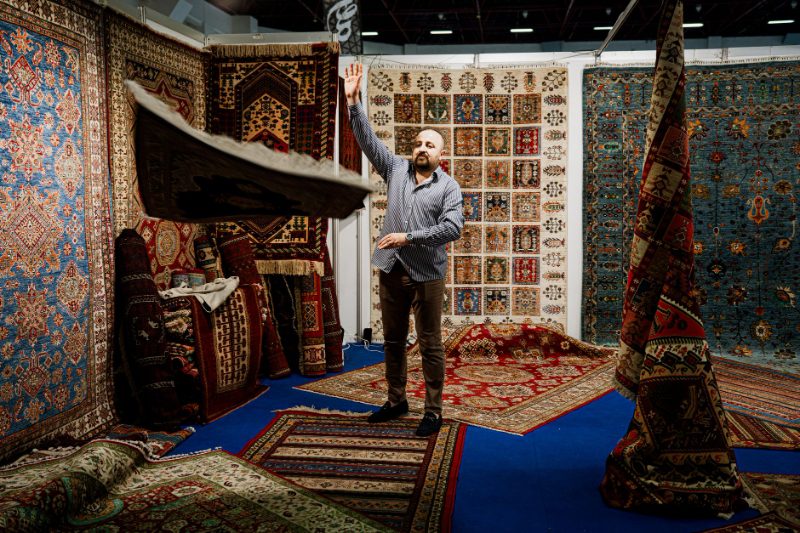
Bharat Tex 2026, India’s largest global textile trade show, concluded in New Delhi on July 17, 2026, after generating investment commitments worth more than Rs 14,300 crore and facilitating over 28,000 business-to-business meetings across its four-day run. The event drew more than 11,000 global buyers, including nearly 6,000 from overseas, alongside over 1,600 exhibitors from 138 countries, reinforcing India’s push to position itself as an alternative global sourcing hub for textiles and apparel.
Held at Bharat Mandapam from July 14-17, the expo covered the full textile value chain, from raw fibre and yarn through finished apparel, home furnishings, and technical textiles. Chairman Narendra Kumar Goenka, addressing the closing press conference, highlighted that MSMEs made up nearly 70% of all exhibitors and that 95 first-time exporters took part this year, a detail organisers pointed to as evidence that smaller Indian manufacturers are gaining direct access to global buyers rather than relying solely on larger trading houses.
Why Does Bharat Tex 2026 Matter for Indian Exporters?
The event’s more than 28,000 B2B meetings and over 100 high-level government interactions translated discussions into what organisers describe as tangible commercial partnerships and trade agreements, rather than just industry talk. A notable outcome was a Letter of Intent signed between the Bharat Tex Trade Federation and Premiere Vision Paris to deepen India-EU collaboration on textile sourcing, sustainability, and design, a signal that Indian exporters are courting European buyers as US tariff uncertainty continues to weigh on the sector. With 95 first-time exporters participating, the event is also being framed as a way to widen market access for smaller manufacturers who previously lacked the scale to engage international buyers directly.
What Does This Mean for India’s Textile Industry?
The Rs 14,300 crore in investment commitments secured at Bharat Tex 2026 comes at a pivotal moment for India’s textile sector, which is simultaneously navigating a favourable domestic investment story and a difficult US trade environment. Indian cotton textile exporters have been contending with a combined US tariff burden built from a 9% base rate plus a 10% Section 122 surcharge, and the industry has been watching closely as that surcharge nears its July 24, 2026 expiration, with proposed Section 301 duties of 12.5% waiting in the wings. Domestic investment momentum from events like Bharat Tex offers exporters some cushion against that external pressure, even as the sector waits for clarity from ongoing India-US trade talks.
Market Reaction and Industry Response
Industry body reaction to the event’s conclusion has centred on the scale of MSME participation and the international buyer turnout, both read as validation of India’s “5F” vision, from farm to fibre to fashion to foreign markets, that organisers used to frame the four-day event. State governments used the platform to pitch textile investment opportunities directly to exhibitors and international delegations, with several states highlighting free-trade-agreement-linked incentives as part of their pitch. Exporters attending the event said the buyer turnout from 138 countries, including new participation from markets like Portugal, Spain, and South Korea, points to genuine diversification away from reliance on the US market.
What Happens Next?
The immediate focus for India’s textile exporters shifts to the US tariff situation, with the Section 122 surcharge set to expire July 24 and the US Trade Representative facing a July 20 deadline on related Section 301 investigations that could reshape duty rates on Indian cotton textiles. Industry watchers will also be tracking how quickly the Rs 14,300 crore in Bharat Tex investment commitments convert into actual manufacturing capacity, and whether the Premiere Vision Paris partnership translates into concrete European sourcing deals over the coming quarters.
Frequently Asked Questions
How much investment did Bharat Tex 2026 secure?
Bharat Tex 2026 generated investment commitments worth more than Rs 14,300 crore, alongside business enquiries valued at nearly $2.8 billion, according to organisers at the event’s closing press conference on July 17, 2026.
How many buyers and exhibitors attended Bharat Tex 2026?
The four-day event drew more than 11,000 global buyers, including nearly 6,000 international participants, and featured over 1,600 exhibitors from 138 countries at Bharat Mandapam in New Delhi.
What does the Section 122 tariff expiration mean for Indian textile exporters?
The 10% Section 122 surcharge on US textile imports is set to expire July 24, 2026, and its replacement by proposed Section 301 duties of 12.5% could reshape the roughly 19% combined tariff burden Indian cotton textile exporters currently face.










Leave a comment