

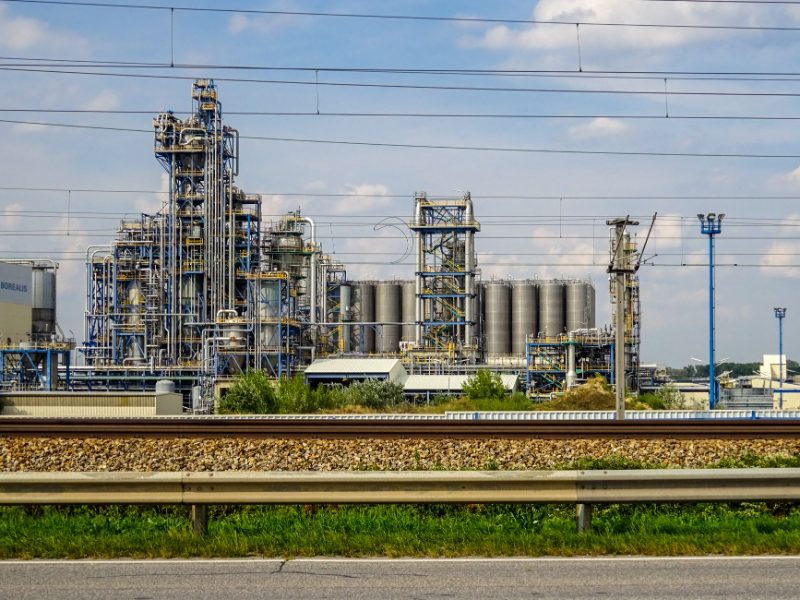
The Union Cabinet, chaired by Prime Minister Narendra Modi, has approved the BHAVYA-Rasayan scheme (Bharat Audyogik Vikas Yojana Rasayan) with a total financial outlay of ₹3,030 crore to set up three dedicated large chemical parks across India. The scheme was first announced by Finance Minister Nirmala Sitharaman in the Union Budget for FY27 and will run for five years, from FY27 to FY31.
Under the BHAVYA-Rasayan scheme, ₹3,000 crore will fund common infrastructure facilities and basic utilities inside the parks, while the remaining ₹30 crore is earmarked for administrative expenditure. State governments will develop the proposed chemical parks through a challenge-based selection process, allowing states to compete for central funding based on readiness of land, utilities, and industrial demand.
How Will the BHAVYA-Rasayan Scheme Affect Chemical Manufacturers?
The scheme directly targets a long-standing industry complaint: the lack of plug-and-play chemical manufacturing infrastructure in India. By funding shared utilities such as effluent treatment plants, power supply, and logistics corridors inside dedicated parks, the BHAVYA-Rasayan scheme is expected to cut project set-up time for chemical manufacturers by reducing individual companies’ capital burden on common infrastructure. Sectors likely to benefit include specialty chemicals, agrochemicals, dyes and pigments, and petrochemical downstream units, all of which have flagged infrastructure gaps as a barrier to scaling domestic production and import substitution.
What Do Industry Bodies Say About the Scheme?
Industry associations including chemical manufacturers’ bodies have welcomed the ₹3,030 crore outlay as a step toward reducing India’s chemical import dependence, particularly for specialty and fine chemicals currently sourced from China. Analysts note that India’s chemical sector, valued at over $220 billion, has lagged behind manufacturing hubs in China and the Gulf due to fragmented, small-scale industrial estates lacking shared infrastructure. The challenge-based selection process is also seen as a mechanism to push states to compete on ease-of-doing-business metrics, similar to earlier PLI-linked infrastructure schemes.
Market and Trade Reaction
Shares of listed specialty chemical companies saw modest gains following the Cabinet nod, as investors priced in the prospect of lower capital expenditure for future capacity expansion. Trade bodies have also pointed to the scheme’s potential to support India’s chemical exports, which have faced pricing pressure from Chinese oversupply in agrochemical and dye intermediates. A stronger domestic manufacturing base under the BHAVYA-Rasayan scheme could help Indian exporters compete on cost in export markets across Southeast Asia and Africa.
What Happens Next?
The Ministry of Chemicals and Fertilizers is expected to notify detailed scheme guidelines and open the challenge-based application window for states in the coming weeks. States will need to submit proposals covering land availability, connectivity, and co-funding commitments. Implementation is slated to begin within FY27, with the first chemical parks expected to become operational within the scheme’s five-year window ending FY31.
Frequently Asked Questions
What is the BHAVYA-Rasayan scheme?
The BHAVYA-Rasayan scheme is a ₹3,030 crore Union government initiative approved by the Cabinet to set up three dedicated large chemical parks in India between FY27 and FY31, funding shared infrastructure and utilities.
How will states be selected for the chemical parks?
States will be selected through a challenge-based process where they compete by submitting proposals on land availability, infrastructure readiness, and co-funding commitments to the central government.
Which industries benefit most from the BHAVYA-Rasayan scheme?
Specialty chemicals, agrochemicals, dyes and pigments, and petrochemical downstream manufacturers are expected to benefit most, as the scheme reduces their individual capital burden on common infrastructure.










Leave a comment