

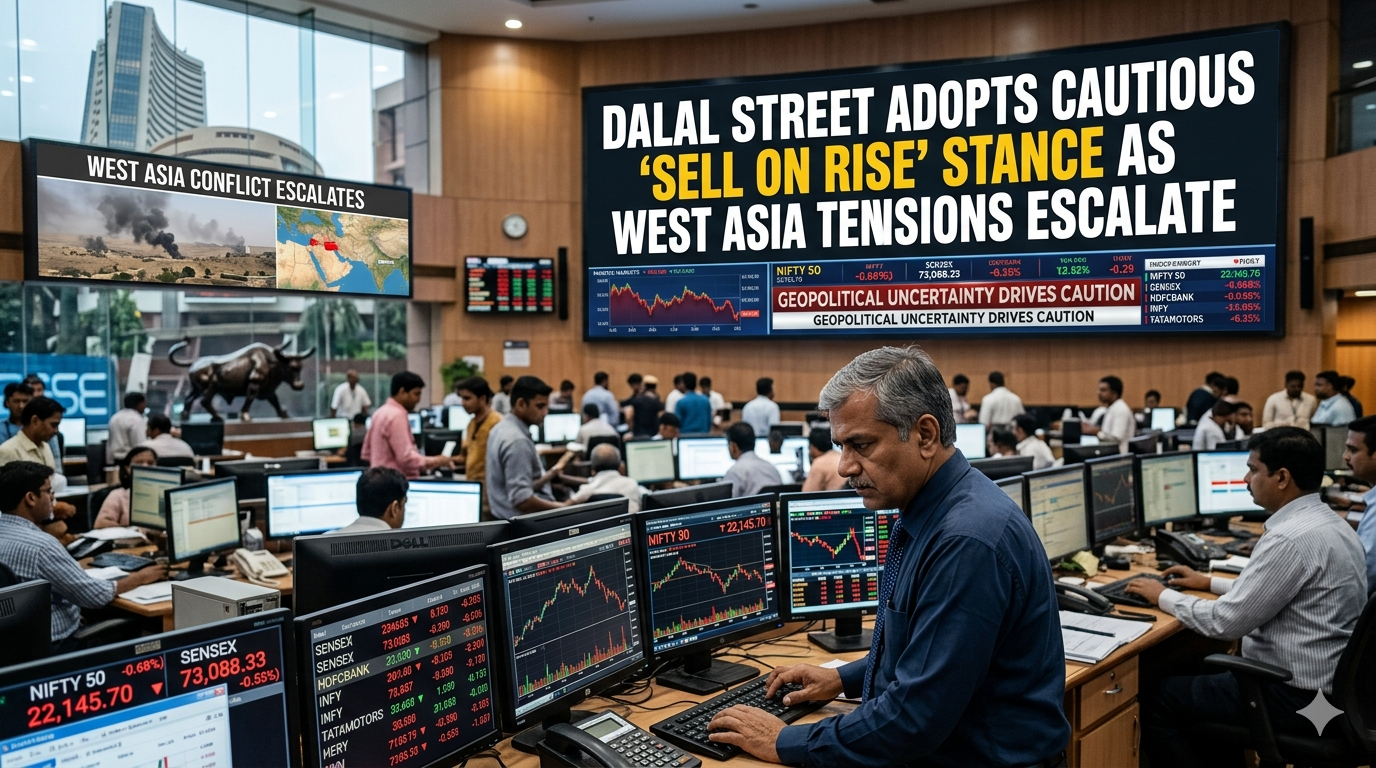
Indian equity markets are witnessing a strategic shift as investors increasingly embrace a ‘sell on rise’ approach amid escalating geopolitical tensions in West Asia, signaling growing concerns about potential market volatility and global economic repercussions.
Market Sentiment Turns Defensive
The recent flare-up of tensions in West Asia has prompted seasoned market participants on Dalal Street to adopt a more defensive investment strategy. This tactical shift reflects investors’ apprehensions about potential disruptions to global supply chains, particularly crude oil supplies, which could significantly impact India’s import-dependent economy.
The ‘sell on rise’ strategy involves booking profits during market upswings rather than holding positions for extended periods, effectively allowing investors to capitalize on short-term gains while minimizing exposure to sudden market downturns that typically accompany geopolitical crises.
Oil Price Volatility Concerns
India’s heavy reliance on crude oil imports, with approximately 85% of its requirements sourced internationally, makes the domestic market particularly vulnerable to West Asian developments. Any significant disruption in oil supplies from the region could trigger inflationary pressures and strain the country’s current account deficit.
Market analysts are closely monitoring Brent crude prices, which have shown increased volatility following recent tensions. A sustained spike in oil prices could potentially impact sectors ranging from aviation and logistics to petrochemicals and consumer goods, creating a ripple effect across the broader economy.
Sectoral Impact Assessment
Different sectors are expected to experience varying degrees of impact from the ongoing geopolitical situation. Oil marketing companies and refiners face the dual challenge of rising input costs and potential supply disruptions, while export-oriented industries might benefit from any resulting currency depreciation.
The aviation sector, already grappling with high fuel costs, could face additional pressure if oil prices surge further. Conversely, domestic oil and gas exploration companies might see renewed investor interest as energy security becomes a priority.
Financial markets have already begun reflecting these concerns, with increased volatility observed in energy-related stocks and broader market indices showing cautious trading patterns.
Strategic Positioning for Uncertainty
Investment strategists recommend that retail and institutional investors maintain a balanced approach, focusing on fundamentally strong companies while avoiding excessive exposure to geopolitically sensitive sectors. The current environment favors defensive sectors such as pharmaceuticals, information technology, and fast-moving consumer goods.
Portfolio diversification and active risk management have become crucial as market participants navigate this period of heightened uncertainty. Many fund managers are reportedly increasing cash positions and reducing leverage to maintain flexibility in their investment strategies.
As West Asian tensions continue to evolve, Dalal Street’s adoption of the ‘sell on rise’ strategy reflects a pragmatic approach to wealth preservation. While short-term volatility appears inevitable, India’s robust domestic consumption story and structural reform momentum could provide resilience against external shocks, making selective buying opportunities attractive for long-term investors once the geopolitical situation stabilizes.












Leave a comment