

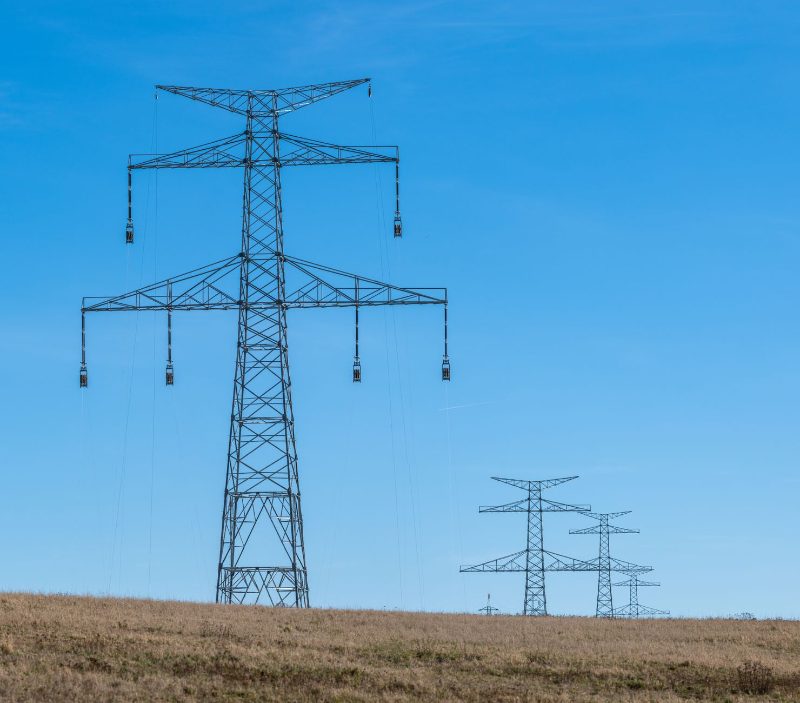
The Union Cabinet has approved Phase III of the Green Energy Corridor (GEC-III), a ₹1,86,405 crore scheme to build the state transmission network needed to evacuate up to 135 GW of renewable power by 2032-33. It is the first Green Energy Corridor phase to include dedicated battery energy storage, with 50 GWh of capacity planned.
According to reports on the Cabinet decision, the outlay splits into ₹1,36,378 crore for intra-state transmission and ₹50,000 crore for battery energy storage systems (BESS). The Centre will provide ₹54,082 crore of Central Financial Assistance (CFA), which is expected to leverage about ₹1.32 lakh crore of total investment. Reports on the approval appeared between September 30 and October 2, 2026.
What Does the Green Energy Corridor Phase III Scheme Cover?
The scheme funds 51,126 circuit kilometres of transmission lines and 2,28,903 MVA of transformation capacity. Of the central support, ₹45,005 crore is earmarked for intra-state transmission and ₹6,000 crore as viability gap funding for battery storage. State transmission utilities will be the implementing agencies. New lines will be awarded through tariff-based competitive bidding (TBCB), while upgrades to existing networks will proceed on a cost-plus basis. Funds will be released against milestones, with a dedicated monitoring unit overseeing delivery.
Why Does India Need Battery Storage and New Transmission Now?
The grid has struggled to keep pace with renewable additions. Trade press reports citing system data put variable renewable energy curtailment in the second quarter of 2026 at 1,874.09 million units, and note that roughly 21 GW of installed renewable capacity is currently connected through temporary arrangements. Union Minister Ashwini Vaishnaw described the scheme as “a structural step — specifically, how to strengthen the grid to evacuate renewable energy.” Prime Minister Narendra Modi, according to a report, called it a big push towards the goal of 900 GW of non-fossil capacity by 2035.
Who Benefits and What Are the Industry Implications?
Renewable developers stand to gain from lower curtailment and faster grid access, while state utilities get central funding to upgrade networks. Battery manufacturers, transformer and conductor suppliers, and EPC contractors in transmission are likely to see demand from the programme, which is spread across states and union territories. The BESS component works out to roughly ₹1 crore per MWh of storage capacity, according to one report.
Market and Trade Reaction
No official market or industry-body reaction was found in the sources reviewed at the time of writing. Execution speed on competitive bidding and state-level land and right-of-way clearances will determine how quickly the benefits reach developers.
What Happens Next?
State transmission utilities will now prepare projects and begin bidding for new lines. The scheme runs through FY2032-33, with milestone-linked disbursals. Watch for the Ministry of Power’s operational guidelines, state-wise allocations and the first BESS tenders.
Frequently Asked Questions
How much is the Green Energy Corridor Phase III outlay?
The total scheme size is ₹1,86,405 crore, including ₹1,36,378 crore for intra-state transmission and ₹50,000 crore for 50 GWh of battery storage. Central Financial Assistance is ₹54,082 crore.
How much renewable power will the scheme help evacuate?
The scheme is designed to enable evacuation of up to 135 GW of renewable energy across states and union territories by 2032-33.
What is new compared with earlier Green Energy Corridor phases?
Phase III is the first to include a dedicated battery energy storage component, alongside new intra-state transmission lines and substations.











Leave a comment