

India’s electric passenger vehicle retail sales crossed 31,823 units in June 2026 — the first time monthly EV car sales have surpassed 30,000 units — registering a massive 107.75% year-on-year growth and pushing EV penetration above 12% of total automobile retail for the first time. The India EV sales record for Q1 FY27 shows 82,737 electric passenger vehicles were registered between April and June 2026, up 89.3% from 43,710 units in the same quarter last year, confirming that India’s electric vehicle transition has moved decisively from early adopter to mainstream consumer phase.
Tata Motors Passenger Vehicles remained India’s dominant EV manufacturer, selling 12,187 retail units in June 2026 alone — a 126.73% year-on-year increase — commanding a 38.30% EV market share. For Q1 FY27 in full, Tata Motors sold 34,467 EVs, a 112% jump from Q1 FY26, and its overall passenger vehicle sales reached 182,574 units, up 46% year-on-year. Mahindra secured second position with 7,766 EV units in June, growing 121.06% year-on-year, while JSW MG Motor India sold 5,785 units, up 23% year-on-year.
Why Did India EV Sales Cross 30,000 Units Per Month for the First Time in June 2026?
Several structural factors converged to drive India’s EV sales record in June 2026. Tata Motors’ aggressive product expansion — with the Nexon EV, Punch EV, Curvv EV, and Harrier EV all generating strong volumes — created a diverse EV portfolio spanning price points from ₹10 lakh to ₹25 lakh, dramatically broadening the addressable buyer base beyond early adopter luxury segments. Mahindra’s XEV 9e and BE 6 generated 121% year-on-year growth as the company’s EV-native Inglo platform products hit their stride. The Faster Adoption and Manufacturing of Electric Vehicles (FAME III) policy incentives, coupled with falling battery cell costs and improving charging infrastructure density in Tier 1 and Tier 2 cities, are making the total cost of ownership comparison increasingly favourable for EVs over ICE vehicles in urban commuting contexts.
What Does Tata Motors’ 46% Q1 FY27 Sales Growth Signal for India’s Automotive Sector?
Tata Motors’ Q1 FY27 performance — 182,574 passenger vehicles sold, up 46% year-on-year — marks its highest-ever quarterly sales volume and positions it as a genuine challenger to market leader Maruti Suzuki. EV volumes constituting 23% of Tata Motors’ total passenger vehicle sales represents the company’s highest-ever EV penetration rate, validating its early bet on building an end-to-end EV ecosystem including Tata.ev retail formats, Tata Power charging infrastructure, and dedicated EV manufacturing lines at Sanand and Pune. The broader market data — with Maruti Suzuki, Mahindra & Mahindra, and Toyota also posting strong Q1 FY27 numbers — reflects robust consumer demand despite an elevated vehicle pricing environment, supported by strong GDP growth, a buoyant job market, and accessible auto financing.
Market Reaction and Industry Response
The Society of Indian Automobile Manufacturers (SIAM) and automotive analysts have marked June 2026 as a milestone month, with EV penetration crossing 12% ahead of several earlier projections that had placed this threshold in calendar year 2027. Brokerage analysts covering Tata Motors highlighted the 112% EV volume growth as evidence of successful product-market fit and raised revenue forecasts for FY27. The strong Q1 FY27 data has also renewed attention on India’s battery manufacturing ecosystem: domestic cell production remains limited, with most EV packs still dependent on imported cells from China, South Korea, and Japan — a supply chain vulnerability that the government’s PLI scheme for Advanced Chemistry Cells (ACC) is working to address. Multiple ACC battery factories are under construction or in planning stages, with operations expected between FY27 and FY29.
What Happens Next?
The India EV market trajectory for the remainder of FY27 looks bullish, with multiple new EV models scheduled for launch including Maruti Suzuki’s first mass-market EV, Hyundai’s Creta Electric successor, and Ola Electric’s first four-wheeler product. Industry forecasters now expect India to sell over 4 lakh electric passenger vehicles in FY27, compared to approximately 1.5 lakh in FY25. The government’s Automotive Mission Plan 2026 targets India as a global leader in EV manufacturing, with the PLI scheme for automobiles incentivising domestic EV production. Nissan’s newly launched Tekton SUV — priced from ₹10.49 lakh — adds another player to India’s hotly contested compact SUV segment, intensifying the competitive dynamic that is accelerating product quality and feature improvements across the market.
Frequently Asked Questions
Which brand sold the most electric cars in India in June 2026?
Tata Motors was India’s largest electric car brand in June 2026 with 12,187 retail units and a 38.30% market share, followed by Mahindra with 7,766 units (121% year-on-year growth) and JSW MG Motor India with 5,785 units. Tata Motors has consistently held the top EV market position in India since 2020, supported by its expanding portfolio of Nexon EV, Punch EV, Curvv EV, and Harrier EV models.
What is India’s EV penetration rate in 2026?
India’s electric vehicle penetration rate crossed 12% of total passenger vehicle retail for the first time in June 2026, when 31,823 EVs were sold out of approximately 2.6 lakh total passenger vehicles. For Q1 FY27 (April–June 2026), overall EV penetration averaged around 10-11%, with June 2026 marking the breakthrough above the 12% threshold — a milestone many analysts had projected for calendar year 2027.
How is India’s EV charging infrastructure keeping pace with rising EV sales?
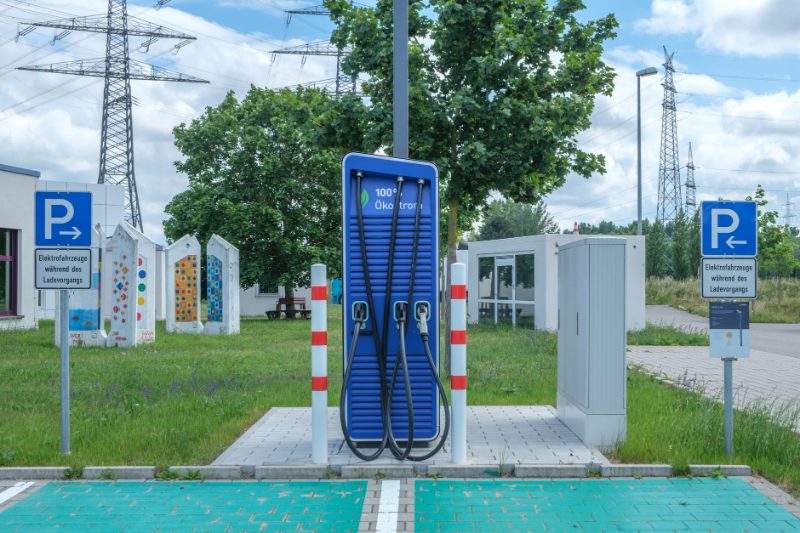
India’s EV charging network has expanded significantly, with Tata Power, Ather Grid, ChargeZone, Statiq, and government-supported EESL charging stations collectively operating tens of thousands of public charging points. However, charging infrastructure density in Tier 2 and Tier 3 cities remains the primary concern for would-be EV buyers outside major metros. The government’s FAME III scheme includes specific allocations for public charging infrastructure, and major highway corridors are increasingly covered by fast-charging stations operated by multiple private players.













Leave a comment